Fed Minutes Loom Over Volatile Markets as Kyiv Bridge Strike Escalates Geopolitical Risk
سایه سنگین فدرال رزرو بر بازارها و تشدید تنشها با حمله پهپادی به پل کییف
As investors await critical Fed minutes that could signal future interest rate paths, a drone strike on a major Kyiv bridge during a German diplomatic visit has sent ripples through global risk sentiment. Meanwhile, Brazil's high-stakes election between Lula and Bolsonaro highlights a growing global ideological divide with significant implications for commodity markets.
At time of publishing
USD
269,100
Toman
Gold 18K
26.41M
Toman / gram
Bitcoin
$85,266
US Dollar
Tether
269,067.977
Toman
Federal Reserve Minutes and the Global Market Jitters
Global financial markets are entering a week of high anxiety as the Federal Reserve prepares to release the minutes from its September meeting. These documents are expected to provide much-needed clarity on the central bank's internal debate regarding the trajectory of interest rates. Currently, analysts are particularly focused on the "real" fed-funds rate, which remains surprisingly low despite previous tightening cycles. This disconnect has left investors wondering if the Fed is prepared to pivot toward a more aggressive stance or if it will maintain a cautious approach to avoid stifling economic growth. For the average investor, this translates to a period of heightened volatility, where every word from the Fed is dissected for clues about the cost of borrowing and the strength of the U.S. Dollar.
In the local Iranian market, we are already seeing the ripple effects of this global uncertainty. Today, Sunday, October 4, 2026, the USD sell rate in Tehran moved from 268,500 to 269,100 Toman, a slight but telling increase of 0.2%. This upward nudge suggests that local participants are seeking the safety of hard currency as global macro signals remain mixed. Gold has shown even more sensitivity to the shifting winds; 18k gold per gram rose from 26,201,579 to 26,411,653 Toman, a 0.8% jump. This indicates that while the global gold ounce is trading at a staggering $4,141.80, domestic demand for gold as a hedge against inflation and geopolitical risk remains robust, even as the Emami coin saw a slight correction of -0.7% to 272,000,000 Toman.

Geopolitical Flashpoints: Kyiv Bridge Strike and Brazil’s Election
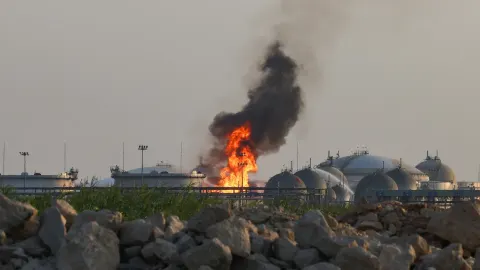
The geopolitical landscape has darkened significantly today following a Russian drone strike on the Northern Bridge in Kyiv. The timing of the attack is particularly provocative, occurring during an unannounced visit by German Chancellor Friedrich Merz. The strike, which was captured on footage showing a massive fireball as cars traversed the bridge, underscores the escalating "infrastructure war" designed to paralyze Ukrainian logistics. For global markets, this is a reminder that the conflict in Eastern Europe remains a primary driver of energy and food price volatility. The presence of a high-ranking German official during the strike also raises the stakes for NATO-Russia relations, as Germany remains Ukraine's largest donor in Europe, having committed over €43 billion since the war began.
Simultaneously, on the other side of the Atlantic, Brazil is witnessing a historic presidential face-off between Luiz Inácio Lula da Silva and Flávio Bolsonaro. This election is not merely a domestic affair; it is a battle for the future of Latin America’s largest economy and its vast natural resources. Bolsonaro has leaned heavily on his ties to the Trump administration, emphasizing a desire for better trade deals involving Brazil's rare mineral resources. Lula, conversely, has framed the election as a fight for Brazilian sovereignty. The outcome will have direct consequences for global commodity chains, particularly in agriculture and mining, as Brazil remains a critical node in the global supply of food and industrial metals.
---
Tech Wars: Apple’s M5 Strategy and Iran’s Space Claims
In the world of consumer technology, a significant shift is occurring as Amazon’s October Prime Day effectively resets the pricing floor for high-end hardware. The MacBook Air with the new M5 chip and 512GB of storage has seen its first major discount, dropping $200 to a price of $1,099. This move is seen as a strategic response to the price hikes Apple implemented in June. By lowering the entry barrier for the M5, Apple is likely attempting to widen the gap between its premium offerings and the entry-level "MacBook Neo," which currently retails for $699. For tech-savvy consumers in Iran, where hardware prices are heavily influenced by the USD/IRR exchange rate, these global price cuts offer a rare window of relative affordability, provided the Toman remains stable.

Closer to home, the Iranian government has once again made bold claims regarding its domestic space industry. Hassan Salarieh, head of Iran's Space Agency, reported that the country has achieved several "historic milestones" over the past two years using domestic know-how. While the government frequently uses such announcements to project strength and self-sufficiency amidst international sanctions, these developments are often viewed with skepticism by the international community, who fear the dual-use nature of satellite launch technology for ballistic missile programs. Furthermore, the Foreign Ministry has indicated it will deliver "additional points" on a U.S. counter-proposal regarding regional conflicts, suggesting that diplomatic maneuvering continues behind the scenes even as regional tensions remain at a boiling point.
Frequently Asked Questions
چرا صورتجلسه فدرال رزرو برای بازار ارز ایران مهم است؟
حمله به پل کییف چه تأثیری بر قیمت طلا دارد؟
آیا کاهش قیمت مکبوک در آمازون بر بازار ایران اثر میگذارد؟
Understanding Geopolitical Risk and Its Impact on Financial Markets
Geopolitical risk refers to the potential for international relations, political instability, or conflicts to disrupt the global economy and financial markets. Events like the Kyiv bridge strike are prime examples, immediately signaling heightened tensions and uncertainty. Such incidents don't just affect the directly involved regions; they send ripples across the globe, impacting investor confidence, supply chains, and the outlook for economic growth. This uncertainty often leads to increased market volatility as investors scramble to reassess risks and reallocate assets.
The mechanisms through which geopolitical risks manifest in financial markets are diverse. Direct impacts include disruptions to critical infrastructure, energy supplies, or trade routes, leading to price spikes in commodities like oil and gas. Indirectly, prolonged instability can deter foreign investment, reduce consumer spending due to fear, and force governments to divert resources towards defense or humanitarian aid, rather than economic development. Currencies of affected nations or those heavily reliant on disrupted trade flows can weaken, while safe-haven assets typically strengthen.
Central banks, like the U.S. Federal Reserve, closely monitor geopolitical developments because these events can significantly influence inflation, economic growth, and financial stability. For instance, a geopolitical conflict that drives up energy prices can exacerbate inflationary pressures, complicating a central bank's efforts to manage interest rates. Conversely, a sudden escalation of risk might prompt central banks to adopt a more cautious monetary policy stance to prevent a deeper economic downturn, even if it means tolerating higher inflation for a period.
Ultimately, understanding geopolitical risk is crucial for comprehending market dynamics. It explains why events far removed from one's immediate economic environment can still dictate the price of gold in Tehran, the value of the USD against the Iranian Rial, or the overall sentiment in global equity markets. Investors and policymakers alike must constantly evaluate these evolving risks to navigate an increasingly interconnected and unpredictable world.