Riyadh Airport Struck by Houthi Missiles as Hormuz Tanker Explosion and Stalled US Talks Rattle Regional Markets
حمله مجدد به فرودگاه ریاض و انفجار سوپرتانکر در هرمز؛ بنبست دیپلماتیک و نوسان قیمتها در بازار تهران
A series of deadly Houthi missile strikes on Riyadh's King Khalid International Airport has escalated regional tensions, while a supertanker explosion in the Strait of Hormuz adds to the maritime crisis. Despite the geopolitical volatility, the US dollar in Tehran saw a minor 0.6% dip as diplomatic progress remains 'insufficient.'
At time of publishing
USD
263,800
Toman
Gold 18K
26.27M
Toman / gram
Bitcoin
$83,792
US Dollar
Tether
263,945
Toman
Riyadh Airport Under Fire: A New Phase of Regional Escalation
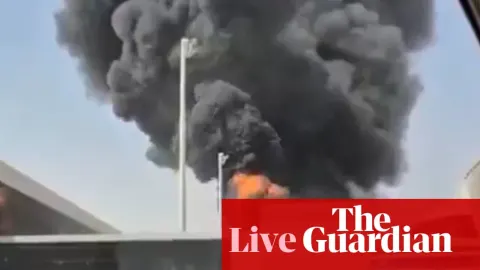
The security situation in the Middle East has taken a sharp turn for the worse this Sunday, October 11, 2026, as Houthi rebels launched a series of sophisticated missile attacks against King Khalid International Airport in Riyadh. According to Saudi authorities and regional reports, at least 12 people were killed in the initial strikes, which targeted passenger terminal 4 and ignited significant fires. This is the third time the facility has been targeted in a single week, signaling a major breakdown in the previous de-escalation efforts and a direct challenge to Saudi Arabia's internal security and its "Vision 2030" economic ambitions.
What makes this escalation particularly noteworthy is the diplomatic fallout. The United Arab Emirates (UAE) has issued a strong statement of solidarity with Riyadh, a move that analysts view as a strategic pivot. After a year of significant friction between the two kingdoms—which saw the UAE exit OPEC and clash over Yemen policy—this shared threat appears to be forcing a temporary reconciliation. For the global community, the repeated targeting of a major international aviation hub suggests that the Yemen conflict is no longer a localized war but a systemic threat to global travel and logistics, potentially forcing a total rethink of Western security strategies in the Gulf.
The Hormuz Chokehold: Supertanker Explodes on 'Unauthorized' Route
Compounding the regional instability, the Islamic Revolution Guards Corps (IRGC) Navy announced on Sunday that a supertanker carrying crude oil suffered a powerful explosion in the Strait of Hormuz. According to official claims, the vessel hit a naval mine while attempting to exit the strait through what the IRGC described as an "unauthorized" route. This incident happens at a time when maritime traffic in the region is already under extreme duress due to naval blockades and high-stakes brinkmanship. The explosion serves as a visceral reminder of the physical risks facing global energy supplies, as any disruption in the world's most critical oil artery immediately impacts global insurance premiums and supply chain reliability.
From a strategic perspective, the timing of this explosion is likely not coincidental. By highlighting the dangers of navigating "unauthorized" paths, the Iranian military apparatus is asserting total control over the waterway. For Iranian citizens and market observers, this suggests that the "oil war" is entering a more kinetic phase. If shipping companies begin to perceive the Strait of Hormuz as a literal minefield, the cost of importing goods to Iran—and exporting what remains of its sanctioned oil—will skyrocket, further straining a domestic economy already battling significant inflationary pressures.
---
Diplomatic Deadlock: US Response Deemed 'Insufficient'
On the diplomatic front, the hope for a swift resolution to the current standoff was dampened today by Major General Mohsen Rezaei, Secretary of the Supreme National Security Council. Rezaei stated that while the United States has provided a response to Iran’s seven specific conditions for ending the current maritime war and reopening the Strait of Hormuz, Tehran considers the American proposal "insufficient." This suggests that the gap between Washington's demands for regional stability and Tehran's demands for sanctions relief and security guarantees remains as wide as ever.

This lack of diplomatic progress has direct implications for the Iranian rial. Markets typically price in the probability of a deal; with the "insufficient" label now attached to US efforts, the expectation for a long-term cooling of tensions has diminished. The seven conditions, which involve complex geopolitical concessions, are now the primary benchmark for whether the region avoids a total blockade. Without a breakthrough, the risk of a sustained closure of shipping lanes remains the single largest "black swan" event facing the Iranian economy in late 2026.
Market Reaction: The Toman's Fragile Stability
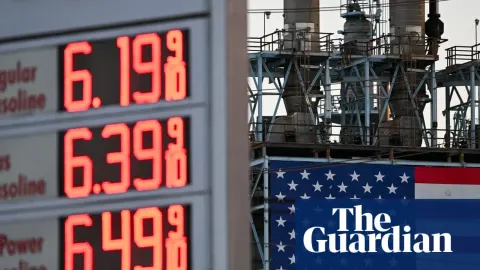
Despite the drums of war beating louder, the Iranian currency market showed a surprising, albeit minor, strengthening over the last 24 hours. The USD sell rate moved from 265,400 to 263,800 Toman, marking a 0.6% decrease. Similarly, 18k gold fell by 0.6% to 26,273,142 Toman per gram. This counter-intuitive movement—where the currency gains value during a security crisis—often points to heavy-handed central bank intervention or a "sell the news" reaction from local traders who had already priced in the worst of the Houthi-Saudi escalation.

In the crypto space, Bitcoin remains a popular hedge for those looking to exit the Toman entirely, currently trading at $83,792. While the domestic currency saw a slight reprieve today, the underlying fundamentals—90% inflation and naval blockades—suggest this stability is brittle. If the Houthi strikes continue to hit civilian infrastructure or if more tankers are lost in the Strait, the psychological floor for the Toman could give way, leading to a rapid correction in the coming days. For now, the market is in a state of suspended animation, waiting for the next move from either the IRGC or the White House.
Frequently Asked Questions
Why did the USD price drop despite the escalation of war in the region?
What were the '7 conditions' mentioned by Mohsen Rezaei?
How does the Riyadh airport attack affect Iranian travelers?
The Strait of Hormuz: A Strategic Chokepoint Shaping Global Energy Markets
The Strait of Horm8 is a narrow sea lane between the Persian Gulf and the Gulf of Oman, measuring roughly 21 nautical miles (39 km) at its narrowest point. Because more than 20 % of the world’s oil and a significant share of liquefied natural gas (LNG) pass through it every day, the strait is classified as a strategic chokepoint – a geographic bottleneck whose disruption can ripple through global supply chains and financial markets. Its importance is underscored by the fact that the United Nations estimates that around 30 million barrels of oil per day flow through the waterway, linking producers in Saudi Arabia, Iran, Iraq, Kuwait and the United Arab Emirates to consumers worldwide.
When the strait is threatened – whether by naval mines, missile strikes, or the accidental explosion of a tanker – the immediate reaction is a price shock in oil futures. Traders factor in the risk of supply interruptions, prompting a spike in the Brent and WTI benchmarks. The 2024 incident involving an Iranian Revolutionary Guard Corps (IRGC)‑operated tanker in the Hormuz corridor, followed by Houthi missile attacks on nearby infrastructure, exemplifies how a single event can trigger volatility not only in crude prices but also in regional currencies such as the Saudi riyal and the Iranian rial.
Historically, the strait has been a flashpoint for geopolitical tension. During the 1980s Iran–Iraq War, Iran briefly closed the waterway, causing a sharp rise in oil prices and prompting the United States to launch Operation Earnest Will to escort merchant vessels. More recently, in 2019 the United States threatened to re‑open the strait after Iran’s seizure of a tanker, highlighting the continuing strategic calculus that major powers employ to keep this artery open. The principle at work is simple: any actor that can interdict the flow of energy can wield disproportionate influence over global economics.
Understanding the strait’s role helps explain why regional crises – such as the Riyadh airport missile strike or the diplomatic deadlock over Iran‑U.S. talks – are watched so closely by investors. Even a temporary slowdown in traffic can tighten global oil supplies, push up shipping insurance premiums, and force nations to reconsider energy diversification strategies. For policymakers, the lesson is clear: maintaining the security and freedom of navigation in the Strait of Hormuz is not just a regional concern but a cornerstone of worldwide economic stability.
For a deeper dive, explore the linked resources that detail the geography, historical incidents, and economic implications of this pivotal maritime corridor.
Topics
Related Articles