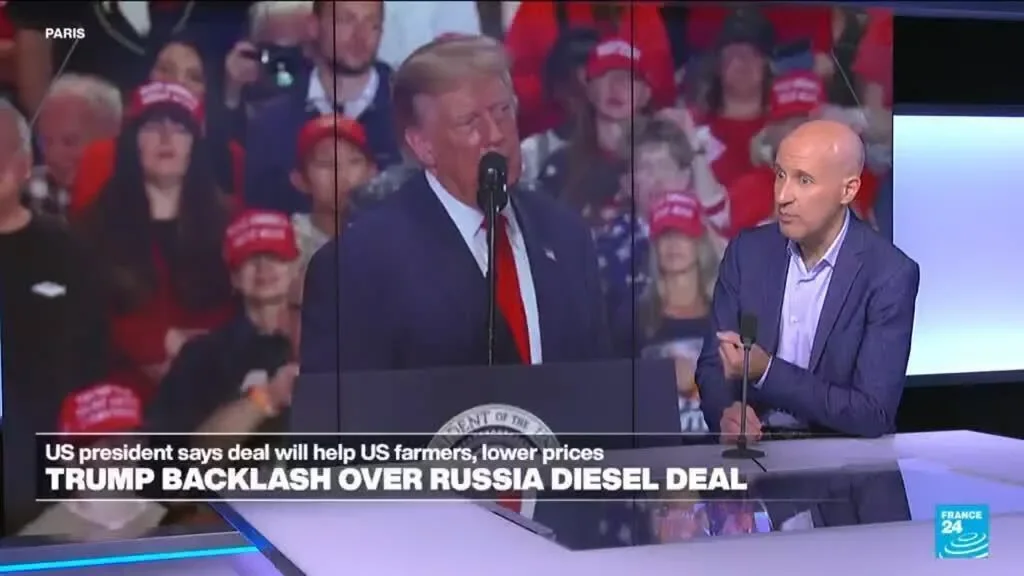
Trump’s Russian Diesel Gambit Ignites D.C. Fury as Toman Recovers Amid Global 'Split' Growth
جنجال واردات گازوئیل روسی توسط ترامپ؛ تقویت ریال در سایه پیشبینیهای دوگانه صندوق بینالمللی پول
Donald Trump faces intense bipartisan backlash over plans to import Russian diesel despite sanctions, while the IMF raises global growth forecasts to 3.1% despite the ongoing US-Iran conflict. In Tehran, the Toman showed resilience today, gaining 1.8% against the dollar.
At time of publishing
USD
255,900
Toman
Gold 18K
25.62M
Toman / gram
Bitcoin
$83,311
US Dollar
Tether
254,030
Toman
The Diesel Dilemma: Trump’s Realpolitik vs. Geopolitical Sanctions
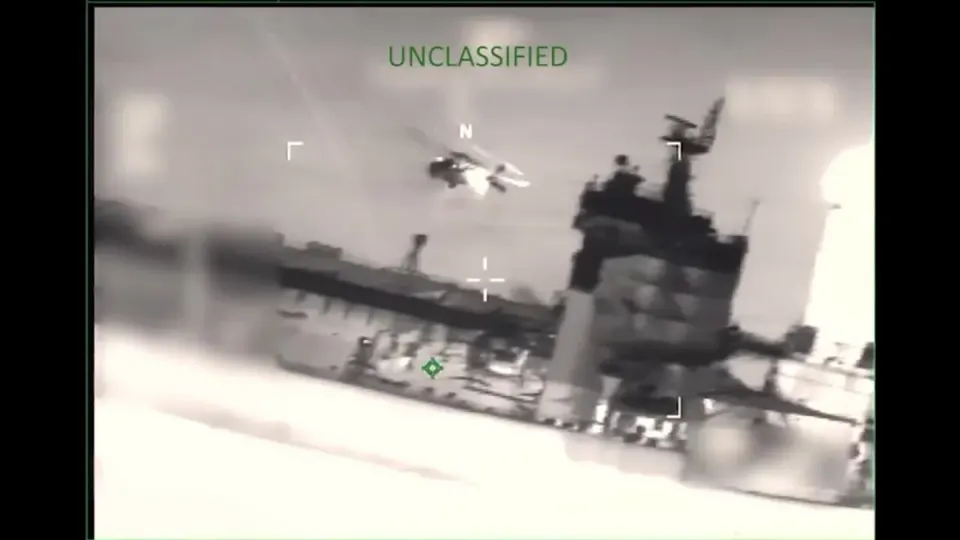
In a move that has sent shockwaves through Washington, Donald Trump’s administration is moving to import Russian diesel fuel, effectively bypassing the very sanctions framework the U.S. helped build. The rationale behind this controversial pivot is purely domestic: skyrocketing fuel prices are threatening Republican prospects in the upcoming midterm elections. By seeking cheaper energy from Moscow, Trump is prioritizing the American consumer's wallet over the geopolitical isolation of Russia, a strategy that has drawn sharp rebukes from both sides of the aisle. Critics argue that this move undermines Ukraine’s position and signals a fracturing of Western resolve, even as the administration calls for Kyiv to hold elections and negotiate a ceasefire.
This policy shift is more than just a campaign tactic; it represents a fundamental tension in global energy markets. The U.S. is currently grappling with the dual pressure of high inflation and the need to maintain a hardline stance against geopolitical rivals. For markets, this suggests that the 'sanctions era' might be entering a more transactional phase where economic survival takes precedence over ideological alignment. If the U.S.—the primary architect of global sanctions—begins to selectively ignore them for its own benefit, the entire structure of international economic pressure could begin to unravel, leading to unpredictable shifts in energy trade routes and pricing power.
, Public domain]
IMF’s 'Split' Outlook: AI Resilience Meets War-Driven Energy Costs
The International Monetary Fund (IMF) has adjusted its 2026 global growth forecast upward to 3.1%, a figure that masks a deeply divided economic reality. According to analysis by Douglas Herbert, the resilience of advanced economies—fueled largely by massive investments in artificial intelligence—is the primary driver of this optimism. However, this growth is being tempered by rising energy prices directly linked to the ongoing US-Iran war. The IMF warns of a 'split' outlook where wealthy nations leverage technology to outpace inflation, while low-income countries remain dangerously vulnerable to the volatility of a world at war.
For the Iranian reader, this 'split' is palpable. While global markets find ways to adapt, the domestic economy remains tethered to the pulse of regional conflict. The IMF’s report highlights that while the world is growing, the cost of that growth is becoming increasingly uneven. The surge in AI investment is creating a new class of economic winners, but for nations caught in the crosshairs of energy disruptions and sanctions, the path to recovery is obstructed by high shipping costs and fragmented trade. This suggests that even if global GDP rises, the gap between the 'tech-resilient' West and the 'energy-vulnerable' Global South is widening into a chasm.

Tehran Market Correction: Toman Gains as Gold Retracts
At 17:00 Tehran time on Tuesday, October 13, 2026 (21 Mehr 1405), the domestic market saw a notable correction. The USD/IRR exchange rate, which stood at 260,600 yesterday, fell to 255,900 today, marking a 1.8% gain for the Iranian Toman. This strengthening of the local currency comes despite the regional 'false flag' accusations between London and Tehran. The UK has recently blamed the IRGC for an incident at a British airbase, a claim the Iranian government has dismissed as a manufactured provocation. Despite these geopolitical headlines, the market seems to be reacting to internal liquidity shifts and perhaps a temporary cooling of immediate escalation fears.
The gold and coin markets followed the currency's lead downward. Gold 18k/gram moved from 25,919,940 to 25,615,217 Toman, a decrease of 1.2%. The Emami coin saw an even sharper decline, dropping 2.3% from 264,500,000 to 258,500,000 Toman. These movements suggest that the 'panic buying' seen in previous sessions is subsiding, as traders reassess the likelihood of a broader regional conflagration. However, with Bitcoin holding steady at $83,311 and global gold prices remaining elevated at $4,186.50 per ounce, the long-term outlook remains cautious. Investors are currently balancing the relief of a stronger Toman against the persistent reality of high global commodity prices.
Apple’s AI Delay: Hardware Ready, Software Lagging
In the world of technology, Apple has officially announced the HomePod Mini 2, equipped with a new chip specifically designed to power 'Siri AI.' However, in a move that has disappointed many tech enthusiasts, the company confirmed that these AI features will not be available at launch. This gap between hardware capability and software readiness highlights a broader trend in the tech industry: the rush to market with 'AI-ready' labels before the actual intelligence is fully baked. The new speaker features an aesthetic 'sound glow' that syncs LED lights with music, but the core promise of a smarter, more autonomous Siri remains a future prospect.
This delay is significant because it reflects the immense computational and ethical hurdles companies face when deploying generative AI at scale. While fund managers remain optimistic about the stock market's AI-driven bull run, the actual delivery of these technologies is proving more difficult than the marketing suggests. For consumers and investors, this is a reminder that the 'AI boom' is still in its infrastructure phase. We are seeing the hardware being laid down—from Apple’s new chips to the massive data centers driving copper demand—but the transformative software experience is still being refined behind closed doors.
Watch
Trump’s use of Russian diesel fuel, at Ukraine’s expense, sparks controversy in the US
FRANCE 24 English
Frequently Asked Questions
Why is Trump importing Russian diesel despite sanctions?
Why did the Toman strengthen today despite regional tensions?
What does the IMF mean by a 'split' economic outlook?
Is the new Apple HomePod Mini 2 worth buying for AI?
Understanding Economic Sanctions and Their Global Ripple Effects
Economic sanctions are a powerful tool of foreign policy, essentially punitive measures imposed by one or more countries against a target country, entity, or individual. Far from mere diplomatic slaps on the wrist, these measures aim to alter the target's behavior by inflicting economic pain. They can take various forms, including trade embargoes, restrictions on financial transactions, asset freezes, and travel bans. The goal is often to pressure a regime to change its policies, deter aggression, or combat terrorism, but their effectiveness and ethical implications are subjects of ongoing debate.
When applied, sanctions can profoundly impact the targeted economy. For instance, restrictions on oil exports or financial transactions, as seen with Russia and Iran, can severely limit a country's access to international markets and vital foreign currency. This often leads to currency depreciation, inflation, reduced investment, and a decline in living standards for ordinary citizens. While the headline mentions the "Toman recovers," currency movements under sanctions are complex, influenced by black markets, domestic policies, and the effectiveness of circumvention strategies, rather than an indication that sanctions are not impactful.
Beyond the immediate target, economic sanctions often create significant ripple effects across the global economy. Sanctions on major energy producers, like Russia, can disrupt global supply chains, leading to volatility and price spikes in commodities such as oil and diesel, impacting consumers worldwide. This can contribute to a "split" in global growth, where some economies, dependent on the sanctioned commodities or deeply integrated with the sanctioned nation, suffer disproportionately, while others might find new trade routes or alternative suppliers, or even benefit from higher commodity prices if they are exporters.
Ultimately, economic sanctions are a double-edged sword. While intended to achieve specific political objectives, they carry substantial economic costs, not just for the targeted nation but also for the global economy. Understanding their mechanisms and widespread consequences is crucial for comprehending contemporary geopolitical and economic dynamics, from fluctuating exchange rates like the USD/IRR to global energy market shifts and divergent growth patterns.
Topics
Related Articles