Leon Black Lawsuit Dismissed; Europe Faces Shifting US Stance on Russia
دعوی علیه لئون بلک رد شد؛ اروپا در برابر تغییر رویکرد آمریکا در قبال روسیه
A high-profile civil lawsuit against billionaire Leon Black has been dismissed after the plaintiff cited medical incapacity. Meanwhile, former Estonian President Toomas Hendrik Ilves warns Europe to prepare for a potential shift in US policy regarding Russia's war in Ukraine, urging greater European strategic independence.
At time of publishing
USD
265,000
Toman
Gold 18K
26.21M
Toman / gram
Bitcoin
$81,528
US Dollar
Tether
264,200
Toman
Leon Black Lawsuit Dismissed Amid Plaintiff's Medical Issues
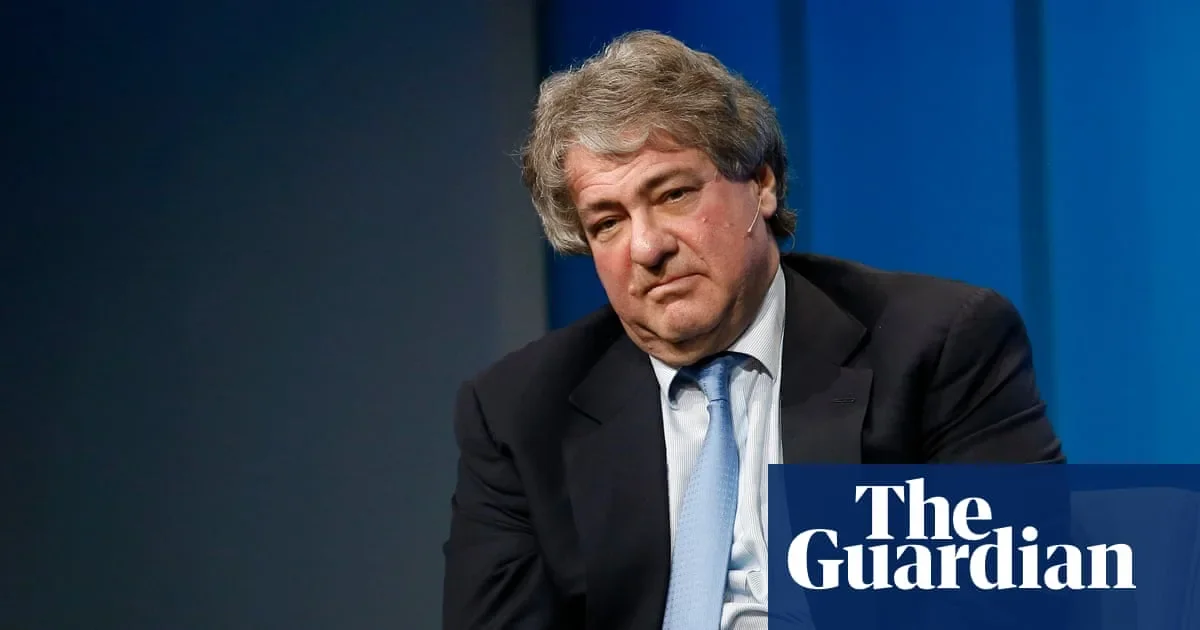
A federal judge has dismissed the civil lawsuit filed against private equity billionaire Leon Black. The plaintiff, identified only as "Jane Doe," alleged that Black raped her in 2002 after being "handed off" to him by his associate, Jeffrey Epstein. Doe, who had been acting without legal representation, stated she was "medically incapable of continuing" the case due to the risk of "acute psychiatric crisis, including suicide." Black has consistently denied the allegations, characterizing them as a fabrication.
This development brings a temporary close to a case that has garnered significant media attention. The legal proceedings highlighted disturbing allegations and the complex dynamics of high-profile civil litigation. While the dismissal is based on the plaintiff's stated condition, the underlying accusations remain a subject of public scrutiny. The case's trajectory underscores the challenges plaintiffs face in such sensitive matters, particularly when navigating the legal system without consistent legal counsel.
---
Europe Urged to Bolster Independence Amid Shifting US-Russia Stance
Former Estonian President Toomas Hendrik Ilves has issued a stark warning to Europe, suggesting that the United States may be gradually tilting its policy towards Russia. Ilves expressed concern over the implications for European security, particularly in light of the ongoing conflict in Ukraine. He argues that Europeans are increasingly finding themselves standing more solidly with Ukrainian President Zelenskyy, but this solidarity must be matched by a greater degree of European autonomy.
Ilves's assessment points to a potential recalibration of transatlantic relations, where Europe may need to shoulder more responsibility for its own defense and foreign policy. The former president emphasized the critical juncture at which Europe finds itself, suggesting that this is the opportune moment for the continent to act as a unified entity rather than solely pursuing self-interest. This call for strategic independence is framed against the backdrop of an increasingly unpredictable global order, where reliance on traditional alliances may become less tenable.
Circle Eyes Emerging Markets for Stablecoin Expansion
Circle, the company behind the USD Coin (USDC) stablecoin, is planning a significant expansion into approximately 40 emerging markets. CEO Jeremy Allaire indicated that the company sees growing demand for stablecoin services in regions across Southeast Asia, Latin America, Africa, and the Middle East. This strategic move signals a broader trend of stablecoins moving from niche financial instruments to mainstream payment and remittance tools in developing economies.
The expansion is driven by the increasing recognition of stablecoins' potential to facilitate cross-border transactions, reduce remittance costs, and provide greater access to digital financial services in areas with underdeveloped traditional banking infrastructure. Circle's aggressive push into these markets suggests a belief that regulatory frameworks will evolve to accommodate these digital currencies, or that the company is prepared to navigate existing complexities to capture market share.
AI Safety Debate Intensifies with Potential Anthropic IPO
The upcoming initial public offering (IPO) of AI company Anthropic has ignited a renewed debate around artificial intelligence safety and its potential impact on financial markets. New York City's comptroller has reportedly opened a line of communication with Anthropic to discuss the "existential risks" associated with advanced AI and how these might influence the company's future valuation and stability as a publicly traded entity.
This dialogue highlights a growing concern among institutional investors and regulators about the long-term implications of powerful AI systems. As AI companies like Anthropic develop increasingly sophisticated models, questions arise about their control, ethical deployment, and potential for unintended consequences. The prospect of an IPO for such a company introduces a new dimension to the AI safety conversation, linking it directly to the financial well-being of investors and the broader economic landscape. The comptroller's engagement suggests a proactive approach to understanding and mitigating risks before they can manifest in market downturns or other financial disruptions.
Frequently Asked Questions
Why was the lawsuit against Leon Black dismissed?
What is the concern regarding US policy towards Russia?
Which emerging markets is Circle planning to enter?
What is the connection between Anthropic's IPO and AI safety?
Understanding U.S. Secondary Sanctions on Russia and Their Impact on Europe
What are secondary sanctions?
Primary sanctions are direct restrictions that a country places on another state, its government officials, or entities that it directly controls. Secondary sanctions go a step further: they target non‑U.S. persons, companies, or financial institutions that facilitate prohibited activities with the sanctioned target. In practice, the United States threatens to cut off any foreign firm that does business with a sanctioned Russian bank, oil exporter, or defense contractor, even if that firm has no direct ties to the U.S. This extraterritorial reach is enforced by the Office of Foreign Assets Control (OFAC) and is codified in various executive orders issued after the 2014 annexation of Crimea and the 2022 invasion of Ukraine.
Why Europe feels the squeeze
European banks and corporations have long been intertwined with Russian markets through energy trade, finance, and supply chains. When the U.S. imposed secondary sanctions on Russian oil exports in 2022, it forced European firms to choose between lucrative Russian contracts and access to the U.S. financial system. The threat of being cut off from dollar clearing, SWIFT messaging, or U.S. investment capital is a powerful lever, prompting many European companies to voluntarily curtail Russian exposure even before domestic EU sanctions took effect. This dynamic illustrates how secondary sanctions can shape foreign policy indirectly, by leveraging the global dominance of the U.S. dollar and its financial infrastructure.
Legal and compliance challenges
Compliance departments across Europe now have to navigate a complex web of U.S. regulations, EU sanctions, and national laws. The risk of inadvertent violation is high because secondary sanctions can apply to seemingly peripheral activities, such as providing insurance, shipping services, or even software updates to a sanctioned Russian entity. Firms therefore invest heavily in sanctions screening tools, conduct regular risk assessments, and sometimes restructure transactions through third‑party jurisdictions that are less exposed to U.S. jurisdiction. The cost of compliance can be substantial, but the alternative—being barred from the U.S. market—can be catastrophic.
Broader geopolitical implications
Secondary sanctions are not just an economic tool; they are a diplomatic signal. By extending the reach of its sanctions regime, the United States signals to allies and adversaries alike that it will use its financial clout to enforce its foreign‑policy objectives. For Europe, this creates a delicate balancing act: supporting the Western response to Russia’s aggression while protecting its own economic interests and sovereignty. The ongoing debate over “policy coordination” between Washington and Brussels reflects the tension between collective security goals and the practical realities of global trade.
Looking ahead
As the Ukraine war drags on, secondary sanctions are likely to evolve, targeting new sectors such as technology, aerospace, and even cryptocurrency. European firms will need to stay agile, investing in both legal expertise and technological solutions to monitor sanctions lists in real time. Understanding the mechanics of secondary sanctions is therefore essential for anyone involved in international finance, trade, or policy analysis.