UK Signals Support for Chinese EV Tariffs; AI 'Burnout Trade' Gains Momentum
چراغ سبز بریتانیا به تعرفه علیه خودروهای برقی چین؛ موج فرسودگی از هوش مصنوعی در بازارها
Downing Street has signaled it may join EU-led tariffs on Chinese electric vehicles, sparking warnings of a trade war from Beijing. Meanwhile, global investors are shifting toward an 'AI burnout trade' as the U.S. budget deficit hits a staggering $2 trillion.
At time of publishing
USD
265,000
Toman
Gold 18K
26.21M
Toman / gram
Bitcoin
$81,339
US Dollar
Tether
264,200
Toman
The Great EV Pivot: UK Weighs Tariffs on Chinese Vehicles
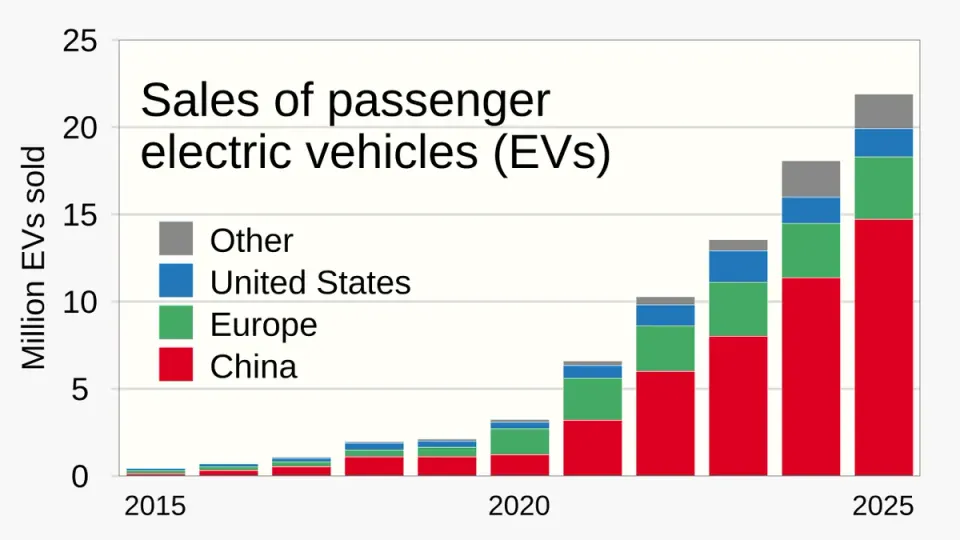
In a significant shift in post-Brexit trade policy, Downing Street has left the door open to imposing tariffs on Chinese-made electric vehicles (EVs). This move comes as part of the broader 'Made in Europe' package, a strategic industrial initiative aimed at protecting domestic manufacturing from heavily subsidized foreign competition. The shift became possible after France dropped its long-standing opposition to Britain’s inclusion in the scheme, signaling a rare moment of cross-channel industrial alignment. Beijing has already responded with sharp rhetoric, labeling the potential move as "discriminatory" and warning of retaliatory measures that could disrupt global supply chains.
For the global economy, this isn't just about cars; it’s about the fracturing of global trade into regional blocs. If the UK aligns with the EU’s protectionist stance, it marks the end of Britain’s attempt to be a 'neutral' bridge between China and the West. For Iranian consumers and businesses, these trade wars are more than a headline. As global supply chains tighten and major economies impose barriers, the cost of technology and automotive components often trickles down to secondary markets. Furthermore, any escalation in trade tensions between the West and China often pushes Beijing closer to its alternative partners, potentially reshaping the geopolitical landscape in which Iran operates.
Market Fatigue: The 'AI Burnout Trade' and the $2 Trillion Deficit
Wall Street is witnessing a transition in sentiment as the initial euphoria surrounding Artificial Intelligence begins to wane. Analysts are now highlighting the emergence of the 'AI burnout trade,' where investors, tired of the constant debate over when massive tech investments will actually yield bottom-line profits, are rotating into more traditional or defensive sectors. This skepticism is compounded by the latest U.S. budget data, which shows the federal deficit has ballooned to nearly $2 trillion—approximately 6.2% of the national GDP. This level of spending, the highest since the pandemic era, is raising serious questions about long-term fiscal sustainability and the future strength of the U.S. Dollar.
What this means for the average investor is a period of heightened volatility and a possible shift away from high-growth tech stocks. When the world's largest economy runs a deficit of this magnitude, it often leads to inflationary pressures that force central banks to keep interest rates higher for longer. In the Iranian context, where the USD/IRR rate is a primary indicator of economic health, global dollar strength or weakness directly dictates local purchasing power. Today, the USD sell rate in Tehran moved from 266,700 to 265,000 Toman, a decrease of 0.6%, reflecting a moment of local consolidation despite the massive fiscal clouds gathering in Washington.
Geopolitics and Humanitarian Pleas: The Siege of Oleshky
On the geopolitical front, Pope Leo XIV has made a direct and rare personal plea to Vladimir Putin for a cease-fire in the Ukrainian city of Oleshky. The city is currently under a brutal siege, with reports indicating that roughly 2,000 civilians are trapped by a combination of landmines and drone strikes, facing imminent starvation. The Pope’s intervention, coming while he recovers from major surgery, underscores the gravity of the humanitarian crisis. Such high-level diplomatic efforts often serve as a barometer for regional tension; any successful mediation could temporarily ease the 'risk-off' sentiment that has kept energy prices and gold volatile in recent weeks.
In the Middle East, President Masoud Pezeshkian has also entered the discourse, condemning the environmental destruction caused by regional conflicts. While the rhetoric focuses on ecology, the underlying message targets the economic and social toll of perpetual warfare. For the Iranian public, these developments are a reminder of the fragility of regional stability. When conflict intensifies, whether in Eastern Europe or the Levant, the first reaction is seen in the gold markets. Currently, the Emami coin remains stable at 270,000,000 Toman, and Gold 18k is holding at 26,213,121 Toman per gram, suggesting that while tensions are high, the local market is currently in a 'wait-and-see' mode.

Crypto Regulation and the Cost of Moving Money
In the world of digital assets, the legal battle between the CFTC and Gemini has taken a new turn as a judge rejected the regulator's attempt to drop a $5 million settlement. This decision highlights the increasing scrutiny and lack of flexibility in U.S. crypto enforcement, which continues to drive the industry toward more regulated stablecoin solutions. Interestingly, new data shows that stablecoin remittances are now 84% cheaper than traditional bank transfers. For a country like Iran, where traditional banking is largely severed from the global system, the efficiency and cost-effectiveness of stablecoins like USDT are not just a convenience—they are a financial lifeline for trade and personal remittances.
Bitcoin is currently trading at $81,339, maintaining its position as a primary hedge against the fiscal instability mentioned earlier. As the U.S. deficit grows, the narrative of Bitcoin as 'digital gold' gains traction among institutional and retail investors alike. For Iranians using USDT (currently priced at 264,200 Toman), the stability of the stablecoin relative to the Rial remains the most critical factor. The ongoing regulatory crackdowns in the U.S. may seem distant, but they dictate the liquidity and safety of the very assets Iranians rely on to preserve their wealth against local inflation.
Frequently Asked Questions
Why is the UK considering tariffs on Chinese electric vehicles now?
What is the 'AI burnout trade' mentioned in market reports?
How does the $2 trillion US deficit affect the Iranian Rial?
Are stablecoins really 84% cheaper than traditional bank transfers?
Stablecoins and Cross‑Border Remittances in Sanctioned Economies
Stablecoins are a class of cryptocurrencies designed to hold a stable value by being pegged to a reserve asset such as the US dollar, euro, or a basket of commodities. Unlike Bitcoin or Ethereum, whose prices can swing wildly, a stablecoin aims to stay within a narrow band—typically within 1 % of its reference currency. The most common mechanism is a fiat‑backed model, where every token is supposedly backed 1:1 by cash held in a bank, though other designs use algorithmic controls or collateralised crypto assets.
Because they combine the speed and low‑cost settlement of blockchain with a predictable unit of account, stablecoins have become attractive for remittances, especially where traditional banking channels are blocked or expensive. A migrant can purchase a dollar‑pegged stablecoin on a local exchange, send it instantly to a recipient abroad, and the recipient can convert it back into local cash or use it directly for online purchases. This bypasses the need for correspondent banks, SWIFT fees, and often avoids the high spreads seen in black‑market foreign‑exchange rates such as the USD/IRR market in Iran.
Iran provides a vivid case study. International sanctions have limited access to the global banking system, pushing households and businesses to rely on informal channels—often at a premium of 30 %‑50 % over the official rate. In recent years, Iranian expatriates have turned to stablecoins like USDC and Tether (USDT) to send money home, converting the tokens into Iranian rial on peer‑to‑peer platforms or local crypto exchanges. The influx of stablecoins also influences the gold price in Iran, as many Iranians use gold as a hedge against currency devaluation, creating a feedback loop between crypto inflows, fiat scarcity, and precious‑metal demand.
While the technology offers speed and lower fees, it also raises regulatory concerns. Stablecoins can be used to evade sanctions, facilitate money‑laundering, or undermine monetary policy. Authorities in the United States, the European Union, and Iran are grappling with how to supervise issuance, enforce AML/KYC rules, and protect consumers from potential peg failures. Understanding the mechanics of stablecoins therefore equips anyone watching global finance to assess both the opportunities and the systemic risks they pose.