Alaska Battles High Costs Amid Iran War; Toman Surges on Geopolitical Warnings
آلاسکا درگیر هزینههای بالا در بحبوحه جنگ ایران؛ تومان با هشدارهای ژئوپلیتیکی افزایش یافت
Alaska faces crippling costs fueled by global conflicts, impacting daily life and potentially shifting its Senate representation. Meanwhile, Iran issues stern warnings against new threats, causing a significant ripple effect in the domestic currency market.
At time of publishing
USD
272,700
Toman
Gold 18K
27.21M
Toman / gram
Bitcoin
$81,983
US Dollar
Tether
272,499.02
Toman
Alaska's Cost Crisis Linked to Global Conflicts
In a stark illustration of how distant conflicts can echo in everyday life, the U.S. state of Alaska is grappling with unprecedented cost-of-living increases. Residents in remote areas face astronomical prices for essentials like paper towels, costing up to $40, and a half-gallon of oat milk at $21. This inflation is not merely a logistical challenge; it's directly tied to global supply chain disruptions exacerbated by ongoing international tensions, including the protracted conflict involving Iran. For communities reliant on diesel generators for power, monthly bills have soared to $1,500, a direct consequence of rising fuel costs driven by geopolitical instability.
The political landscape in Alaska is being significantly shaped by these economic pressures. Mary Peltola, the Democratic congresswoman, is campaigning in these hard-hit interior regions, aiming to become the first Democrat in two decades to secure a Senate seat. Her platform directly addresses the cost-of-living crisis, highlighting how policies and global events impact the everyday lives of Alaskans. The upcoming elections could see a significant shift, with Democrats optimistic about flipping key seats due to these circumstances, underscoring the interconnectedness of global affairs and domestic political outcomes.
---
Iran Issues Stark Warnings Amidst Regional Tensions
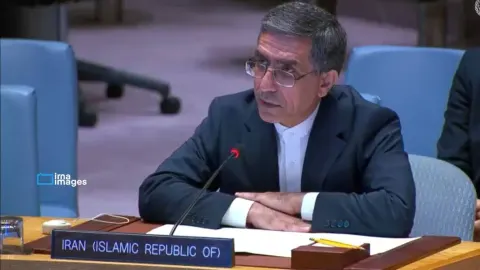
Iranian officials have delivered a strong message to adversaries, warning of a significantly more severe response to any future provocations. Ebrahim Azizi, Chairman of the Iranian Parliament’s National Security and Foreign Policy Commission, stated that any new hostile action would elicit a "more painful response." This rhetoric comes as Iran's Army Chief Commander, Major General Amir Hatami, announced advancements in drone capabilities and readiness for asymmetric warfare, citing lessons from recent conflicts. These statements signal a heightened state of alert and a clear intent to project strength in a volatile regional environment.
The geopolitical posturing has had an immediate and tangible impact on Iran's domestic economy. The Iranian Toman experienced a notable surge against the US dollar, with the USD/IRR exchange rate moving from 267,600 to 272,700, marking a 1.9% increase. This sharp appreciation in the Toman, alongside a similar 1.9% rise in the Emami gold coin, reflects market participants reacting to the elevated geopolitical risk. Investors are likely seeking refuge in traditional safe-haven assets and the national currency amidst fears of escalating regional tensions and potential further disruptions.
---
Geopolitical Chess: Putin's Strategic Maneuvers and Western Divisions
Russian President Vladimir Putin appears to be making strategic gains by leveraging international divisions, even as the conflict in Ukraine continues. Reports suggest Russia is actively working to decouple the war in Ukraine from potential business dealings and diplomatic engagement with the United States. This strategy seems to be yielding results, with indications that Russia is nearing a point where it can restore ties with the U.S. without making significant concessions on its objectives in Ukraine or elsewhere.
Meanwhile, Ukrainian President Volodymyr Zelenskyy continues to highlight Russian aggression, recently appearing to mock comments that praised Putin's "humanitarian" approach following missile attacks on Kyiv. This sharp contrast underscores the ongoing diplomatic and informational battles surrounding the conflict. In Europe, France is preparing for heightened security measures during anticipated protests, with the interior minister announcing a significant increase in police presence, indicating the volatile social climate within the continent. These developments collectively paint a picture of a complex geopolitical landscape where conflicts, diplomatic maneuvering, and domestic stability are intrinsically linked.
---
Market Volatility Driven by Geopolitics and Tech Sector Weakness
Global markets are experiencing turbulence, with Bitcoin seeing a significant pullback from its recent highs. The cryptocurrency fell below $82,000 after briefly touching $85,000, a move attributed to a broader sell-off in risk assets, partly triggered by disappointing tech earnings reports and rising oil prices. The volatility in Bitcoin and other cryptocurrencies highlights their sensitivity to macroeconomic factors and geopolitical uncertainty.
In the corporate world, Meta Platforms reported a 26% rise in quarterly revenue, driven in part by its AI initiatives, but its stock experienced a decline amid a general sector downturn. The company is also navigating regulatory scrutiny, including accusations of political interference in Brazil and striking a deal to shield CEO Mark Zuckerberg from potential wealth taxes in California. Concurrently, Barclays announced significant job cuts, planning to eliminate 5,000 positions as it integrates artificial intelligence into its back-office operations, signaling a trend of AI-driven efficiency gains impacting the financial sector workforce. These events collectively contribute to a cautious market sentiment, with investors weighing corporate performance against broader economic and geopolitical risks.
Frequently Asked Questions
How are global conflicts directly impacting Alaska's cost of living?
What was Iran's specific warning to its adversaries?
What caused the recent surge in the Iranian Toman?
Why did Bitcoin experience a significant price drop?
How is AI impacting job roles in the financial sector?
Understanding the Geopolitical Risk Premium
The geopolitical risk premium is the extra return that investors demand for holding assets exposed to political instability, wars, or diplomatic tensions. When a country faces conflict—such as the heightened tensions surrounding Iran—markets anticipate potential disruptions to trade, energy supplies, and financial flows. Those uncertainties are baked into asset prices, pushing the cost of capital higher for firms operating in or trading with the affected region.
In practice, the premium shows up most clearly in commodity markets, especially oil and gas. A war in the Middle East can threaten key pipelines and shipping routes, causing oil prices to spike. Higher energy costs then ripple through the global economy, raising living expenses in remote places like Alaska, where heating and transportation already consume a large share of household budgets. Simultaneously, currencies tied to the conflict zone—like Iran’s toman—may surge or tumble sharply as investors scramble for safe‑haven assets or speculate on future sanctions.
Financial markets also react by shifting capital toward perceived safe havens such as the U.S. dollar, gold, or even Bitcoin, though the latter can be volatile and often falls when risk‑off sentiment dominates. The interplay of these flows creates a feedback loop: rising energy prices boost inflation expectations, prompting central banks to tighten policy, which in turn can depress risk‑ier assets like equities and cryptocurrencies.
Modern finance increasingly relies on artificial intelligence to quantify geopolitical risk. Machine‑learning models ingest news feeds, satellite imagery, and social‑media sentiment to produce real‑time risk scores. These scores help traders price the risk premium more accurately, adjust portfolio allocations, and hedge exposure with derivatives. As AI tools improve, the gap between raw geopolitical events and market pricing narrows, but the underlying premium—compensation for uncertainty—remains a core driver of global asset pricing.
Understanding the geopolitical risk premium equips investors, policymakers, and everyday consumers with a lens to interpret why a war halfway around the world can make a cup of coffee more expensive in Anchorage or cause a sudden surge in the toman’s value. It underscores the interconnectedness of politics, energy, and finance in today’s globalized economy.
Topics
Related Articles