Tirana in Turmoil: Albania Protests Erupt as Syria Eyes Energy Revival and Tehran Markets Cool
آشوب در تیرانا: تظاهرات گسترده در آلبانی همزمان با تلاش سوریه برای بازگشت به بازار انرژی
Thousands have clashed with police in Albania's capital during fierce anti-government rallies, while Syria begins a strategic energy sector reconstruction that could reshape Middle Eastern gas flows. Meanwhile, Tehran's markets see a slight retreat as gold and USD prices cool from recent highs.
At time of publishing
USD
267,800
Toman
Gold 18K
25.86M
Toman / gram
Bitcoin
$80,446
US Dollar
Tether
267,846
Toman
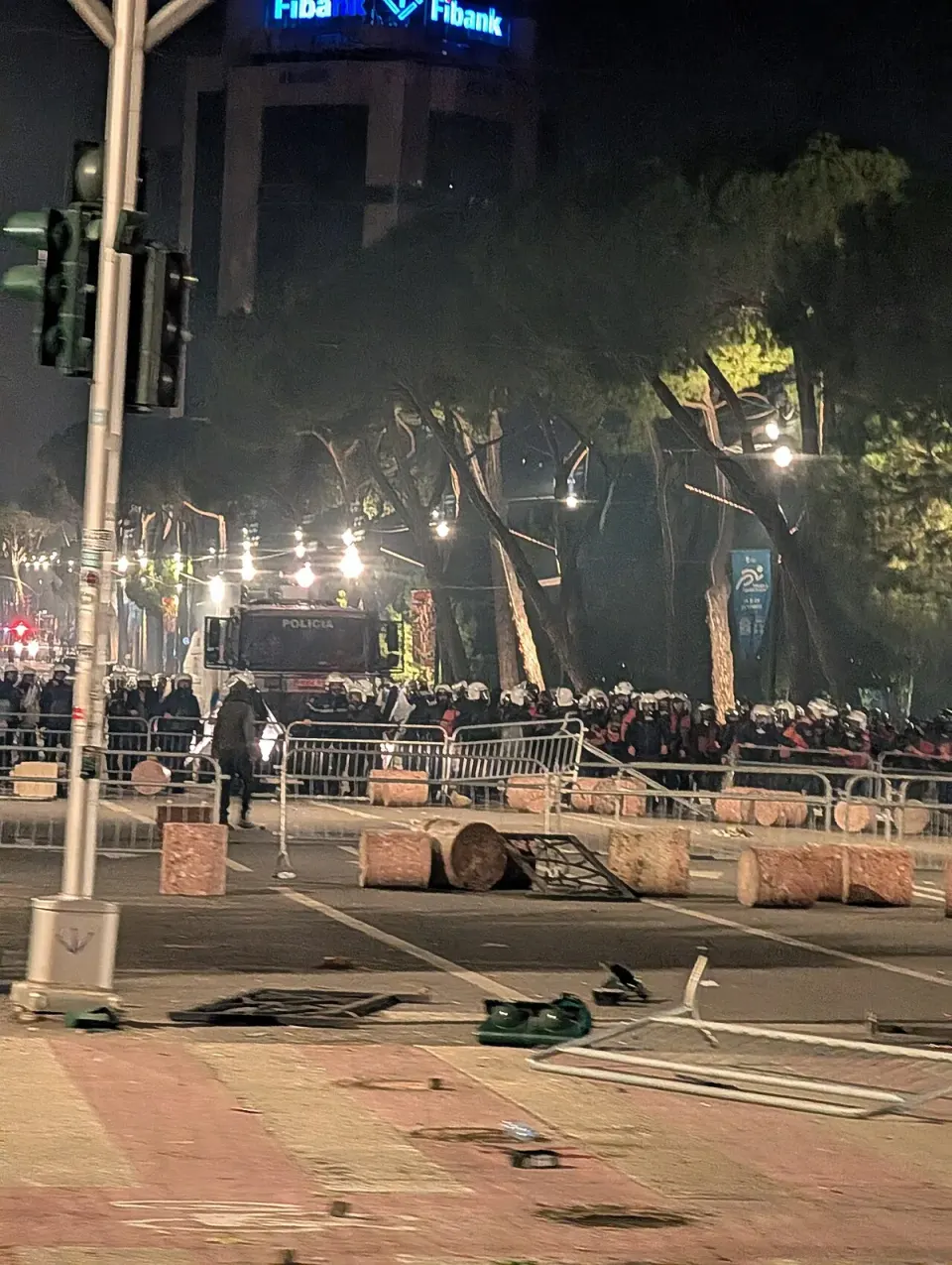
Balkan Instability: Thousands Clash in Tirana
The Albanian capital of Tirana has been rocked by the fiercest anti-government protests in years, with more than 300 people, including both protesters and police officers, reported injured. The unrest stems from deep-seated frustrations over alleged government corruption and the rising cost of living, leading to chaotic scenes in the city's central squares. Protesters have utilized Molotov cocktails and stones, while security forces responded with tear gas and water cannons to disperse the crowds. This volatility in the Balkans is being closely watched by international observers, as Albania is a NATO member and a key strategic partner in European security architecture.
For Iranian readers, stability in Albania often carries a secondary layer of interest due to the country's hosting of the Mojahedin-e Khalq (MEK) group. Any significant internal instability or change in the Albanian political landscape can lead to shifts in how the host government manages foreign political entities on its soil. As the clashes intensify, the potential for a prolonged political crisis in Tirana could distract the administration from regional security commitments, creating a vacuum that various external actors might seek to exploit. The scale of the injuries suggests that the current movement has moved beyond mere symbolic protest into a genuine challenge to the state's authority.
Syria’s Energy Comeback: A New Regional Hub?
Syria is signaling a major economic pivot as it enters a phase of countrywide reconstruction after more than a decade of devastating conflict. Under the leadership of President Ahmed al-Sharaa and a transitional government, Damascus is prioritizing the redevelopment of its oil and gas infrastructure. The goal is not just domestic self-sufficiency but the eventual establishment of Syria as a regional energy hub. Given its favorable geographic position connecting the Mediterranean to the heart of the Middle East, a stabilized Syrian energy sector could reshape the logistics of gas pipelines and oil transit across the Levant.
This shift is of critical importance to the regional balance of power. For years, Syria’s energy needs were a point of leverage for its allies, including Iran and Russia. However, a self-reliant and modernized Syrian energy grid would alter these dependency dynamics. If Syria successfully attracts the necessary investment for its "Energy Comeback," it could provide a cheaper, more direct route for regional energy exports, potentially competing with existing transit corridors. The move toward economic diversification is seen as the cornerstone of the transitional government's plan to support long-term recovery and bring millions of displaced citizens back into the workforce.
The AI Graveyard: Silicon Valley’s Reality Check
The tech industry is currently grappling with what analysts are calling the "AI Graveyard," a growing list of high-profile projects and startups that have failed to live up to the immense hype of the past two years. Recent reports highlight significant setbacks for industry giants; Apple has faced repeated delays in its Siri AI integration, while OpenAI’s attempt at a "super app" has met with internal friction and technical hurdles. This trend suggests that the initial era of "AI at any cost" is ending, replaced by a more skeptical market that demands tangible utility and sustainable business models over flashy demos.
This cooling of the AI sector has direct implications for global venture capital and tech sentiment. As investors realize that large language models are expensive to maintain and difficult to monetize at scale, the flow of "easy money" into AI startups is tightening. For the broader market, this means a potential shift in dominance back toward companies with established hardware or diverse revenue streams, rather than pure-play AI firms. The graveyard serves as a reminder that even the most advanced technology must eventually face the reality of the balance sheet, a lesson that is currently being learned the hard way across Silicon Valley.
Tehran Market Update: A Brief Respite
Tehran’s financial markets have experienced a slight cooling period over the last 24 hours, providing a brief respite for consumers after weeks of upward pressure. The USD sell rate in the open market moved from 269,700 Toman down to 267,800 Toman, representing a 0.7% decrease. This minor correction is mirrored in the gold market, where 18k gold fell from 26,420,887 Toman per gram to 25,855,302 Toman, a more significant drop of 2.1%. The Emami coin also saw a notable decline, falling 2.6% to settle at 267,000,000 Toman.
Despite these local price drops, the global context remains tense. Gold on the international market is hovering just below the psychological milestone of $4,000, currently trading at $3,996.90 per ounce. Bitcoin remains strong, holding steady at $80,446, suggesting that while the Iranian Rial is seeing a temporary moment of stabilization, the global appetite for hedge assets remains high. The local market’s retreat is likely a combination of profit-taking by traders and a temporary lull in regional escalations, though most analysts remain cautious about the long-term trend given the ongoing geopolitical uncertainties in the neighborhood.
Frequently Asked Questions
چرا اعتراضات آلبانی برای ایران اهمیت دارد؟
آیا کاهش قیمت طلا در تهران با انس جهانی هماهنگ است؟
طرح جدید انرژی سوریه چیست؟
Understanding Currency Devaluation and Exchange Rate Regimes
Currency devaluation is the deliberate downward adjustment of a nation's official exchange rate relative to other currencies. When a government or central bank reduces the value of its currency, imports become more expensive while exports become cheaper for foreign buyers. This tool is often used to address large trade deficits, stimulate domestic production, or raise fiscal revenue, but it can also trigger inflation and erode public confidence if not managed carefully.
Iran’s rial provides a vivid contemporary case. Decades of U.S. and EU sanctions, coupled with fiscal deficits and a heavy reliance on oil exports, have forced Tehran to let the rial float unofficially on the black market. The official USD‑IRR rate may sit at a few hundred thousand rials per dollar, while the market rate can exceed a million, reflecting a massive devaluation. Such a split creates distortions: imported goods and essential medicines become unaffordable for many Iranians, while the government struggles to collect taxes in a rapidly weakening currency.
Devaluation also reshapes investor behavior. As the rial falls, Iranians often turn to hard assets like gold, which recently breached the $4,000 per ounce mark, or to foreign‑denominated cryptocurrencies and even niche tokens such as the Emami coin. These assets act as stores of value when the local currency loses purchasing power, but they also expose savers to volatility and regulatory risk.
The mechanics of exchange‑rate regimes—fixed, pegged, managed float, or free float—determine how much policy leeway a country has. A fixed peg can provide stability but requires large foreign‑exchange reserves to defend; a managed float allows occasional interventions to smooth volatility; a free float lets market forces set the rate, often leading to rapid swings in crisis periods. Understanding which regime a country employs helps explain why some economies, like Albania during its 2026 protests, can experience sudden currency pressures when political unrest disrupts fiscal confidence.
For policymakers, the challenge is balancing short‑term relief from devaluation with long‑term stability. Strategies may include diversifying exports, building reserve buffers, and gradually liberalizing the exchange market to restore credibility. For ordinary citizens, awareness of how exchange‑rate policies affect everyday prices—whether for groceries, gasoline, or gold—empowers better financial decisions in turbulent times.