Obama Slams Trump’s Iran Policy as Midterm Heat Drives Toman to 268,600; Europe Shaken by Massive Protests
بازگشت اوباما به صحنه با انتقاد از سیاست ترامپ علیه ایران؛ دلار به ۲۶۸ هزار تومان رسید
Barack Obama has re-entered the political fray in Ohio, warning that the upcoming midterms will decide the fate of US-Iran relations. Meanwhile, a wave of cost-of-living protests has swept through Europe, and Bitcoin remains resilient above the $80,000 threshold.
At time of publishing
USD
268,600
Toman
Gold 18K
25.94M
Toman / gram
Bitcoin
$80,498
US Dollar
Tether
268,447.153
Toman
Obama’s Ohio Return and the Shadow of War
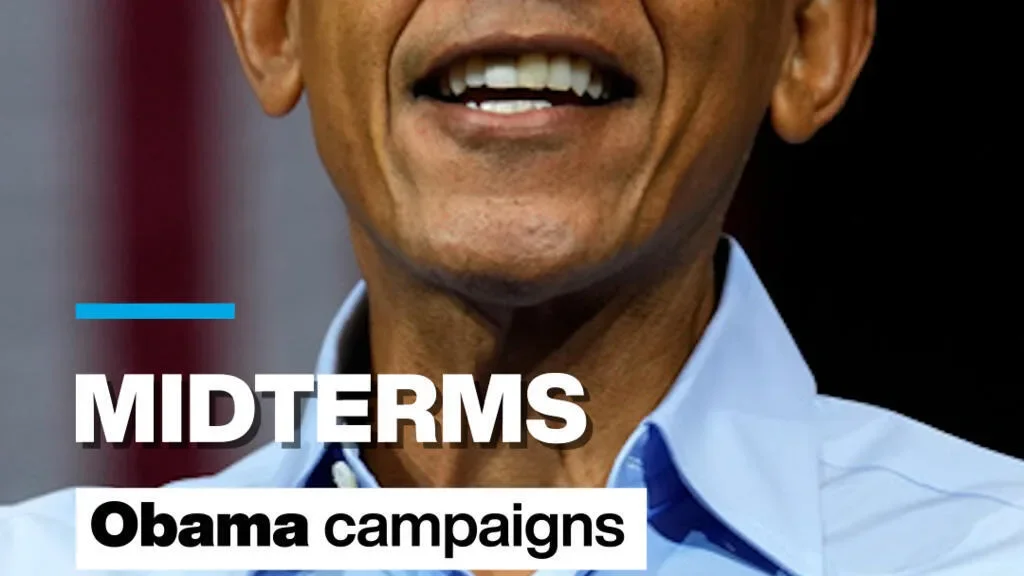
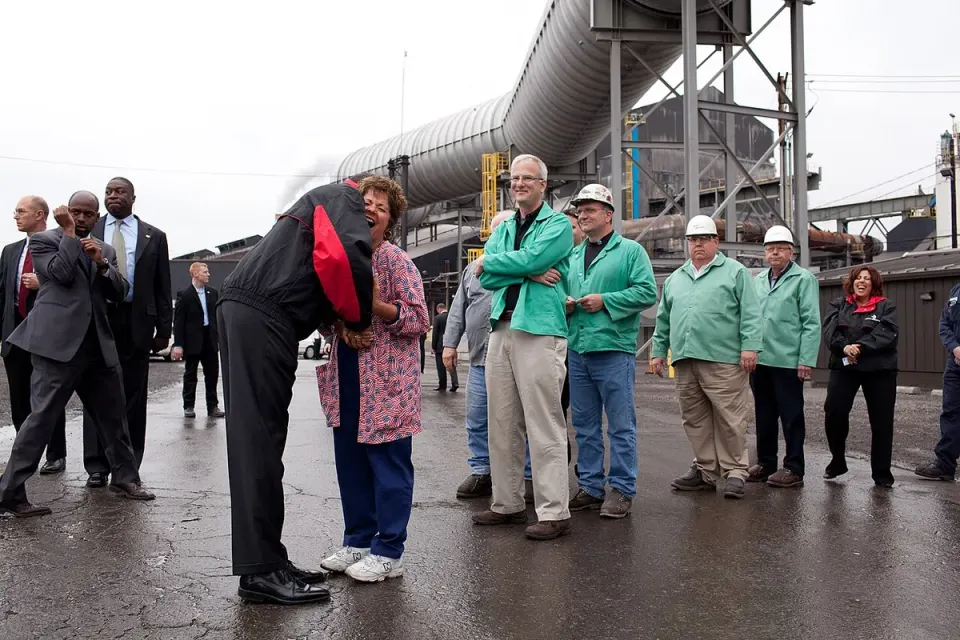
Former President Barack Obama has stepped back onto the campaign trail in Ohio, delivering a blistering critique of Donald Trump’s current trajectory regarding Iran. Obama framed the upcoming midterm elections not just as a domestic policy choice, but as a critical juncture for global security. He argued that the current administration's rhetoric is unnecessarily pushing the United States toward a direct conflict, a sentiment that has resonated deeply within the Democratic base. This political maneuvering comes as reports surface that CENTCOM has already finalized strike plans for Iran, though analysts remain skeptical about whether Trump would authorize such a move before the votes are tallied.
For the Iranian market, these political shifts are never just background noise. The Toman reacted with its characteristic sensitivity to American electoral volatility; the USD sell rate moved from 267,800 to 268,600 (+0.3%) over the last 24 hours. Traders in Tehran are increasingly pricing in the risk of a 'red wave' that could see a return to the 'maximum pressure' era, while others hold out hope that Democratic gains might force a diplomatic pivot. The uncertainty is palpable, with the 18k gold gram also tracking upward to 25,943,025 Toman (+0.3%), reflecting a broader flight to safety among local investors who fear a post-election escalation.
Europe’s Autumn of Discontent: From Paris to Lisbon
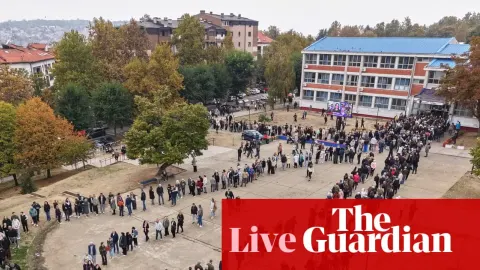
Across the Atlantic, the economic toll of regional instability is manifesting in massive street demonstrations. In Paris, an estimated 110,000 protesters took to the streets to denounce the soaring cost of living and rising energy prices, which many attribute to the ongoing geopolitical friction in the Middle East. While the majority of the marches were peaceful, security forces were deployed in massive numbers, and clashes erupted when fringe groups targeted police with fireworks. The French government is struggling to balance its international commitments with a domestic population that is increasingly fed up with the inflationary consequences of foreign policy decisions.
This unrest is not isolated to France. In Lisbon and Porto, Portuguese police used dogs and batons to dismantle housing protest camps where citizens were living in tents to highlight the country's deepening real estate crisis. Similarly, in Italy, young protesters have returned to the streets, fed up with a political establishment they feel has abandoned them to record-high rents and stagnant wages. This collective European frustration suggests a growing rift between the continent's leadership and its citizens, particularly as energy costs continue to sharpen opposition to any further military involvement or sanctions regimes that might disrupt global supply chains.

---
Crypto Sovereignty and the $80,000 Floor
In the digital asset space, Bitcoin has shown remarkable resilience, holding steady at 80,498 USD despite a volatile weekend and the looming shadow of the Federal Reserve's next interest rate decision. The market seems to have found a temporary equilibrium, with investors weighing the risks of geopolitical tension against the long-term adoption curve of decentralized finance. Interestingly, Israeli Prime Minister Benjamin Netanyahu is reportedly exploring the use of cryptocurrency as a means to bypass potential economic sanctions, though early reports suggest that liquidity remains a significant hurdle for state-level evasion tactics.
Meanwhile, the European Central Bank (ECB) is doubling down on the concept of 'digital sovereignty.' ECB official Piero Cipollone recently stated that the bloc is on track to begin testing real transactions for a digital euro by 2027, with a full rollout potentially occurring by 2029. This move is seen as a strategic hedge against the dominance of American and Chinese payment systems. For Iranian users, who have long relied on stablecoins like USDT (currently trading at 268,447 Toman) to navigate their own sanctioned economy, the evolution of state-backed digital currencies represents a new frontier that could either offer new loopholes or create even tighter regulatory nets.
Frequently Asked Questions
چرا سخنان اوباما بر قیمت دلار در تهران تاثیر گذاشته است؟
علت اصلی اعتراضات گسترده در فرانسه و اروپا چیست؟
آیا یورو دیجیتال جایگزین ارزهای دیجیتال معمولی خواهد شد؟
Understanding Economic Sanctions and Their Ripple Effects on Currency, Gold, and Crypto
Economic sanctions are coercive measures imposed by one country—or a group of countries—to compel a change in policy, behavior, or governance of another nation. They can take many forms, ranging from trade embargoes and asset freezes to restrictions on financial transactions and technology transfers. While the primary goal is political, the secondary consequences reverberate throughout the targeted economy, reshaping everything from exchange rates to the price of commodities.
One of the most immediate impacts of sanctions is on a country’s currency. When access to foreign exchange is limited, demand for hard currencies such as the US dollar spikes, driving up the official USD/IRR (Iranian rial) price. In Iran, decades of U.S. and EU sanctions have repeatedly forced the rial to lose value, prompting a parallel market where the Toman—often quoted at 10 rials—trades at dramatically different rates. This devaluation erodes purchasing power, fuels inflation, and can trigger capital flight as citizens seek safer stores of value abroad.
Sanctions also affect commodity markets, especially gold, which is traditionally viewed as a hedge against currency weakness. In sanctioned economies, gold prices often rise in local terms because investors convert depreciating cash into the precious metal. Iran’s gold market, for instance, has seen sharp price spikes whenever the rial slides, reflecting both speculative demand and the need for a universally accepted asset that can bypass banking restrictions.
A less obvious but increasingly important side‑effect is the acceleration of cryptocurrency adoption. When traditional banking channels are blocked, individuals and businesses turn to decentralized assets like Bitcoin to move value across borders. The recent rally of Bitcoin toward the $80,000 mark was partially fueled by investors in sanction‑hit regions seeking a “digital safe haven.” At the same time, governments such as the European Central Bank are preparing a Digital Euro for 2027, aiming to provide a state‑backed alternative that could coexist with—or compete against—private crypto networks, especially in contexts where sanctions limit access to conventional finance.
Finally, the political context—whether a U.S. presidential speech, a midterm election, or a European protest movement—can shift the intensity or scope of sanctions. Obama’s 2016 speech on Iran’s nuclear program, for example, signaled a willingness to re‑engage diplomatically, which temporarily eased some financial pressures. Conversely, heightened geopolitical tension can tighten sanctions, amplifying all the economic ripples described above. Understanding these dynamics helps investors, policymakers, and ordinary citizens anticipate how geopolitical decisions translate into everyday financial realities.
Topics
Related Articles