War Echoes and Oil Shields: Iran’s Cultural Legacy Meets the $100 Energy Reality
بازتاب جنگ و سپر نفتی: میراث فرهنگی ایران در برابر واقعیت ۱۰۰ دلاری انرژی
As the world reflects on the human cost of conflict through the lens of late photographer Mohsen Rastani, the modern energy market remains on a knife-edge with oil prices holding above $100. Meanwhile, US Central Command highlights its role in protecting 1.5 billion barrels of Gulf oil, underscoring the persistent tension in the Strait of Hormuz.
At time of publishing
USD
269,000
Toman
Gold 18K
26.36M
Toman / gram
Bitcoin
$79,992
US Dollar
Tether
268,821.115
Toman
The Social Lens of Conflict: Mohsen Rastani’s Legacy
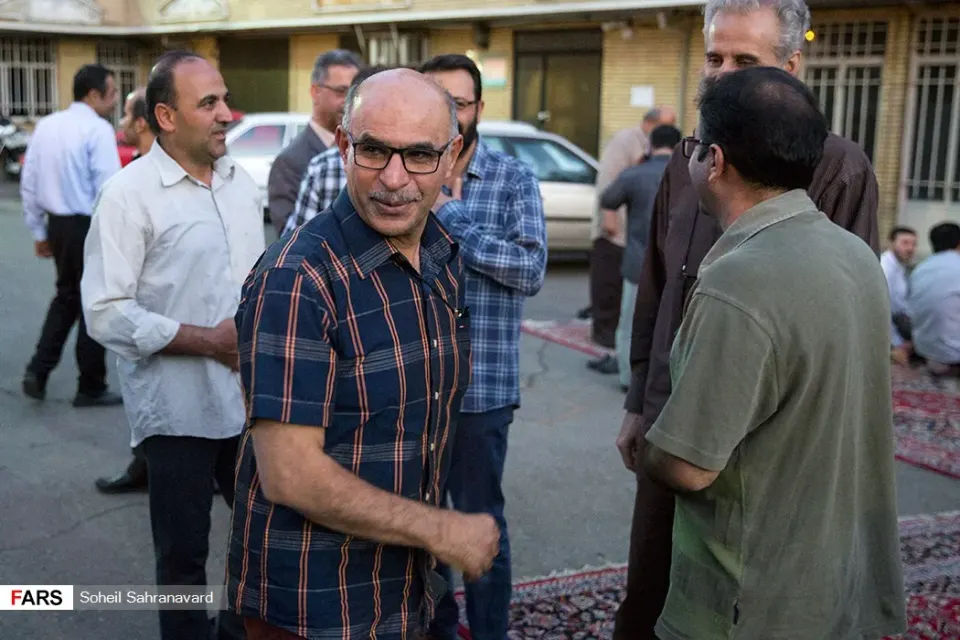
At 10:00 Tehran time, the cultural and historical weight of the Iran-Iraq war returns to the spotlight through the documentation of the late Mohsen Rastani. Born in the front-line city of Khorramshahr, Rastani’s work transcended the mere recording of military movements, focusing instead on the social fabric of people living through the devastation of war. His lens captured not only the Iranian experience but extended to the tragedies in Bosnia and Herzegovina and Armenia, creating a photographic bridge between disparate conflicts that share a common human suffering.
This retrospective matters today because it provides a stark counter-narrative to the sanitized, state-sponsored rhetoric often found in official commemorations. By highlighting the lives of ordinary citizens in Khorramshahr and beyond, Rastani’s work forces a confrontation with the long-term trauma of regional instability. For the Iranian public, these images are a reminder of the fragility of peace at a time when regional tensions are once again reaching a boiling point. The focus on "social photography" rather than tactical victory serves as a poignant critique of the cycles of violence that have defined West Asia for decades.
Energy Security and the Billion-Barrel Shield
While cultural history looks backward, the current geopolitical reality is focused on the immediate flow of energy. US Central Command (CENTCOM) recently announced that it has facilitated the transit of over 3,000 commercial vessels through the Strait of Hormuz, effectively guarding the export of 1.5 billion barrels of oil for Gulf nations. This claim arrives as Ali Bagheri, an Iranian security official, promotes the idea of "endogenous security"—a regional framework that would exclude Western military presence. The tension between these two visions of security is the primary driver of volatility in the Persian Gulf, where tanker seizures and drone threats have become the new normal.
What this means for the global economy is a persistent "risk premium" on every barrel of oil. Even though Brent crude saw a slight dip to $114.42 per barrel this morning, it remains significantly higher than the $60 levels seen just a year ago. The market is pricing in the possibility of a major supply disruption, as Houthi attacks and Iranian naval maneuvers keep traders on high alert. For the average Iranian, this high oil price is a double-edged sword: while it theoretically increases potential state revenue, the reality of sanctions and the cost of maintaining regional proxies often means that this wealth does not translate into domestic price stability or a stronger Toman.

Market Volatility: Gold Rallies as Toman Stabilizes
In the local markets this Monday, October 26, 2026, we are witnessing a divergence between the currency and bullion sectors. The US Dollar (USD) sell rate moved slightly from 269,500 to 269,000 Toman, a minor -0.2% decrease that suggests a temporary plateau in demand. However, the gold market tells a different story. Gold 18k per gram rose from 26,063,068 to 26,363,174 Toman, marking a 1.2% increase in just 24 hours. This flight to gold, even as the dollar remains relatively stable, indicates that local investors are hedging against long-term inflation and geopolitical shocks rather than immediate currency fluctuations.
The rise in Emami coins to 269,000,000 Toman (+0.7%) further underscores this sentiment. When gold outpaces the dollar in local growth, it usually reflects a lack of confidence in the broader economic trajectory. Investors are looking past the daily exchange rate and focusing on the global price of gold, which has surged to over $4,005 per ounce. For the Iranian household, this means the cost of preserving wealth is becoming increasingly expensive, as the "safe haven" of gold moves further out of reach for the middle class, leaving them more exposed to the Toman's underlying weakness.

China’s Internal Purge and Global Reliability
Beyond the immediate region, the internal politics of China are casting a long shadow over its economic partners. President Xi Jinping’s decade-long corruption crackdown shows no signs of slowing, with over one million investigations opened in the last year alone. As Chinese leaders prepare for the fifth plenum, the focus has shifted from economic expansion to absolute party loyalty. For a country like Iran, which relies heavily on China as its primary oil customer and a key diplomatic ally, this internal focus creates a layer of unpredictability.
If the Chinese Communist Party (CCP) prioritizes internal discipline over international trade stability, the flow of "gray market" oil and infrastructure investment could face new bureaucratic hurdles. Analysts are increasingly worried that the purge of high-ranking officials is less about corruption and more about consolidating power in the face of a slowing domestic economy. For the Iranian leadership, a China that is inward-looking or politically unstable is a major strategic risk. Without a reliable and focused Beijing, Tehran’s "Look to the East" policy loses its most critical pillar, potentially forcing the government into more desperate economic measures at home.
Frequently Asked Questions
Why is gold rising while the dollar is slightly down in Tehran?
What is the significance of the 1.5 billion barrels mentioned by CENTCOM?
How does China's internal corruption crackdown affect Iran?
The Strategic Chokepoint: Why the Strait of Hormuz Matters for Global Oil
The Strait of Hormuz is a narrow waterway—about 21 nautical miles wide at its narrowest point—situated between the Persian Gulf coast of Iran and the Arabian Peninsula. Despite its modest dimensions, it serves as the world’s most critical oil transit corridor, funneling roughly a fifth of daily global oil consumption. Nations such as Saudi Arabia, Iraq, the United Arab Emirates, and Kuwait ship their crude through this passage, and any disruption can instantly ripple through international energy markets, pushing benchmarks like Brent crude and even gold prices higher.
Because the United States Central Command (CENTCOM) oversees naval operations in the region, the security of the strait is tightly linked to American military strategy. CENTCOM’s presence aims to deter threats—whether from state actors, piracy, or asymmetric groups—that could block or threaten tankers. Historical incidents, such as the 2019 attacks on oil tankers near the strait, illustrate how quickly shipping interruptions can trigger price spikes in Brent crude, influencing not only oil‑producing economies like Iran but also the broader global economy and exchange rates, including the USD/IRR pair.
The economic concept at play is “supply shock”: a sudden reduction in oil supply, even if temporary, forces markets to adjust. Oil‑dependent countries experience currency pressure, while oil‑importing nations may see their trade balances deteriorate. In Iran’s case, a constrained oil flow can exacerbate the already volatile Iranian rial, prompting the government to adjust the official USD‑IRR exchange rate. Simultaneously, investors often turn to safe‑haven assets such as gold, which explains the observed correlation between heightened tension in the Hormuz corridor and rising gold prices in Tehran.
Understanding the strategic importance of the Strait of Hormuz helps explain why geopolitical events—like a crackdown on corruption in China that affects global demand, or a high‑profile photography exhibition by Mohsen Rastani highlighting war’s human cost—can indirectly influence oil markets. All these factors converge on a single point: control over the strait translates into leverage over the world’s energy supply chain, making it a perpetual focal point for policymakers, traders, and scholars alike.
For those interested in deeper analysis, the International Energy Agency regularly publishes reports on the impact of chokepoints on oil security, while the IMF provides data on how oil price volatility feeds into exchange‑rate dynamics in emerging markets. Keeping an eye on developments in the Hormuz corridor is essential for anyone tracking the future trajectory of Brent crude prices toward 2026 and beyond.