Global Trust Under Fire: Australia’s Institutional Scandals, Lula’s Return, and the $15T Energy Shift
لرزه بر پیکر اعتماد جهانی؛ از دادگاههای جنجالی استرالیا تا بازگشت لولا و نقشه ۱۵ تریلیون دلاری آسیا
As institutional trust wavers from Australian courtrooms to the Brazilian presidency, gold prices surge in Tehran. We break down the overnight double-murder trial revelations, Lula's historic win, and the shifting energy tides in Asia.
At time of publishing
USD
269,000
Toman
Gold 18K
26.36M
Toman / gram
Bitcoin
$80,121
US Dollar
Tether
268,809.01
Toman
Market Open — Monday, October 26, 2026
The Tehran market opened this morning with a subtle but notable divergence between hard assets and the national currency. The US Dollar (USD) saw a slight easing, with the sell rate settling at 269,000 Toman, marking a modest 0.2% decrease from yesterday's 269,500. This minor cooling of the greenback comes as a relief to some, yet it hasn't stopped the aggressive climb of gold. Gold 18k per gram has surged to 26,363,174 Toman, a significant 1.2% jump in just 24 hours, while the Emami coin followed suit, rising 0.7% to reach 269,000,000 Toman.
In the digital frontier, Bitcoin is holding its ground firmly above the psychological barrier, trading at $80,121. The appetite for gold and crypto suggests that while the Rial's immediate volatility is dampened, Iranian investors are still seeking refuge in assets that hedge against global uncertainty. This 'risk-off' sentiment is mirrored globally as geopolitical tensions and institutional scandals dominate the headlines, driving capital toward safe havens like gold, which is now flirting with the $4,000 mark on the international stage.
The Trial of Authority: Australia’s Double Murder and Pilot Scandals
Overnight, the global news cycle was gripped by harrowing details emerging from Australian courtrooms, highlighting a disturbing trend of institutional betrayal. In Sydney, a covert recording was played in the trial of Beau Lamarre-Condon, a former police officer accused of the double murder of Jesse Baird and Luke Davies. The recording, captured in prison, shows Lamarre-Condon acknowledging his accountability to a friend, a moment that has sent shockwaves through the Australian public. The case is particularly stinging because the accused used his police-issued weapon to commit the alleged crimes, raising fundamental questions about the vetting processes within law enforcement.
Simultaneously, another trial in Toowoomba has captured international attention. Robert John Crawford, a former Royal Australian Air Force (RAAF) pilot, stands accused of murdering his wife and staging it as a lawnmower accident. Prosecutors described Crawford as a "love rat" and a "master manipulator," terms that resonate with a broader global anxiety about the integrity of those in high-stakes, trusted professions.

These stories matter because they contribute to a mounting global "crisis of trust." When pilots and police officers—the very symbols of safety and order—are implicated in such calculated violence, the psychological impact on the public is profound. For the Iranian reader, this serves as a reminder that institutional fragility is a global phenomenon. In financial terms, this erosion of trust often manifests as a flight from centralized systems toward decentralized assets like Bitcoin and physical gold, explaining part of the upward pressure we are seeing on those prices this morning.
Brazil’s Pivot: Lula Secures a Fourth Term Amidst Polarization
In a historic and tightly contested runoff, Luiz Inácio Lula da Silva has secured a fourth, non-consecutive term as Brazil’s president, defeating Senator Flávio Bolsonaro. This victory marks a remarkable political comeback for the leftist leader, but he returns to a country deeply divided. The electoral authority confirmed the win, which was met with immediate celebration from supporters but also serves as a signal of potential friction ahead with a hostile Congress.

For Iran, Lula’s victory is strategically significant. As a founding member of BRICS, Brazil under Lula is expected to continue advocating for a multipolar world order and the use of local currencies in international trade—a policy that aligns with Tehran’s current economic survival strategy. However, the narrow margin of victory suggests that Brazil’s internal stability remains fragile. Any domestic turmoil in the world's largest agricultural exporter could impact global commodity prices, which eventually trickles down to the costs of basic goods in the Iranian market.
The New Piracy Rhetoric and Asia’s $15T Energy Future
Geopolitical rhetoric between Tehran and Washington reached a new boil overnight. Foreign Ministry spokesperson Esmaeil Baqaei responded sharply to US Secretary of State Marco Rubio, who had accused Iran of "piracy" in the Caribbean. Baqaei pointedly recalled former President Donald Trump’s own admissions regarding US actions, effectively turning the piracy label back on Washington. This verbal sparring occurs against a backdrop of recovering oil flows in the Persian Gulf, where exports have actually risen despite recent regional strikes.
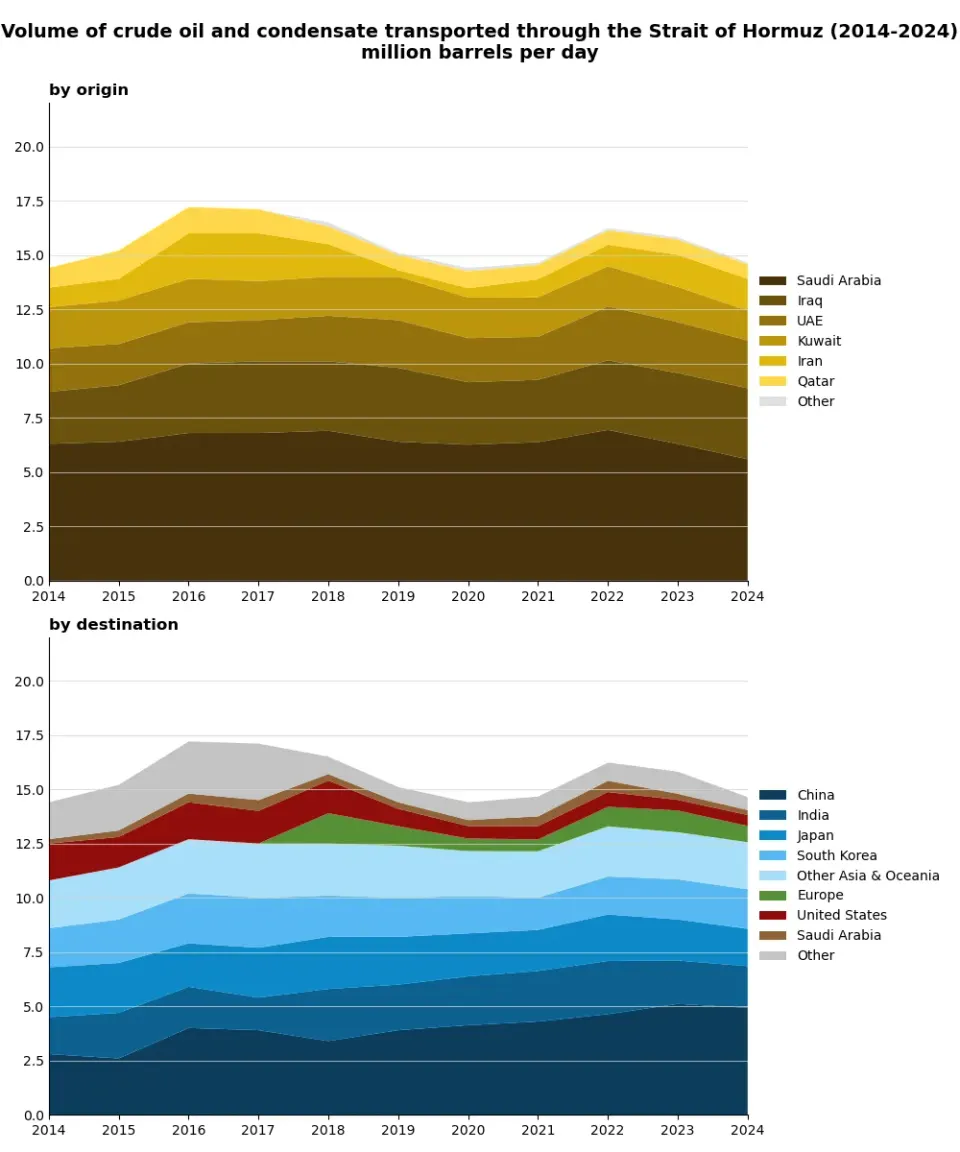
While the politicians argue, the real shift is happening in the energy markets. Asia is currently building what is projected to be a $15 trillion energy market, driven by a transition that refuses to follow the scripts written in Washington or Brussels. As Asian nations invest $1 trillion annually into energy, the region's influence over the future of fossil fuels and renewables will dictate global prices for the next decade. For Iran, being locked out of this growth due to sanctions remains the primary economic hurdle, even as regional trade figures like the 2-2 draw between Nassaji Mazandaran and Fajr Sepasi in the Pro League remind us that life—and local interests—continue regardless of the global shadow play.
Frequently Asked Questions
چرا قیمت طلا در ایران علیرغم کاهش قیمت دلار افزایش یافته است؟
پیروزی لولا در برزیل چه تاثیری بر اقتصاد ایران دارد؟
منظور از بازار ۱۵ تریلیون دلاری انرژی در آسیا چیست؟
De‑dollarization: Why BRICS Countries Are Shifting to Local Currencies
De‑dollarization refers to the gradual reduction of the U.S. dollar’s dominance in international trade, finance, and reserves. While the dollar has been the world’s primary reserve currency since the Bretton Woods era, recent geopolitical tensions, sanctions, and the desire for greater monetary sovereignty have spurred a coalition of emerging economies—most notably the BRICS (Brazil, Russia, India, China, and South Africa)—to explore alternatives. By settling bilateral trade in their own currencies, these nations aim to lower transaction costs, avoid exposure to U.S. monetary policy swings, and insulate themselves from the threat of secondary sanctions.
The push gained momentum after the 2022‑2023 wave of sanctions on Russia and Iran, which highlighted how quickly access to dollar‑denominated channels can be cut off. Brazil’s newly elected President Luiz Inácio Lula has pledged to deepen South‑South trade ties, and the BRICS summit in 2024 announced a framework for “local‑currency clearing houses” that would allow members to invoice each other in reais, rouble, rupee, yuan, or rand. Such mechanisms rely on swap lines and digital platforms that match exchange rates in real time, reducing the need for an intermediary dollar swap.
Economically, the benefits are mixed. On the one hand, local‑currency trade can boost export competitiveness by eliminating the spread added by converting to dollars and back. On the other, it introduces exchange‑rate risk for firms accustomed to the dollar’s relative stability; volatility in emerging‑market currencies can deter investors unless hedging instruments are developed. Moreover, the global financial system remains heavily dollar‑centric, so a full‑scale shift would require substantial liquidity provision and confidence‑building measures.
If successful, de‑dollarization could reshape global power balances. Reduced dollar demand may weaken the United States’ ability to finance deficits cheaply, while BRICS nations could wield greater influence over international monetary rules. Yet the transition is likely to be gradual, with a hybrid system persisting for years as markets test the resilience of local‑currency networks.