Araghchi Declares 'Red Lines Are a Thing of the Past' Amid Hormuz Tensions; London Property Market Cools
عراقچی: «خطوط قرمز دیگر گذشتهاند» در بحبوحه تنشهای هرمز؛ بازار املاک لوکس لندن افت میکند
Iran's Foreign Minister Araghchi has issued a stark warning to Germany, declaring that 'red lines are a thing of the past' in a statement that signals a more assertive stance on regional conflicts, particularly concerning the Strait of Hormuz. This comes as Iran condemns Canada's support for the UAE's claim over Persian Gulf islands, further escalating diplomatic tensions. Meanwhile, London's high-end property market faces a significant downturn, reflecting broader global economic shifts.
At time of publishing
USD
274,100
Toman
Gold 18K
25.42M
Toman / gram
Bitcoin
$77,203
US Dollar
Tether
273,881.268
Toman
Araghchi Declares 'Red Lines Are a Thing of the Past' Amid Hormuz Tensions
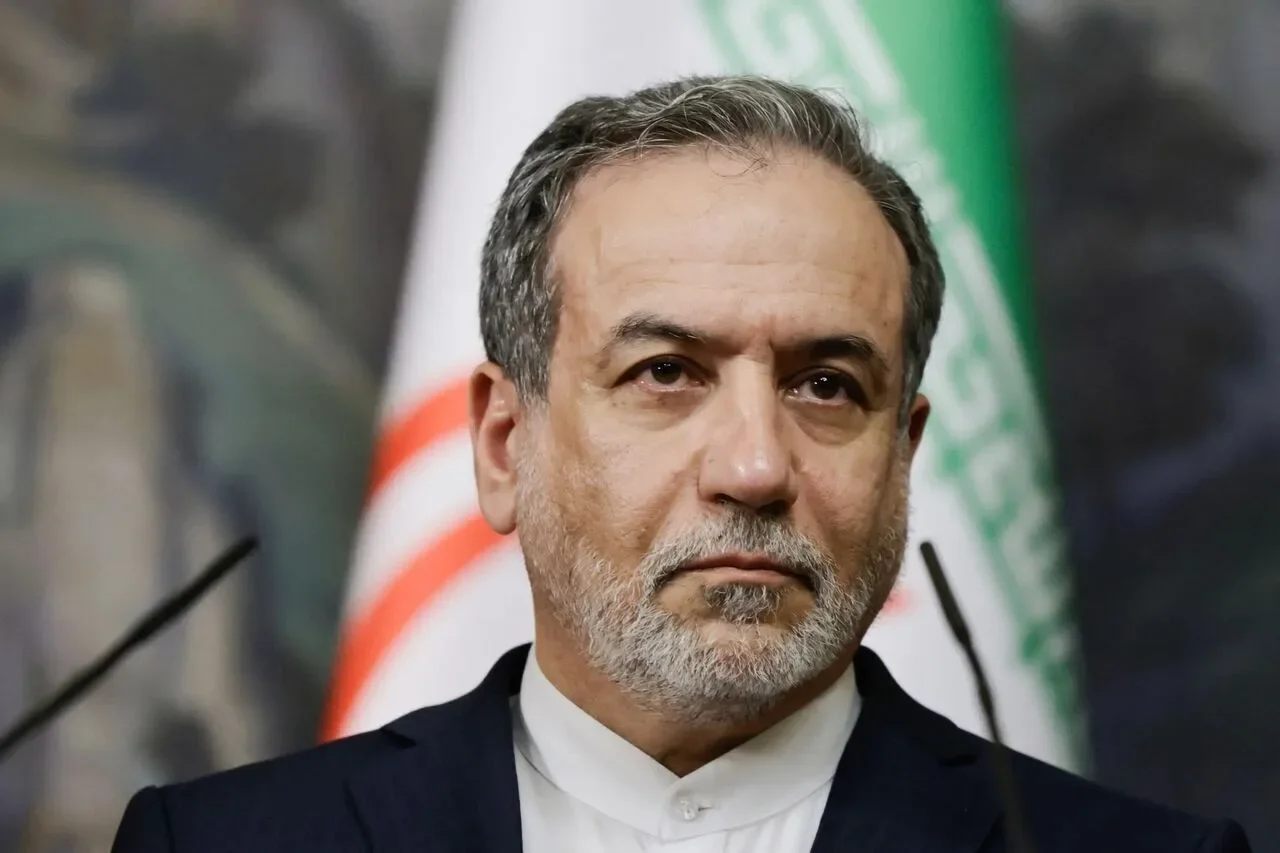
Iranian Foreign Minister Abbas Araghchi has delivered a sharp rebuke to German Chancellor Friedrich Merz, stating that "red lines are a thing of the past." This forceful declaration came in direct response to Merz's earlier call for a swift end to what he termed the "US-Israeli war on Iran," a conflict the German Chancellor linked to escalating energy prices caused by potential disruptions in the Strait of Hormuz. Araghchi's comments signal a significant shift in Tehran's diplomatic posture, suggesting a reduced tolerance for traditional boundaries in its foreign policy, especially concerning strategic waterways and regional conflicts.
This assertive stance from Iran could have far-reaching implications for regional stability and global energy markets. The Strait of Hormuz, a critical chokepoint for a substantial portion of the world's oil supply, remains a focal point of international concern. Any perceived threat to its free passage invariably sends ripples through global markets, affecting energy prices and trade routes. For Iranian citizens, such heightened geopolitical rhetoric often translates into increased economic uncertainty, potentially influencing currency expectations and overall market confidence as external political pressures mount.
Against this backdrop of heightened geopolitical rhetoric, Iranian markets showed mixed reactions. The US Dollar saw a marginal increase against the Iranian Toman, moving from 274,000 to 274,100, representing a negligible 0.0% change over the last 24 hours. However, the precious metals market experienced a dip; 18-karat gold fell from 25,739,877 Toman to 25,416,685 Toman per gram, a decrease of 1.3%, while the Emami coin slightly receded from 266,500,000 Toman to 266,000,000 Toman, a modest 0.2% decline. These movements could reflect a cautious sentiment among investors, potentially reacting to the broader geopolitical uncertainties signaled by Araghchi's comments and their implications for regional stability and trade routes.
Canada's Support for UAE Claim on Iranian Islands Draws Tehran's Condemnation
In another developing diplomatic spat, Iran's Foreign Ministry spokesperson Esmaeil Baqaei has strongly condemned Canadian Prime Minister Mark Carney’s recent support for the United Arab Emirates’ claim over three Iranian islands in the Persian Gulf. Baqaei characterized Canada's stance as a "blatant contradiction and a flagrant violation of the principles enshrined in the United Nations Charter." This reiteration of Iran's sovereignty over Abu Musa, Greater Tunb, and Lesser Tunb highlights persistent territorial disputes in a region already fraught with geopolitical complexities.
This diplomatic confrontation underscores the enduring sensitivity of territorial claims in the Persian Gulf and the involvement of international actors in these long-standing disputes. For Iran, the islands are an integral part of its national territory and a matter of unquestionable sovereignty, making any external challenge to this claim a serious diplomatic incident. Such disputes contribute to a climate of geopolitical uncertainty, which can indirectly affect investor confidence and regional trade flows, potentially influencing the Toman's stability as external political pressures and international scrutiny intensify.
London's Luxury Property Market Experiences Significant Downturn
New research from Coutts, a private banking service for wealthy clients, reveals a significant cooling in London’s exclusive property market. According to their findings, eight out of ten properties in the city’s most prestigious neighborhoods, including Mayfair, Belgravia, and Knightsbridge, are now selling below their original asking price. This downturn signifies that sellers in these traditionally robust markets are facing hundreds of thousands of pounds in potential losses, with property prices in "prime central London" having dropped a notable 5% in the third quarter of 2026.
This trend reflects a broader economic slowdown in the UK, now visibly impacting its wealthiest residents and the luxury real estate sector. The cooling of such a pivotal global financial hub can be attributed to various factors, including higher interest rates, ongoing economic uncertainty, and shifts in global capital flows and wealth migration patterns. The implications extend beyond London, signaling a potentially more challenging global investment climate for high-net-worth individuals.
For Iranian investors with international portfolios or those sensitive to global economic indicators, this downturn in London's luxury market serves as a crucial signal. It suggests a potential reduction in global capital flows and a more cautious risk appetite among the ultra-wealthy, which could prompt a re-evaluation of international investment strategies. The softening of traditionally stable and high-value markets like prime central London indicates that even the most resilient segments of the global economy are not immune to wider economic pressures.
Vietnam's Campaign to Unearth War Dead Raises Questions of Closure
A 500-day campaign in Vietnam dedicated to finding and identifying soldiers who fell during the war has successfully unearthed hundreds of bodies, offering a glimmer of hope for families seeking closure decades after the conflict. However, the emotional and logistical complexities of such an endeavor are immense, and the process of identification and repatriation is often protracted and challenging. While the intent is to heal old wounds, the initiative also raises poignant questions about whether digging up the past truly provides closure or, for some, reopens deeply buried grief and trauma.
This humanitarian effort highlights the enduring legacy of historical conflicts and their profound impact on nations and their populations, even generations later. For regions like the Middle East, which have experienced their own share of protracted conflicts and unresolved losses, Vietnam's experience serves as a powerful reminder of the long-term human cost of war. The painstaking process of accounting for the fallen underscores the deep societal need for reconciliation and peace, while also illustrating the complex and often incomplete nature of healing in the aftermath of widespread devastation.

Kavdeh Wildlife Refuge: A Biodiversity Hotspot in Northern Iran
Amidst the geopolitical discussions, Iran continues its efforts in environmental conservation, highlighted by the Kavdeh Wildlife Refuge. Spanning approximately 74,000 hectares in Firuzkuh County, Tehran Province, this refuge stands as a crucial biodiversity hotspot. It serves as an ecological boundary between the Hyrcanian forests and the Irano-Turanian vegetation zone, fostering a remarkable array of diverse animal and plant species, including various wildlife and birds of prey.
Kavdeh's significance extends beyond its ecological value, representing Iran's ongoing commitment to protecting its natural heritage. The refuge's unique geographical position supports a rich tapestry of ecosystems, underscoring the importance of sustained conservation efforts to safeguard these natural habitats against environmental pressures. Such initiatives, while regional, contribute to global biodiversity and reflect a broader national focus on environmental stewardship.
Frequently Asked Questions
What specifically did Araghchi mean by 'red lines are a thing of the past'?
How does the Strait of Hormuz relate to Germany's Chancellor's remarks?
What are the three Iranian islands mentioned in the dispute with the UAE and Canada?
What impact could a cooling luxury property market in London have on global investors?
Why is identifying Vietnam's war dead still a sensitive issue decades later?
The Strategic Importance of the Strait of Hormuz
The Strait of Hormuz is a narrow waterway that connects the Persian Gulf with the open ocean, measuring roughly 21 nautical miles (39 km) at its narrowest point. Despite its modest width, it serves as the world’s most critical oil chokepoint, carrying about 20% of global petroleum liquids and roughly 30% of the oil traded by sea. Nations that rely on imported energy – from Japan and South Korea to the European Union – watch the strait closely because any disruption can ripple through fuel prices, shipping costs, and even inflation worldwide.
Historically, the strait has been a flashpoint for conflict. During the 1980‑1988 Iran‑Iraq War, both sides launched attacks on commercial vessels, prompting the United Nations to deploy naval forces to protect shipping. More recently, in 2019, a series of missile and drone attacks on tankers near the strait raised fears of a larger confrontation, prompting the United States and its allies to increase naval patrols and conduct freedom‑of‑navigation operations. These episodes illustrate how the strait’s strategic value translates into a “red line” for regional powers, especially Iran, which has repeatedly warned that it could close the waterway in retaliation for sanctions or military pressure.
The economic stakes extend far beyond oil. The strait also handles a substantial share of liquefied natural gas (LNG) and bulk cargoes, making it a vital artery for global trade. When tensions rise, insurance premiums for vessels transiting the region spike, and shipping companies may reroute around the Cape of Good Hope – a detour that adds up to 10,000 nautical miles and weeks of extra travel time. Such rerouting inflates freight rates and can delay the delivery of essential commodities, underscoring how a geopolitical dispute in a narrow channel can have outsized effects on the world economy.
Understanding the Strait of Hormuz helps explain why diplomatic statements – like Abbas Araghchi’s claim that “red lines are a thing of the past” – carry weight. If regional actors perceive the strait as a negotiable space rather than an inviolable line, the likelihood of escalation diminishes, and global markets can breathe easier. Conversely, any rhetoric suggesting a willingness to threaten closure re‑energizes the chokepoint’s strategic relevance and can trigger market volatility.