Trump’s Liberty Arch Faces Legal Wall; Binance Recovers 90% of Stolen Billions as Toman Cools
شکایت علیه طاق یادبود ترامپ؛ بازگشت ۹۰ درصدی داراییهای بایننس همزمان با عقبنشینی دلار
The District of Columbia and Virginia have filed lawsuits to halt construction of Donald Trump’s massive 250-foot memorial arch, while Binance reports a near-total recovery of assets from its historic $6.3 billion hack. In Tehran, the currency and gold markets have entered a cooling phase despite heightened military rhetoric from Iranian commanders.
At time of publishing
USD
270,100
Toman
Gold 18K
25.36M
Toman / gram
Bitcoin
$77,646
US Dollar
Tether
269,996
Toman
The Battle for the Potomac: Legal Challenges Strike Trump’s Arch
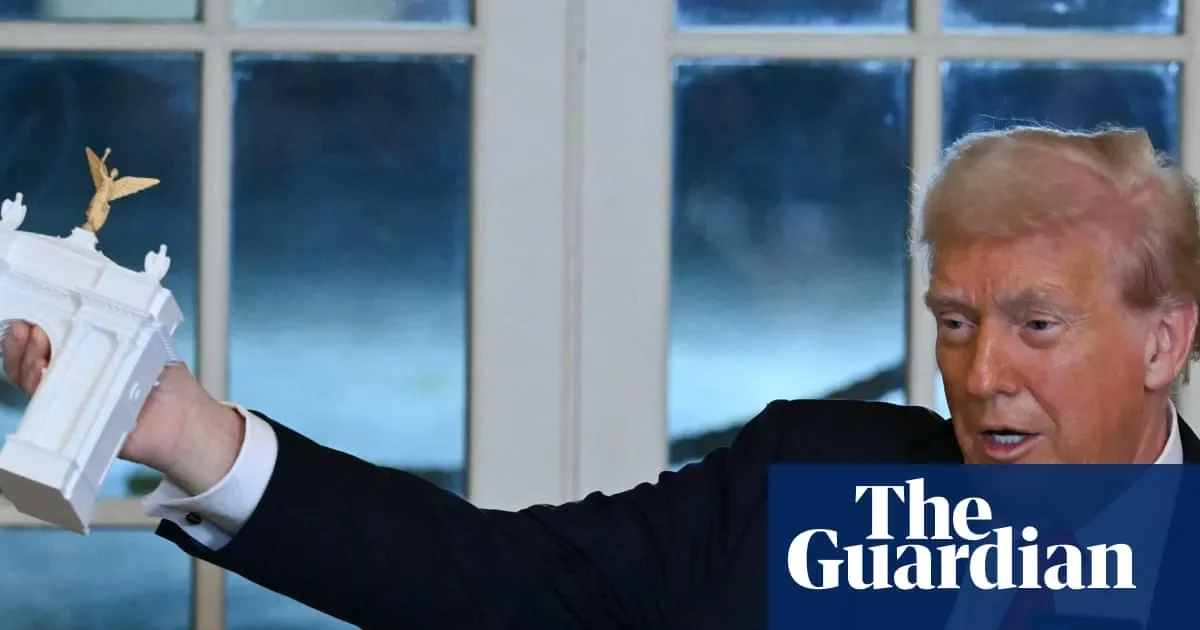
The legal storm surrounding Donald Trump’s proposed 'Liberty Arch' intensified this Saturday as the District of Columbia and Virginia filed federal lawsuits to halt the project. The monument, intended to stand 250 feet tall on the banks of the Potomac River, has become a lightning rod for political and environmental controversy. Opponents argue that the structure, which would dwarf the Statue of Liberty by nearly 30 meters, permanently alters the historic skyline of the capital and encroaches upon the sanctity of the Arlington National Cemetery. Despite these filings, the administration has signaled that construction could begin as early as next week, setting the stage for a high-stakes standoff between federal executive power and state-level legal resistance.
Legal experts suggest that these lawsuits represent more than just an aesthetic dispute; they are a direct challenge to the rapid-fire executive actions characterizing the current political era. The plaintiffs argue that the environmental impact assessments were bypassed and that the land use permits violate long-standing federal statutes. For the public, the arch has become a symbol of deep national division. While supporters view it as a necessary monument to American resilience, critics see it as an ego-driven project that ignores the fiscal and social priorities of the region. As the first cranes arrive near the bridge connecting the city to Arlington, the federal court's decision on a temporary restraining order remains the only barrier to a project that would redefine the visual identity of Washington D.C.

Binance Defies the Odds: A $5.6 Billion Recovery Operation
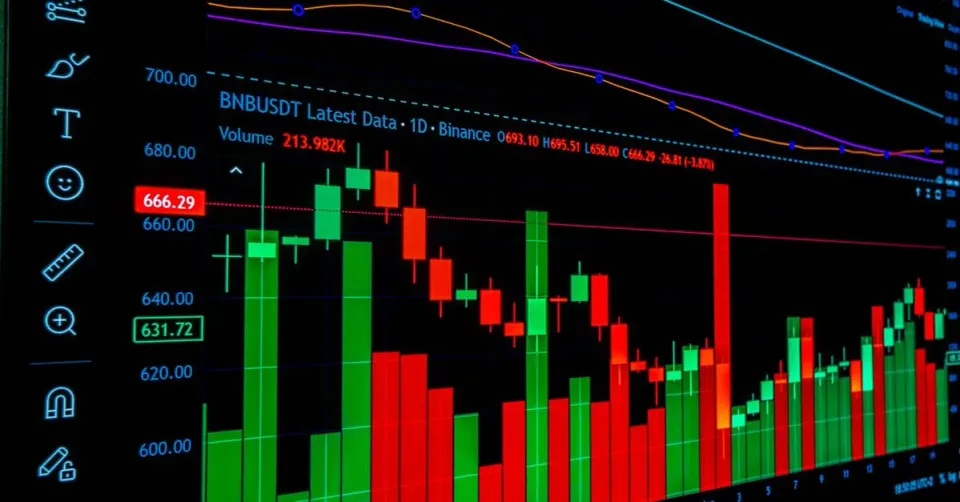
In a stunning turnaround for the cryptocurrency industry, Binance announced that it has successfully replenished 90% of the $6.3 billion lost in a record-breaking hack earlier this year. The exchange revealed that it has been aggressively purchasing replacement assets through both open market operations and over-the-counter trades to ensure users remain whole. This recovery comes as forensic firms point toward state-backed North Korean groups as the masterminds behind the exploit. The news has sent a wave of relief through the markets, with Bitcoin (BTC) rising to $77,646 as investor confidence in the resilience of major exchanges begins to stabilize after weeks of extreme volatility.
This recovery is unprecedented in the history of decentralized finance, where stolen assets are typically considered gone forever. Binance’s ability to cover such a massive shortfall suggests a significant capital reserve and a highly effective collaboration with global law enforcement and blockchain analytics firms. However, the incident has also reignited the debate over the security of centralized platforms in an era of 'offensive agentic' hacking techniques. While the immediate crisis of liquidity appears to be averted, the long-term implications for regulatory oversight are clear: governments are likely to use this breach as justification for stricter capital requirements and mandatory insurance pools for all major crypto service providers.
Tehran Markets Cool Despite "No Limits" Military Warnings
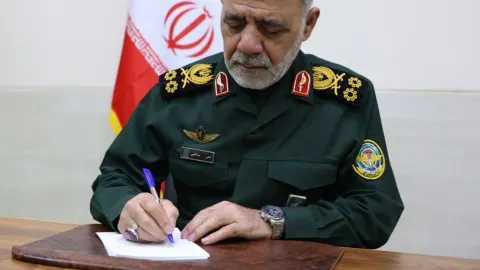
On Saturday, October 31, 2026 (9 Aban 1405), the Iranian domestic market showed a surprising decoupling from the aggressive rhetoric of military officials. Chief of Staff Major General Ali Abdollahi claimed that Iran’s response to any potential aggression would be "without geographical limits," suggesting a readiness for wide-scale regional conflict. However, the currency market moved in the opposite direction. USD sell rates in the open market dropped from 274,000 to 270,100 Toman, marking a 1.4% decline in 24 hours. This suggests that traders are currently prioritizing economic technicals and perhaps a temporary lull in immediate escalatory expectations over the bellicose statements issued by the IRGC and regular army leadership.
The gold market followed suit, reflecting a broader retreat from the panic-buying seen earlier in the week. Gold 18k per gram fell from 25,739,877 to 25,358,973 Toman (-1.5%), while the Emami coin saw an even sharper correction, dropping 2.4% to settle at 260,000,000 Toman. Analysts attribute this cooling to a combination of central bank intervention and a lack of fresh 'bad news' to sustain the upward momentum of the Toman. While the military remains vocal about its capabilities, the Iranian public and the merchant class appear to be waiting for concrete geopolitical shifts rather than reacting to the standard cycle of official warnings that have historically characterized the Islamic Republic's defensive posture.

Regional Diplomacy and Humanitarian Corridors
Beyond the military and financial headlines, significant movements are occurring on the diplomatic front. In Yerevan, Armenia, the COP17 Biodiversity talks have brought global attention to the Caucasus, focusing on how developing nations can fund wildlife protection amidst regional instability. For Iran, stability in its northern neighbors is critical for maintaining trade routes that bypass traditional Western-controlled corridors. Meanwhile, on the northern Ukrainian border with Belarus, emotional reunions took place as residents of Oleshky were evacuated following a temporary humanitarian ceasefire. These small windows of de-escalation offer a rare glimpse of hope in a global landscape otherwise dominated by conflict and economic protectionism.
Frequently Asked Questions
Why is the lawsuit against Trump's arch significant?
How did Binance recover 90% of the stolen $6.3 billion?
Why is the Toman falling despite military threats from Iranian commanders?
Blockchain Forensics: Tracing Stolen Crypto Assets
Blockchain forensics, also called blockchain analysis, is the practice of examining public ledger data to uncover the flow of cryptocurrency after a transaction. Because every transaction on a public blockchain like Bitcoin or Ethereum is recorded immutably, investigators can follow the path of funds from the point of theft to any subsequent wallets, exchanges, or mixers. The process combines on‑chain data (addresses, transaction timestamps, amounts) with off‑chain intelligence such as IP logs, KYC records from exchanges, and patterns of known illicit services.
The tools used in forensic investigations range from open‑source explorers to sophisticated commercial platforms like Chainalysis, CipherTrace, and Elliptic. These platforms employ clustering algorithms, graph analysis, and machine‑learning models to identify address groups that likely belong to the same entity, flag suspicious activity, and even predict where stolen funds might be laundered. When a hack occurs, the speed of analysis is crucial: the quicker the trail is mapped, the higher the chance that exchanges will freeze or return the assets before they are moved into privacy‑enhancing mixers or converted to fiat.
Binance’s recent recovery of roughly 90 % of the billions of dollars it lost in a hack illustrates the power of coordinated forensic work. After the breach, Binance worked with law‑enforcement agencies and blockchain‑analysis firms to trace the stolen tokens through a series of rapid swaps and transfers, ultimately locating them on a few exchange wallets that complied with freeze orders. This collaborative approach demonstrates how public‑private partnerships can turn the transparency of blockchain into a defensive asset rather than a loophole for criminals.
For anyone interested in the field, a solid foundation in cryptography, data analytics, and the regulatory landscape is essential. Understanding concepts such as “mixers” (services that obfuscate transaction trails) and “peel chains” (the step‑by‑step unwinding of a transaction path) equips analysts to differentiate between legitimate activity and money‑laundering schemes. As the crypto ecosystem matures, the demand for skilled forensic investigators will only grow, making this a promising career avenue.
In practice, blockchain forensics also raises privacy debates. While the technology enables recovery of stolen assets, it also allows for extensive surveillance of legitimate users. Striking a balance between security and privacy will be a key policy challenge as regulators worldwide grapple with how to oversee decentralized finance.
Topics
Related Articles