Surveillance Tech Trial Nabs 122 in Australia as Global Oil Markets Slide on Iran Peace Hopes
بازداشت ۱۲۲ نفر با تشخیص چهره در استرالیا و سقوط ۳ درصدی قیمت نفت در پی سیگنالهای دیپلماتیک ایران
A massive facial recognition trial in Western Australia has scanned over one million faces, leading to over a hundred arrests and sparking privacy debates. Meanwhile, global oil prices have dipped 3% as markets react to potential mediation between Tehran and Washington via Qatari channels.
At time of publishing
USD
271,800
Toman
Gold 18K
25.84M
Toman / gram
Bitcoin
$78,125
US Dollar
Tether
271,995
Toman
The Panopticon in Practice: Australia’s Facial Recognition Trial
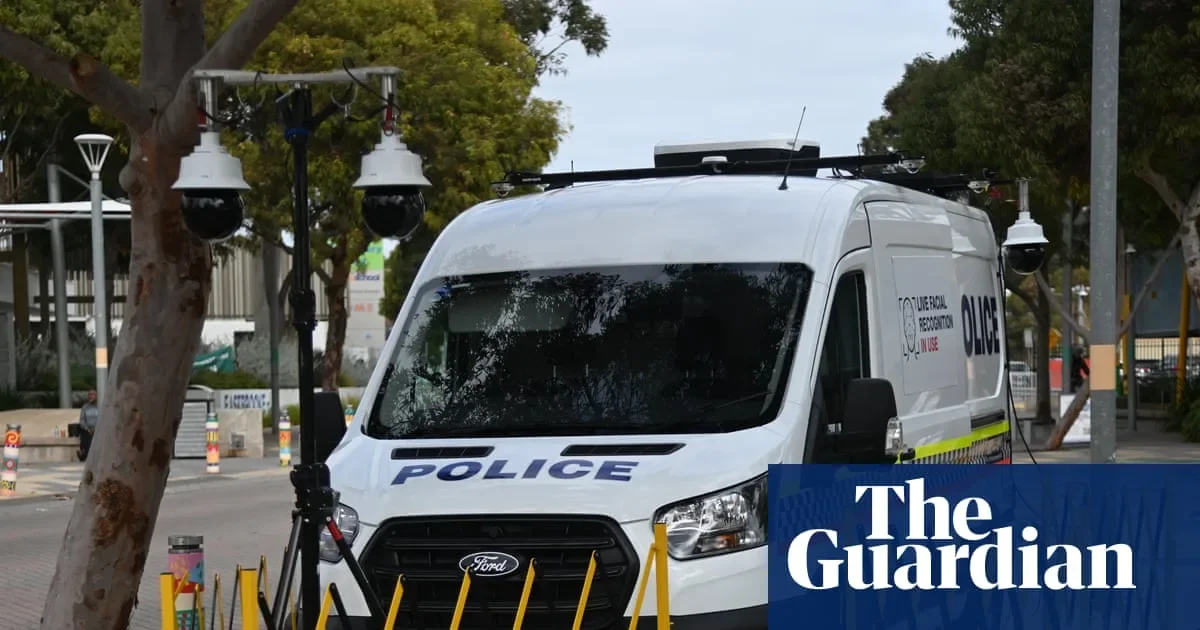
In a move that highlights the growing intersection of law enforcement and high-speed biometric technology, Western Australia police have concluded a five-month trial of real-time facial recognition that scanned a staggering 1.38 million people. The operation, which utilized mobile surveillance vans across 43 regional and metropolitan locations, resulted in 122 arrests and identified 146 registered sex offenders. While the authorities are hailing the trial as a success in modernizing public safety, the data also revealed a margin of error that civil liberties advocates find troubling: nine individuals were incorrectly flagged by the system, leading to unnecessary police engagement.
This deployment represents one of the largest real-world tests of facial recognition in a Western democracy to date. It signals a shift in how governments view public space—not as a zone of anonymity, but as a searchable database. For the average citizen, this means that every trip to a metropolitan center could soon be logged and cross-referenced against criminal databases in real-time. The implications for privacy are profound, as the boundary between targeted surveillance and mass data harvesting continues to blur. As these technologies become more accessible, we are likely to see similar systems proposed in other jurisdictions, including the Middle East, where the balance between security and individual rights is often even more precarious.

Oil Markets Retreat as Diplomacy Takes Center Stage
Global energy markets witnessed a sharp correction this morning, with Brent crude sliding 3% to trade at approximately $109.82 per barrel. The primary catalyst for this downward pressure is a renewed sense of optimism regarding a potential de-escalation between Iran and the United States. Reports over the weekend suggested that Qatar has stepped up its role as a mediator, facilitating talks that could lead to a broader peace deal or at least a stable ceasefire in regional proxy conflicts. Despite the drop in global benchmarks, the domestic Iranian market remains on edge; the price of Gold 18k in Tehran rose 0.5% today to 25,843,760 Toman per gram, indicating that local investors are still hedging against long-term uncertainty.
Foreign Minister Abbas Araqchi has maintained a dual-track rhetoric, stating that Tehran is prepared for both "defense and diplomacy." This calculated ambiguity is designed to keep leverage at the negotiating table while signaling to the markets that a deal is not out of reach. For the Iranian economy, a 3% drop in oil prices is a double-edged sword. While it may reduce the immediate revenue from illicit or gray-market exports, the prospect of sanctions relief—which is driving the price drop—would be far more transformative for the national budget than any marginal gain in per-barrel pricing. Investors are currently watching the $100 WTI floor closely as a psychological support level.
The Real-World Cost of AI: Georgia’s Data Center War
As the 2026 US Midterms approach, a new and unexpected battleground has emerged in the state of Georgia: the physical infrastructure of the Artificial Intelligence revolution. Residents are increasingly at odds with the massive data centers required to power AI models, citing soaring utility bills and the immense strain on local power grids. Georgia has become the top US market for data center construction, but the ecological and financial toll is turning local communities against the tech giants. This "people's war" against data centers highlights a critical reality—AI is not just code in the cloud; it is a resource-heavy industry that competes with ordinary citizens for electricity and water.
This friction in Georgia is a precursor to a global challenge. As companies like OpenAI and Google race to build larger models, the demand for physical hardware and energy is outstripping the pace of green energy adoption. For global markets, this suggests that the next phase of the AI boom will be defined by regulatory hurdles and infrastructure bottlenecks rather than just algorithmic breakthroughs. If voters in key political districts begin to see AI as a threat to their standard of living, we could see a wave of new taxes or zoning restrictions that would significantly alter the valuation of Big Tech stocks. The era of "growth at any cost" for AI infrastructure is facing its first major democratic test.

National Pride and Social Contrast in Iran
In the world of sports, Iran’s freestyle and Greco-Roman wrestling teams have delivered a masterclass in dominance at the 2026 World Championships in Kazakhstan. Scooping up 15 medals, including six golds, the Iranian athletes have set new records and secured the team podium in both disciplines. This achievement serves as a powerful source of soft power and national pride, often used by state media to project an image of strength and resilience. However, this celebration of national excellence stands in stark contrast to the ongoing social tensions within the country. Reports continue to surface regarding the human cost of internal unrest, such as the story of Samira, whose teenage daughter Sevda was killed during protests earlier this year, reminding the public of the deep fractures that exist beneath the surface of official triumphs.
For the Iranian public, these dual realities—international sporting success and internal social struggle—create a complex emotional landscape. While the wrestling victories provide a momentary reprieve and a sense of shared identity, they do not mask the economic pressures or the demands for social change. In the markets, this complexity is reflected in the demand for hard assets. Emami coins rose 1.5% today to reach 265,000,000 Toman, a sign that despite diplomatic hopes or sporting glory, the average citizen remains focused on protecting their purchasing power against a volatile future.
Frequently Asked Questions
چرا قیمت نفت با وجود تنشها کاهش یافته است؟
دقت سیستم تشخیص چهره استرالیا چقدر بوده است؟
چرا مردم جورجیا با دیتاسنترهای هوش مصنوعی مخالفند؟
How Geopolitical Events Influence Brent Crude Prices
The global benchmark for oil, Brent crude, is priced in U.S. dollars and reflects the price of light, sweet crude extracted from the North Sea. Because it is used to price roughly two‑thirds of the world’s oil contracts, any shift in Brent reverberates through gasoline pumps, airline tickets, and even the cost of everyday goods. The price is not set by a single market; instead, it emerges from a network of futures contracts, spot trades, and the expectations of traders watching news feeds around the clock.
Geopolitical developments are among the most potent drivers of those expectations. When tensions rise—say, a conflict in the Middle East or sanctions on a major producer—traders anticipate tighter supply and bid up futures, pushing the spot price higher. Conversely, diplomatic breakthroughs, such as the recent U.S.–Iran mediation talks, can signal a future easing of sanctions or a reduction in conflict‑related supply risks. In the weeks following the announcement of those talks, Brent slipped by several dollars, illustrating how even the hope of peace can depress prices.
The mechanism works through risk premiums. Oil buyers price in a margin to compensate for the chance that supply could be disrupted. If the perceived risk drops, that premium shrinks, and the market price falls. This is why oil markets often react more strongly to rumors or signals of policy change than to the actual physical flow of barrels. The 2024 price dip was not because a single barrel stopped moving, but because the market collectively reassessed the probability of a major supply shock.
Understanding this dynamic helps investors, policymakers, and ordinary consumers see beyond the headline numbers. A falling Brent price does not automatically mean cheaper gasoline; it may be offset by currency moves, refinery constraints, or taxes. Moreover, the volatility itself can be a source of economic risk, prompting governments to maintain strategic petroleum reserves or to diversify energy sources.
For anyone tracking oil markets, the key takeaway is that geopolitics and market psychology are inseparable. Watching diplomatic headlines, sanctions announcements, and even election outcomes can give early clues about where Brent is headed, often before any physical change in oil flows occurs.
Topics
Related Articles