
Palisades Arson Retrial Highlights US Domestic Strain; Trump's Unpopularity Linked to 'War in Iran'
دادگاه تجدیدنظر آتشسوزی "پالیسیدز" نشانگر چالشهای داخلی آمریکا؛ بیمحبوبیتی ترامپ به "جنگ در ایران" گره خورد
A high-profile arson retrial in Los Angeles underscores domestic challenges in the US, drawing focus away from foreign policy at a time when President Trump's waning popularity is explicitly tied to economic grievances and the ongoing "war in Iran." Meanwhile, the tech sector sees a significant M&A deal evoking dot-com era concerns, and the crypto market shows resilience with major Bitcoin acquisitions despite recent volatility.
At time of publishing
USD
271,900
Toman
Gold 18K
25.74M
Toman / gram
Bitcoin
$77,787
US Dollar
Tether
271,774
Toman
Palisades Arson Retrial Underlines US Domestic Focus
A high-profile arson case in Los Angeles has returned to the courtroom, with Jonathan Rinderknecht, 30, facing a retrial for allegedly starting the deadly Palisades fire in January 2025. This development comes just four months after his first trial ended in a hung jury, highlighting the complexities and persistent nature of significant domestic legal challenges within the United States. The wildfire tragically claimed 12 lives and devastated thousands of buildings in the Pacific Palisades, making this retrial a focal point for local communities and a reminder of the immense resource drain that such catastrophic events and their subsequent legal battles impose on a nation.
While seemingly a local matter, the protracted legal proceedings and the scale of the original disaster underscore a broader truth: the significant attention and resources that internal challenges demand from a government. For a global power like the United States, such domestic preoccupations can, at times, shift the national focus away from foreign policy initiatives or dilute its capacity to engage fully on the international stage. This indirect impact can be felt in regions like the Middle East, including Iran, where shifts in US foreign policy focus or perceived stability can influence geopolitical dynamics and the calculus of regional actors.
Trump's Unpopularity Linked to 'War in Iran' Ahead of Midterms
As the 2026 US midterm elections loom, President Donald Trump's political standing is under intense scrutiny, with experts like Richard Johnson from Queen Mary University of London asserting that "no US president in recent times has been as unpopular as Donald Trump." This uncompromising assessment suggests that Trump, often seen as a formidable campaigner, may now be a liability for the Republican party. Johnson points to a significant realignment within the American electorate, driven by persistent economic grievances, rising living costs, and growing disillusionment with the ongoing "war in Iran."
This sentiment is particularly consequential for the Middle East and Iran. The explicit link between Trump's declining popularity and a "war in Iran" signals a public weariness with prolonged foreign engagements and their associated costs. For Iranian readers, this could imply a potential shift in future US foreign policy approaches, possibly moving towards less aggressive or more diplomatic stances if public opinion continues to pressure the administration. Such a change in political climate could impact sanctions regimes, trade relations, and overall regional stability, influencing currency expectations and market confidence in Tehran.

Tech Sector Sees Dot-Com Echoes in Marvell-Lumentum Deal
In the financial markets, a newly announced $115 billion deal for Lumentum by Marvell Technology is sparking discussions reminiscent of the dot-com bubble era. Market analysts are drawing parallels to the year 2000, noting that the acquisition is set to be financed entirely through stock. This equity-heavy financing structure, coupled with the sheer size of the deal in the technology sector, raises questions about market valuations and the sustainability of current growth trajectories, especially in a climate where interest rates and inflationary pressures remain key concerns for investors.
This kind of large-scale, stock-financed acquisition in the tech space can have ripple effects across global markets. While it signals continued confidence in the growth potential of specific tech segments, it also introduces a degree of volatility and risk. Investors in emerging markets, including Iran, often monitor such trends in developed economies as indicators of broader global economic health and risk appetite. A significant market correction in the US tech sector, triggered by concerns over inflated valuations, could lead to a flight to safety, impacting commodity prices, foreign exchange rates like the USD/IRR, and even sentiment in local equity markets.
Crypto Market Stays Resilient Amid Institutional Buys and Flat Prices
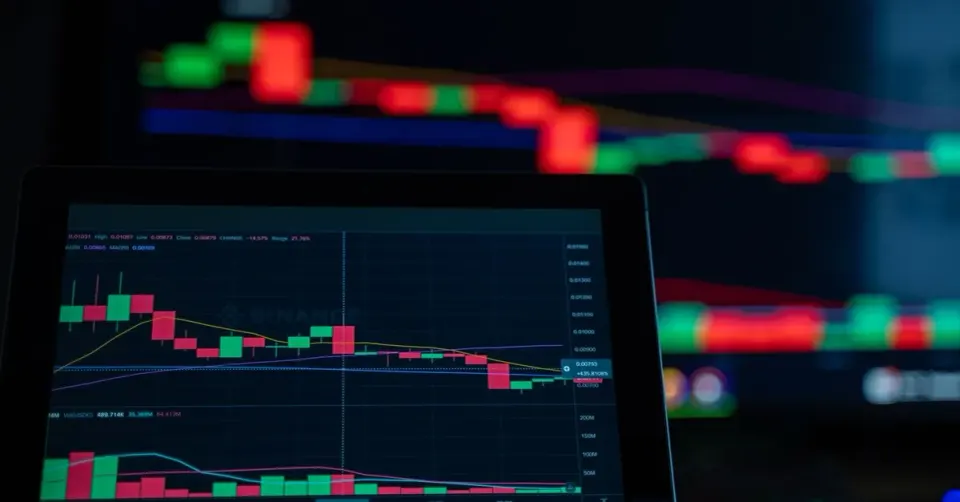
The cryptocurrency market continues to show a mix of resilience and consolidation. Bitcoin (BTC) is currently pinned around $77,787 USD, following recent October losses. Despite this, institutional players are making significant moves, with Strive reportedly buying another 124 BTC, bringing it closer to becoming the second-largest public company holder after Strategy. Adding to this trend, Michael Saylor’s Strategy recently scooped up an additional 811 Bitcoin for $65.5 million, following a strong third-quarter net income report.
Meanwhile, Bitmine has added 8,573 ETH last week, increasing its holdings to 6.06 million ETH, signaling continued institutional interest in Ethereum as well. The market's muted response to the recent Binance hack, as noted by Tom Lee, suggests a growing maturity and a less volatile reaction to security incidents compared to previous cycles. For Iranian crypto holders, USDT is trading at 271,774 Toman. The relative stability of major cryptocurrencies like Bitcoin and Ethereum, coupled with ongoing institutional accumulation, can influence local investor confidence and demand for digital assets, offering an alternative store of value amidst traditional market fluctuations.
Emami Coin Sees Notable Rise as Gold Posts Modest Gains
In the local Iranian markets, the Emami coin experienced a notable increase over the past 24 hours, moving from 261,000,000 Toman to 263,500,000 Toman, marking a significant +1.0% gain. This upward movement in the Emami coin often reflects a combination of local demand, inflation expectations, and a desire for tangible assets in times of economic uncertainty. The Azadi coin also held strong at 254,000,000 Toman, with the Nim Seke at 140,000,000 Toman, indicating a robust demand across the coin market.
Gold prices also saw a modest uptick, with 18k gold per gram rising from 25,721,409 Toman to 25,739,877 Toman, a +0.1% increase. This consistent, albeit slight, appreciation in gold, coupled with the more pronounced rise in coins, suggests that Iranian investors continue to view precious metals as a secure hedge against inflation and economic instability. The USD/IRR exchange rate remained largely stable, moving from 271,800 Toman to 271,900 Toman (+0.0%), reinforcing the idea that while currency markets are relatively calm, the underlying demand for hard assets and alternative investments persists in the current economic climate.
Frequently Asked Questions
What is the significance of the Palisades fire retrial for US policy?
How does Donald Trump's perceived unpopularity affect US foreign policy towards Iran?
What are the implications of the Marvell-Lumentum deal for the broader tech market?
How are institutional investors currently positioning themselves in the crypto market?
What is the current state of the USD/IRR exchange rate and gold prices in Tehran?
The Domestic-Foreign Policy Nexus
The headline "Palisades Arson Retrial Highlights US Domestic Strain; Trump's Unpopularity Linked to 'War in Iran'" points to a fundamental concept in political science: the Domestic-Foreign Policy Nexus. This idea posits that a nation's internal affairs and public sentiment are not isolated from its international relations, but rather are deeply intertwined, constantly influencing and being influenced by one another. Understanding this nexus is crucial for comprehending why leaders make certain decisions on the global stage and how those decisions, in turn, reverberate back home.
On one hand, domestic factors profoundly shape foreign policy. A leader's popularity, the upcoming election cycle (like "US midterm elections"), economic conditions, or the degree of "US domestic strain" can all constrain or empower their actions abroad. For instance, a leader facing low approval ratings or significant internal dissent might be hesitant to embark on a risky foreign intervention, such as a hypothetical "War in Iran," for fear of further alienating the public and jeopardizing their political future. Conversely, a leader with strong domestic support might have more leeway to pursue ambitious or controversial foreign policy objectives.
The relationship also works in reverse: foreign policy decisions and international events can significantly impact domestic politics. A costly or unpopular military engagement can erode public trust, fuel anti-government sentiment, and intensify existing "domestic strain," potentially leading to a leader's "unpopularity." Conversely, a perceived foreign policy success could bolster a leader's standing at home. This constant feedback loop means that foreign policy is rarely made in a vacuum; it is always filtered through the lens of domestic concerns and political realities.
The complex interplay between domestic pressures and international actions creates a "two-level game," a concept where leaders simultaneously negotiate with other countries at the international level and with domestic constituencies (voters, interest groups, political parties) at the national level. Success often requires satisfying both sets of demands. The headline's suggestion that "Trump's Unpopularity" might be linked to a potential "War in Iran" perfectly illustrates this nexus, highlighting how public perception of foreign policy can directly impact a leader's domestic political standing.