Hormuz Reopening Talks Intensify Amid Regional Strikes as UK 'Double Life' Abuse Trial Shocks Global Public
مذاکرات فشرده برای بازگشایی هرمز همزمان با شوک محاکمه «زندگی دوگانه» در بریتانیا و ثبات دلار
Tehran and Washington engage in intensive backchannel negotiations to avert conflict and reopen the Strait of Hormuz, while a horrifying abuse trial in the UK captures global attention. Meanwhile, markets remain steady as Wall Street prepares for the US midterms.
At time of publishing
USD
271,800
Toman
Gold 18K
25.77M
Toman / gram
Bitcoin
$76,896
US Dollar
Tether
272,061
Toman
The 'Double Life' Trial That Shook Stockport
The global news cycle today is dominated by the disturbing details emerging from a courtroom in Stockport, England, where nine men are on trial for their involvement in a decade-long campaign of abuse. The case centers on a husband who has already pleaded guilty to drugging his wife and facilitating her rape by strangers. Prosecutors described a 'double life' where the perpetrator maintained a facade of respectability while orchestrating what they termed 'barbaric fantasies.' This story has resonated far beyond the UK, sparking intense discussions on domestic safety, the psychological profile of predators, and the failure of social safety nets to detect long-term systemic abuse within a household.
Legal experts suggest that the sheer scale of the evidence, involving dozens of defendants and years of digital records, makes this one of the most complex abuse cases in recent British history. For the public, the trial serves as a grim reminder of the potential for hidden criminality in suburban settings. As the trial continues, the focus remains on the victim's anonymity and the pursuit of justice against those who allegedly participated in the husband's schemes. The case highlights the darker side of human behavior that often goes unnoticed behind closed doors, prompting calls for more rigorous oversight in cases where domestic patterns raise red flags.

---
Geopolitical Stakes: Hormuz and the Northern Gulf Strike
In the Middle East, the diplomatic atmosphere is thick with anticipation as Esmaeil Baghaei, the Iranian Foreign Ministry spokesperson, confirmed on Monday, November 2, 2026, that 'intensive' indirect negotiations are underway with the United States. The primary objective is to de-escalate tensions and potentially reopen the Strait of Hormuz, which has been under a de facto blockade. Tehran's strategy appears to be leveraging the energy corridor's status to secure concessions from Washington before the US midterm elections. This diplomatic push comes at a critical time when global energy markets are desperate for stability, yet the Iranian government insists that any deal must meet their specific sovereign demands.
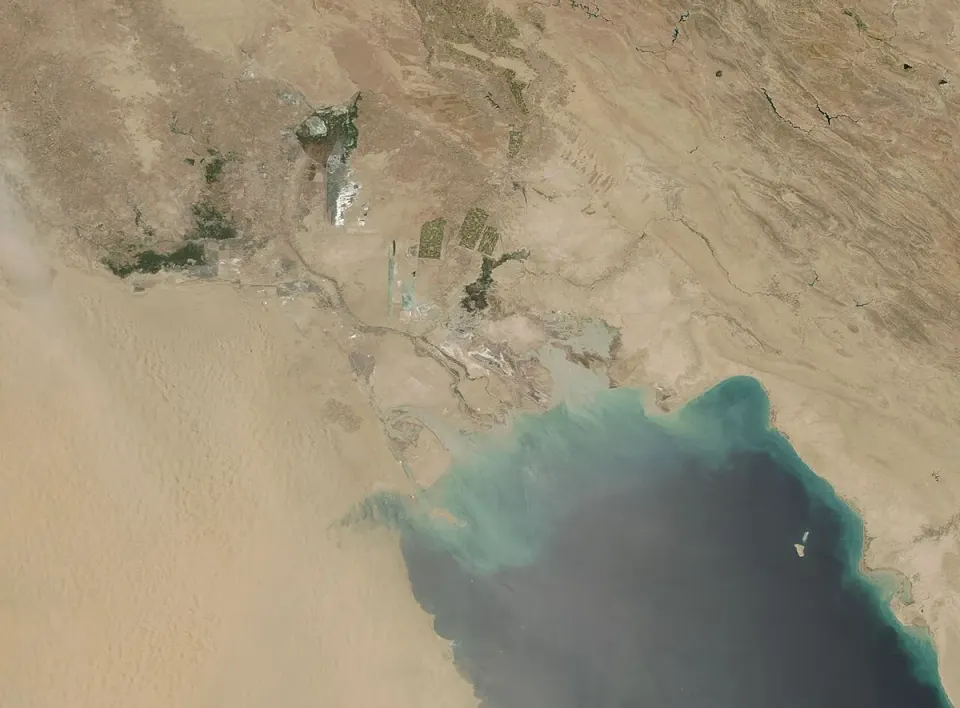
Adding a layer of complexity to these talks is a rare and unusual strike on a vessel hundreds of miles away from the Strait of Hormuz. A tugboat was reportedly hit by projectiles 83 miles east of Ras al-Khafji, near the Saudi-Kuwaiti border. This incident is significant because it suggests that the theater of conflict is expanding beyond the usual maritime chokepoints. While no group has claimed responsibility, the proximity to Saudi oil infrastructure has put regional markets on high alert. For Iranian readers, this tension is reflected in the currency market, where the USD/IRR remained flat at 271,800 (+0.0%), indicating a 'wait-and-see' approach by traders who are wary of both diplomatic breakthroughs and sudden escalations.
---
OpenAI's Energy Gamble and the Semiconductor Super-Deal
On the technology front, OpenAI has launched a provocative new initiative called the 'Grid Protectors Program' in Georgia. As data centers face increasing criticism for their massive electricity consumption, OpenAI is pitching its facilities as potential stabilizers for the public grid. The company claims it can free up to 1,000 megawatts of power during extreme weather events—enough to support air conditioning for 700,000 homes. This move is seen as a strategic attempt to win over local communities and regulators who are concerned that the AI boom is straining national infrastructure and driving up utility costs for average citizens.
Simultaneously, the semiconductor industry is witnessing one of its largest acquisitions in history. Marvell has announced the purchase of Lumentum for a staggering $115 billion. Both companies share Nvidia as a strategic investor, signaling a massive consolidation of power in the AI hardware supply chain. This deal is not just about corporate growth; it is about securing the optical and networking components necessary for the next generation of AI supercomputers. For investors, this consolidation suggests that the 'AI arms race' is entering a more mature, infrastructure-heavy phase where scale and integration are the ultimate competitive advantages.

---
Market Resilience Ahead of US Midterms
Despite the geopolitical noise and the high-profile legal drama in Europe, Wall Street appears remarkably calm as the US midterm elections approach. Market analysts note that while political uncertainty usually triggers volatility, the current 'bond-market rally' is defying traditional playbooks. Investors seem to be decoupling economic fundamentals from political theater, focusing instead on robust GDP data and corporate earnings. Even with the possibility of delayed election results, the consensus among institutional traders is that the underlying strength of the US economy will outweigh any short-term legislative gridlock.
In the local Iranian market, gold and coins have shown more movement than the flat currency. The Emami coin rose from 261,000,000 to 263,500,000 (+1.0%), while 18k gold edged up by 0.2% to 25,774,504 Toman per gram. This slight uptick in precious metals suggests that local investors are hedging against potential regional instability, even as the Toman holds its ground. With Bitcoin hovering around $76,896, the broader financial sentiment is one of cautious optimism, waiting for the dual catalysts of the US election results and the outcome of the Tehran-Washington backchannel talks.
Frequently Asked Questions
آیا تنگه هرمز به زودی بازگشایی میشود؟
علت ثبات قیمت دلار در بازار تهران چیست؟
معامله ۱۱۵ میلیارد دلاری Marvell چه تأثیری بر بازار تکنولوژی دارد؟
The Geopolitical and Economic Significance of the Strait of Hormuz
The Strait of Hormuz is not just a narrow body of water; it is one of the world's most critical maritime chokepoints, a term referring to a narrow channel or passage that is strategically important for trade and military operations. Located between Oman and Iran, this vital waterway connects the Persian Gulf with the Arabian Sea and beyond, serving as the sole sea passage for vast quantities of crude oil and liquefied natural gas (LNG) from major Middle Eastern producers to global markets. Its strategic importance cannot be overstated, influencing everything from global energy prices to international diplomacy.
What makes the Strait of Hormuz so crucial is the sheer volume of energy resources that traverse its waters daily. An estimated one-fifth of the world's total petroleum liquids consumption, and a significant portion of global LNG, passes through this strait. Any disruption, whether due to geopolitical tensions, military conflict, or even severe weather, can send shockwaves through international energy markets, causing oil and gas prices to spike and impacting economies worldwide. For oil-dependent nations, ensuring the free and safe passage through Hormuz is a paramount national security and economic interest.
Consequently, the Strait's security is a constant focus of international attention, particularly amid regional instability and complex diplomatic relations, such as the ongoing Iran-US negotiations. Talks surrounding the 'reopening' or stability of Hormuz directly impact market confidence and the economic outlook for countries in the region, especially Iran. The perceived risk or security of this chokepoint can significantly influence a nation's currency stability (like the USD/IRR exchange rate) and the value of domestic assets (such as the Emami coin price), reflecting investor sentiment and the broader economic health tied to global trade access. Understanding the Strait of Hormuz's role is key to comprehending geopolitical dynamics and their tangible economic consequences.
Topics
Related Articles