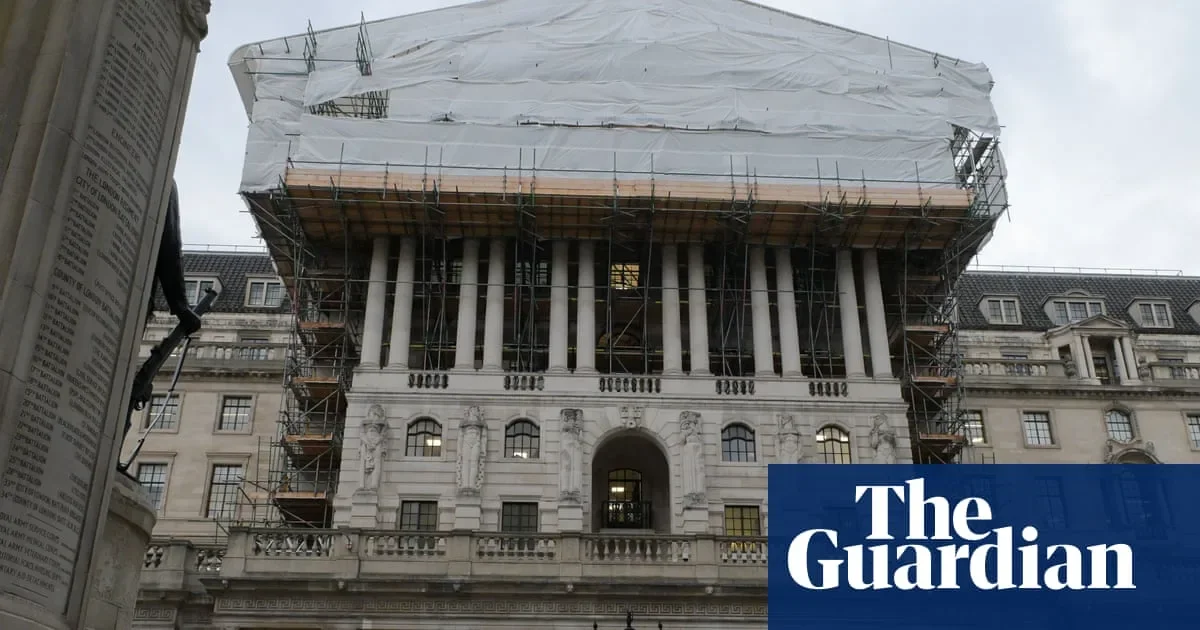
Bank of England Hikes Rates to 4% as Iran War Inflation Bites; Bomb Threats Disrupt European Skies
افزایش نرخ بهره در بریتانیا به ۴ درصد تحت فشار جنگ ایران؛ تهدیدهای بمبگذاری آسمان اروپا را ناامن کرد
The Bank of England has raised interest rates for the first time in three years, citing soaring inflation fueled by the ongoing Iran conflict. Simultaneously, Europe is grappling with coordinated bomb threats against commercial flights and mass strikes across France.
At time of publishing
USD
267,800
Toman
Gold 18K
26.20M
Toman / gram
Bitcoin
$79,979
US Dollar
Tether
267,499
Toman
Bank of England Reacts to Iran War Inflation
In a decisive move that underscores the global economic fallout of the regional conflict, the Bank of England's Monetary Policy Committee (MPC) voted 8-1 on Thursday to raise interest rates from 3.75% to 4%. This marks the first rate hike in over three years, a direct response to the 'soaring inflation' triggered by the war involving Iran, which has significantly destabilized energy markets. While most members agreed on the quarter-point increase, Catherine Mann, a prominent hawk on the committee, pushed for a more aggressive half-point rise, signaling that the central bank remains deeply concerned about the persistence of price pressures.
For the average consumer and investor, this rate hike is a clear signal that the 'peace dividend' of low interest rates is firmly in the past. The Bank warned that further increases may be necessary if energy costs do not stabilize. This decision comes exactly one week after a high-stakes budget announcement, suggesting that the UK government and the central bank are now in a synchronized battle against the inflationary effects of geopolitical instability. For Iranian readers and those holding Rial-based assets, this global trend toward higher rates typically strengthens major currencies like the USD and GBP against emerging market currencies, though the local Tehran market remains more sensitive to immediate conflict escalations.
European Skies and Streets Under Pressure
While central bankers battle inflation, European security forces are dealing with a more immediate and visceral form of disruption. On Thursday morning, a series of bomb threats forced several commercial airliners to make unplanned emergency landings across the continent, including in France and Italy. European officials have been quick to suggest these are 'hybrid attacks' intended to sow chaos, with some pointing fingers toward Moscow and Tehran. While the Iranian government and Russian authorities have both issued denials regarding any involvement in sabotage, the incidents have caused significant delays and heightened the sense of vulnerability across European transport hubs.
Adding to the continent's woes, France is currently paralyzed by a massive nationwide strike. Over 70,000 police officers have been deployed as hundreds of thousands of protesters take to the streets in cities like Marseille, Lyon, and Grenoble. The strike includes hospital workers, air traffic controllers, and rail staff, creating a perfect storm of logistical gridlock. These domestic tensions in Europe are increasingly linked to the economic strain caused by the Iran conflict, as rising living costs push trade unions to demand higher wages that governments are struggling to provide in a high-inflation environment.

Markets and the 'Bull Stampede' Narrative
Despite the geopolitical gloom, some market strategists are looking for silver linings. Analysts at Bank of America have noted a dramatic correlation between oil prices and interest rates in the U.S., U.K., and Germany, suggesting that rates could go 'significantly higher' if oil continues its climb—even if the active phase of the Iran war concludes soon. However, another school of thought is drawing parallels to the 1980s, where a divided government in the U.S. actually powered a massive stock market rally. The theory is that bipartisanship, forced by the recent Democratic gains in the U.S. midterms, could lead to more stable, inflation-fighting policies that eventually trigger a 'bull stampede' in equities.
In the local Tehran market, the reaction to these global shifts remains mixed but focused on gold as a primary hedge. The price of 18k gold per gram rose from 25,975,345 to 26,201,579 Toman (+0.9%), while the Emami coin similarly increased from 264,500,000 to 267,000,000 Toman (+0.9%). Interestingly, the USD/IRR exchange rate saw a slight cooling, moving from 268,100 down to 267,800 Toman (-0.1%). This divergence suggests that while the currency market is temporarily stabilizing, the demand for gold reflects a deeper, long-term anxiety about global inflation and the potential for further military escalation in the region.
Frequently Asked Questions
Why did the Bank of England raise interest rates to 4%?
Who is being blamed for the bomb threats in Europe?
How did the Tehran gold market react to these global events?
What is the 'bull stampede' theory mentioned by strategists?
Understanding Central Bank Interest Rate Hikes and Inflation
Inflation, a persistent rise in the general price level of goods and services, erodes purchasing power and can destabilize an economy. When inflation becomes high or persistent, central banks, such as the Bank of England, step in with monetary policy tools to restore price stability. Their primary goal is often to keep inflation at a target level, typically around 2%, to foster sustainable economic growth.
One of the most potent tools in a central bank's arsenal is the adjustment of its benchmark interest rate, often referred to as the policy rate or bank rate. When a central bank "hikes rates," it means it is increasing the cost for commercial banks to borrow money from it. This increase then ripples through the entire economy: commercial banks raise their lending rates for mortgages, car loans, and business investments, making borrowing more expensive for consumers and businesses alike.
The mechanism is straightforward: by making borrowing more costly and saving more attractive, higher interest rates discourage spending and investment. This reduction in aggregate demand helps to cool down an overheating economy, thereby alleviating upward pressure on prices. For instance, if people borrow less for new homes or businesses delay expansion plans, the demand for construction materials or new equipment falls, which can help moderate their prices. This deliberate slowdown in economic activity is a necessary, albeit sometimes painful, step to bring inflation back under control.
However, central banks face a delicate balancing act. While rate hikes are effective against inflation, an overly aggressive tightening of monetary policy can stifle economic growth, potentially leading to a recession. The timing and magnitude of these decisions are crucial, often influenced by a complex interplay of domestic economic data, global supply shocks (like an energy crisis or geopolitical conflicts), and inflation expectations.
Topics
Related Articles