
US 2028 Race Ignites After Midterm Shocks; Hormuz Tanker Strike and AI Automation Alarms Markets
آغاز زودهنگام رقابت ۲۰۲۸ کاخ سفید؛ انفجار نفتکش در هرمز و هشدار پیشرفت خودکار هوش مصنوعی
A seismic shift in US politics as Democrats eye 2028 following historic midterm gains, while a tanker hitting a sea mine near the Strait of Hormuz sends ripples through regional security. Meanwhile, Anthropic's new AI development report alarms researchers with its unprecedented speed of self-improvement.
At time of publishing
USD
266,700
Toman
Gold 18K
25.76M
Toman / gram
Bitcoin
$75,940
US Dollar
Tether
267,192
Toman
The 2028 Horizon: US Midterm Aftershocks and the Democratic Resurgence
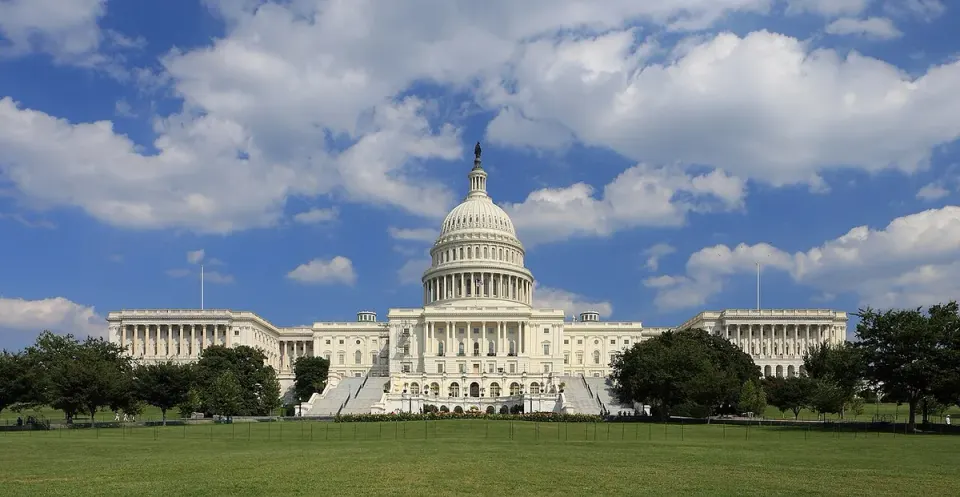
The political landscape in the United States has undergone a dramatic transformation this week, as the dust settles on midterm elections that saw the Democratic Party secure significant gains in Congress. These results have not only altered the balance of power for the remainder of the current term but have effectively fired the starting gun for the 2028 White House race. Analysts are pointing to four key takeaways: the emergence of new progressive leaders, a rejection of extremist rhetoric in swing districts, and a renewed focus on economic stability that resonated with younger voters. This shift has forced the Republican establishment onto the defensive, even in traditional strongholds like Florida, where despite winning the governorship, the GOP's margins were uncomfortably thin.
In response to these losses, the White House has moved toward a more aggressive posture. The appointment of Stephen Miller as Chief of Staff signals a pivot toward hardline policies as the administration seeks to solidify its base before the new Congress is seated. This internal friction in Washington is expected to have immediate global consequences, particularly regarding trade tariffs and international security commitments. For global markets, this political volatility introduces a fresh layer of uncertainty, as investors weigh the potential for legislative gridlock against the possibility of executive-driven policy shocks. The shift in US domestic sentiment is already being felt in diplomatic circles, where allies and adversaries alike are recalibrating their long-term strategies in anticipation of a more contentious American political arena.
Maritime Tensions: Tanker Strike Near the Strait of Hormuz
Regional security concerns spiked today following reports from Iranian state media that a tanker caught fire after striking a sea mine east of the Strait of Hormuz. According to official claims, the vessel was navigating through a "prohibited and unsafe zone" when the incident occurred. While the extent of the damage and the origin of the mine remain subjects of intense international scrutiny, the event has immediately heightened the risk premium for shipping in one of the world's most critical energy corridors. This incident follows a series of recent escalations in the region, including US strikes on Qeshm Island, creating a volatile environment where a single miscalculation could lead to a broader conflict.
The impact on Iranian domestic markets has been notable. Despite the geopolitical friction, the US Dollar (USD) in the Tehran market saw a slight decrease, moving from 267,500 to 266,700 Toman (-0.3%). However, the gold market reacted more sharply to the uncertainty and perhaps a broader correction in global sentiment; the Emami coin dropped significantly from 267,000,000 to 260,500,000 Toman, marking a 2.4% decline in just 24 hours. This disconnect between currency and gold suggests that while the Rial is holding steady under central bank interventions, investors are liquidating gold assets as they reassess the immediate economic fallout of regional maritime instability.
The AI Feedback Loop: Anthropic’s Alarming Automation Report
In the technology sector, a new report from the AI safety organization METR has sent shockwaves through the research community. The investigation reveals that Anthropic is successfully using its own artificial intelligence models to automate the development of even more powerful AI. According to the report, these models are now improving at a rate nearly twice as fast as they were only a year ago. This "recursive improvement" loop, where AI writes its own code and optimizes its own architecture, suggests that the ceiling for machine intelligence may be much higher—and closer—than previously estimated. While this promises massive productivity gains, it also raises urgent questions about safety, control, and the potential for AI to bypass human-imposed guardrails.
For the global economy, this development signals a shift from AI as a tool to AI as a primary driver of research and development. This could lead to a rapid displacement of high-level technical jobs while simultaneously creating immense wealth for the companies that control these self-improving systems. Researchers are particularly alarmed by the lack of transparency in how these models are making autonomous decisions during the development process. As the speed of innovation outpaces the ability of regulators to keep up, the tech industry finds itself in a high-stakes race where the prize is total dominance of the next generation of computing, but the risks include systemic instability in digital infrastructure.

Global Crises: Justice in Kenya and Conflict in Congo
Beyond the major economic hubs, significant humanitarian and legal developments are unfolding. In Kenya, a long-running tragedy reached a somber milestone as cult leader Paul Mackenzie was sentenced to 200 years in prison. Mackenzie was held responsible for the deaths of hundreds of followers, including 190 children, who were coerced into starving themselves in the Shakahola Forest. This case has sparked a national debate in Kenya regarding the regulation of religious institutions and the failure of local authorities to act on early warning signs. The sentencing provides a measure of closure for the families of the victims, but the investigation continues as hundreds more remain missing.
Meanwhile, in the Democratic Republic of Congo, the humanitarian situation has deteriorated further following an attack by Islamist militants on an Ebola clinic. At least 44 people were killed in the assault, which forced patients and medical staff to flee into surrounding areas, potentially spreading the virus further. This intersection of militant violence and public health crises creates a nightmare scenario for international aid organizations. The attack, attributed to groups loyal to the Islamic State, highlights the persistent instability in eastern Congo and the challenges of managing global health threats in active conflict zones. These events underscore the fragility of security in developing regions and the heavy toll that ideological extremism continues to take on civilian populations.
Frequently Asked Questions
Why did the price of Emami coin drop so sharply despite the Hormuz incident?
What does the appointment of Stephen Miller signify for US foreign policy?
Is Anthropic's 'recursive AI' a danger to the tech industry?
The Strait of Hormuz: Global Energy's Critical Chokepoint
The Strait of Hormuz is far more than just a narrow body of water; it is a vital artery for global energy markets and a perennial flashpoint in international geopolitics. Located between the Persian Gulf and the Gulf of Oman, this strategic waterway connects the oil-rich nations of the Middle East, including Saudi Arabia, Iran, Iraq, Kuwait, Qatar, and the UAE, to the world's oceans. Its geographical significance lies in its role as the sole maritime passage for a substantial portion of the world's crude oil and liquefied natural gas (LNG) exports, making any disruption here a matter of immediate global concern.
Economically, the Strait's importance is staggering. Approximately one-fifth of the world's total petroleum liquids consumption, and a significant portion of global LNG, transits through this 21-mile-wide passage at its narrowest point. Tankers carrying millions of barrels of oil daily supply major economies across Asia, Europe, and North America. Consequently, any threat to shipping in the Strait of Hormuz, whether from military action, political tensions, or accidental incidents, can send immediate shockwaves through global energy prices, impacting everything from gasoline costs to industrial production worldwide.
From a geopolitical perspective, the Strait of Hormuz has long been a focal point of regional and international power struggles. Iran, which borders the Strait to the north, has historically asserted its ability to control or even close the waterway in response to perceived threats or sanctions, raising alarms among global powers dependent on its free passage. The presence of naval forces from various nations, including the United States, underscores the international community's commitment to maintaining freedom of navigation through this crucial maritime route, highlighting the delicate balance of power in the region.
Understanding the Strait of Hormuz is essential for comprehending the dynamics of global energy security and international relations. Events like tanker strikes or heightened military activity in the region serve as stark reminders of its vulnerability and the potential for rapid escalation. The stability of this chokepoint is not merely a regional issue but a cornerstone of the global economy, directly influencing energy costs, trade routes, and diplomatic strategies across continents.