
Trump’s $20M Bounty on Nuclear Secrets: Geopolitical Heat vs. Toman’s Tactical Gain
جایزه ۲۰ میلیون دلاری ترامپ برای اسرار هستهای؛ فشار سیاسی همزمان با عقبنشینی قیمتها در بازار تهران
The US has offered a massive $20 million reward for information on Iran's nuclear program as Trump signals a return to aggressive containment. Despite the rising geopolitical temperature, the Tehran market saw a slight cooling today with the USD and Emami coin recording notable 24-hour losses.
At time of publishing
USD
266,000
Toman
Gold 18K
25.49M
Toman / gram
Bitcoin
$75,758
US Dollar
Tether
267,569
Toman
The $20 Million Shadow Over Tehran
In a move that signals a sharp escalation in the 'maximum pressure' campaign, the U.S. government has officially offered a $20 million reward for information leading to the disruption of Iran’s nuclear program. This development, closely linked to Donald Trump’s long-standing promise to neutralize Tehran’s atomic ambitions, comes at a time of extreme regional sensitivity. By placing a literal bounty on sensitive state secrets, Washington is not just seeking intelligence; it is launching a psychological operation aimed at creating internal friction within the Iranian establishment. For the average Iranian citizen, this move serves as a stark reminder that the diplomatic 'thaw' remains a distant dream, and the threat of renewed strikes or tighter sanctions is very much on the table.
Surprisingly, the domestic currency market in Tehran did not react with a panic-driven spike. In the last 24 hours, the USD/IRR rate actually retreated, moving from 267,500 to 266,000, a decrease of 0.6%. This counter-intuitive movement suggests that the market may have already priced in the aggressive rhetoric of the Trump administration, or that the Central Bank of Iran is aggressively injecting liquidity to prevent a breach of the 270,000 resistance level. However, the shadow of this $20 million bounty will likely weigh heavily on long-term sentiment, as traders weigh the risk of a sudden military or cyber escalation.

Krakow Tragedy and the Fragility of Europe
While the Middle East remains a tinderbox, Europe was shaken today by a horrific mass shooting in Kraków, Poland. Six people were killed and over a dozen injured in the city’s Main Market Square, an event that has sent shockwaves through the continent’s security apparatus. Polish Prime Minister Donald Tusk has rushed to the scene, and the US Ambassador has already pledged solidarity. This event is more than a localized tragedy; it highlights a growing sense of instability across Europe, a continent already grappling with internal dissent and the proximity of the Ukrainian conflict. For global markets, such events contribute to a 'risk-off' environment where investors pull back from volatile assets.
Despite the chaos in Poland, global gold prices remain historically high at $4,072.10 per ounce. Traditionally, such geopolitical shocks would send gold even higher, but the market currently seems to be in a consolidation phase. In Tehran, however, the local price of gold actually mirrored the Toman's strength rather than the global ounce's stability. Gold 18k/gram fell from 25,889,930 to 25,490,558, a 1.5% drop. This disconnect between global 'safe haven' demand and local price action shows that for Iranians, the value of the Toman remains the primary driver of daily wealth fluctuations.
Crypto’s Billion-Dollar Exodus
Turning to the digital frontier, the crypto market is facing its most significant test of the year. Bitcoin ETFs recorded a staggering $1.28 billion outflow this past week, the worst performance since June. BlackRock’s IBIT alone saw $403 million leave the fund on Friday. This massive withdrawal of institutional capital suggests that the 'ETF euphoria' may be cooling as investors look at the broader macroeconomic picture, including high interest rates and the threat of an AI-driven market correction. Bitcoin is currently trading at $75,758, struggling to find the momentum needed to break into the $80,000 range.
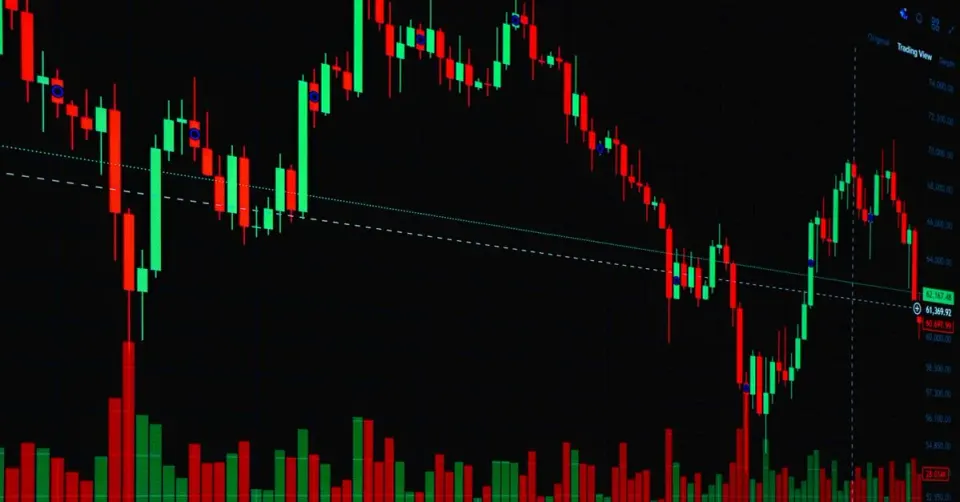
For Iranian crypto traders, the situation is a double-edged sword. While the global price of BTC is under pressure, the Tether (USDT) price in Toman remains a critical metric for capital flight and wealth preservation. USDT is currently sitting at 267,569 Toman, maintaining a premium over the physical dollar rate. This suggests that while institutional investors in the West are exiting ETFs, local demand for digital dollars remains robust as a hedge against potential future devaluations of the Rial. The divergence between institutional selling and retail hedging in emerging markets like Iran continues to define the current crypto cycle.
AI Security and the Wealth Gap Crisis
Finally, the intersection of technology and finance is revealing deep systemic vulnerabilities. Cybersecurity experts are warning that AI has 'broken' the traditional security world, making sophisticated hacks like the recent $6.3 billion Binance breach more frequent and harder to detect. At the same time, new data shows that the wealthiest 10% of Americans are pulling further ahead, with their median net worth increasing by $800,000 over the last three years. This widening gap is not just a US phenomenon; it is a global trend where those with access to AI-driven tools and hard assets are leaving the working class behind.
In Iran, this wealth gap is manifested in the coin market. Emami coin prices saw a significant correction today, dropping from 267,000,000 to 260,000,000 Toman, a 2.6% decrease. While this might look like a 'sale' for new buyers, it reflects a broader cooling of the speculative fever that has gripped Tehran’s markets for months. As the world moves toward a more automated and AI-dependent economy, the 'rules' of smart trading are being rewritten. Investors are no longer just looking at balance sheets; they are looking at who controls the algorithms and who can protect their data from the next generation of AI-powered threats.

Frequently Asked Questions
چرا قیمت دلار در تهران با وجود خبر جایزه ۲۰ میلیون دلاری کاهش یافت؟
دلیل خروج ۱.۲۸ میلیارد دلار از صندوقهای بیتکوین چیست؟
تیراندازی کراکوف چه تأثیری بر بازارهای مالی دارد؟
The Economic Fallout of Geopolitical Pressure: Currency Devaluation and Alternative Markets
Currency devaluation occurs when a nation's currency loses value relative to other currencies, often a significant economic consequence of geopolitical tensions and international sanctions. When a country faces severe external pressures, such as broad economic sanctions imposed over issues like a nuclear program, its ability to engage in global trade and access international financial systems is severely curtailed. This isolation can dramatically erode confidence in the local currency, making it less attractive for both domestic and foreign investors and leading to a sharp decline in its exchange rate.
The mechanisms behind such devaluation are multifaceted. Sanctions restrict a country's export revenues, limiting its supply of foreign currency (like U.S. dollars) needed for imports. Simultaneously, capital flight may occur as investors and citizens seek to move their wealth to more stable economies, further increasing demand for foreign currency. This scarcity of foreign exchange, coupled with reduced economic activity and investor uncertainty, directly drives down the value of the local currency. For ordinary citizens, this translates into soaring inflation, as imported goods become significantly more expensive, and the purchasing power of their savings and wages diminishes rapidly.
In response to a depreciating currency and rampant inflation, citizens and businesses often turn to alternative stores of value to protect their wealth. Assets traditionally seen as stable, such as gold and other precious metals, become highly sought after. In countries like Iran, the "Tehran Gold Market" and specific gold coins (like the Emami coin) can see significant activity, serving as a hedge against currency instability and a more reliable medium for transactions than the official currency. These informal or parallel markets often develop a life of their own, sometimes operating with different exchange rates or valuations than official channels, reflecting the true economic sentiment.
From a geopolitical perspective, currency devaluation can be both a symptom and a tool. While it reflects the economic strain imposed by international pressure, it also serves to amplify that pressure, aiming to compel a targeted nation to alter its policies. The economic hardship caused by a weakening currency can lead to domestic discontent, potentially influencing political decisions. Understanding this dynamic is crucial for comprehending how international relations, economic policy, and domestic stability are intricately linked, particularly in instances where nations are subject to concerted external economic campaigns.