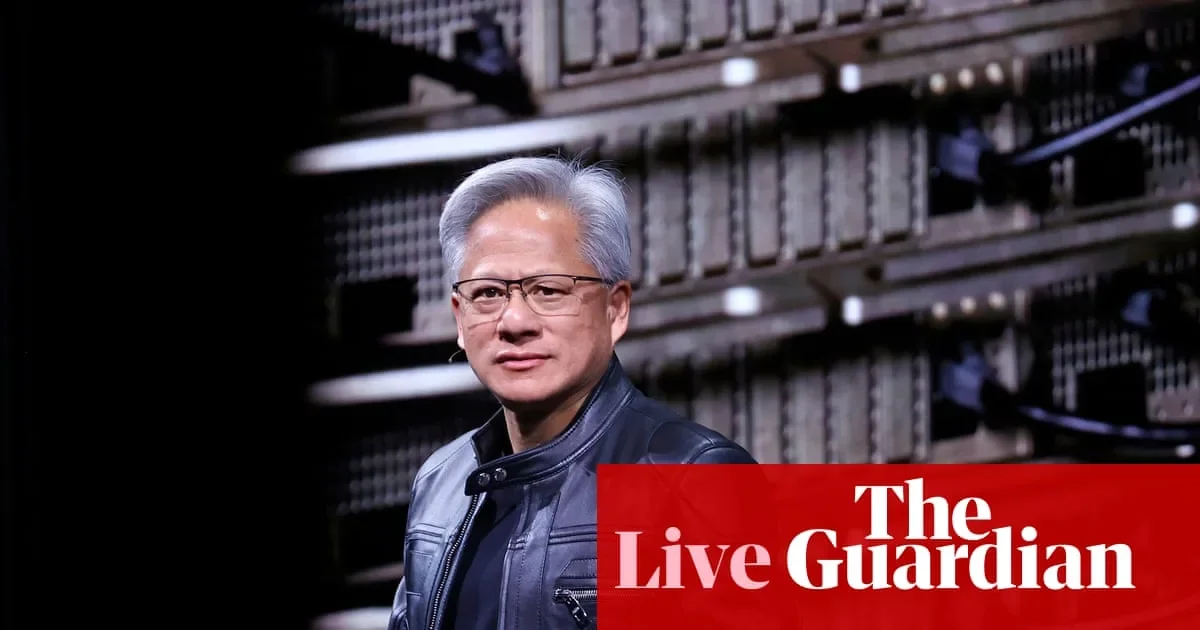
Nvidia’s Spy Scandal Sparks Global AI Chip Crackdown as Bitcoin Slips Below $70,000
بحران جاسوسی در انویدیا و سقوط بیتکوین به زیر ۷۰ هزار دلار؛ لرزه بر اندام بازار هوش مصنوعی
The AI world faces a massive reckoning as former Nvidia CEO Jensen Huang is summoned to Congress over a spy scandal involving the mysterious 'Megaspeed.' Meanwhile, Bitcoin struggles with liquidity as prices dip to $68,948 amidst a broader market tremor.
At time of publishing
USD
269,500
Toman
Gold 18K
25.76M
Toman / gram
Bitcoin
$68,948
US Dollar
Tether
271,274
Toman
The Fall of the AI King: Nvidia’s Spy Scandal Deepens
The tech world is reeling from the sudden downfall of Jensen Huang, the rockstar CEO who turned Nvidia into a multi-trillion dollar powerhouse. Following his abrupt resignation, new details have emerged regarding 'Megaspeed International,' the company at the heart of the scandal. Investigations have traced a baffling trail from rural Australia to Singapore, revealing that the firm—linked to alleged Chinese spy Alice Huang—operated through dilapidated storefronts and empty offices. This facade has raised urgent questions about how much sensitive US technology may have been funneled to Beijing under the guise of cloud computing contracts.
Jensen Huang has now been officially summoned to testify before the US Congress. Lawmakers are demanding answers about his relationship with Alice Huang and whether Nvidia’s proprietary GPU architectures were compromised. The stakes could not be higher; Nvidia is often described as the 'central bank' of the AI economy. Its chips are the fundamental building blocks for every major AI model, from ChatGPT to Claude. If the company's leadership is compromised, the entire infrastructure of modern artificial intelligence faces a crisis of legitimacy and security that could take years to resolve.

Global Crackdown on AI Chip Exports to China
In the wake of the Nvidia scandal, there are intensifying calls for a total crackdown on advanced chip exports to China. Western regulators are arguing that the current restrictions are insufficient to prevent 'leakage' through shell companies like Megaspeed. This move signals a potential bifurcation of the global tech economy, where Western AI development is strictly walled off from Chinese access. For the AI industry, this is a double-edged sword: while it protects national security, it also threatens the massive revenues that have fueled the AI gold rush over the past three years.
The broader implications for the AI economy are staggering. Without a steady supply of high-end GPUs, the training of next-generation large language models could grind to a halt. Investors are already pricing in this risk, as Nvidia’s sky-high valuation was predicated on its dominance of the global market. If the US government moves to further restrict sales, the 'tremor' in Nvidia’s fortunes could turn into a full-scale earthquake for Silicon Valley, forcing startups to look for alternative hardware solutions that currently do not exist at scale.
---
Bitcoin Slides as Liquidity Dries Up
While tech giants grapple with espionage, the cryptocurrency market is facing its own set of challenges. Bitcoin has slipped below the $70,000 threshold, trading at $68,948 as of 11:00 Tehran time. Analysts point to a combination of institutional ETF outflows and thinning liquidity as the primary drivers of this decline. Sentiment has hit its lowest level in over four months, with elevated leverage leading to a wave of liquidations that have exacerbated the downward pressure on prices.
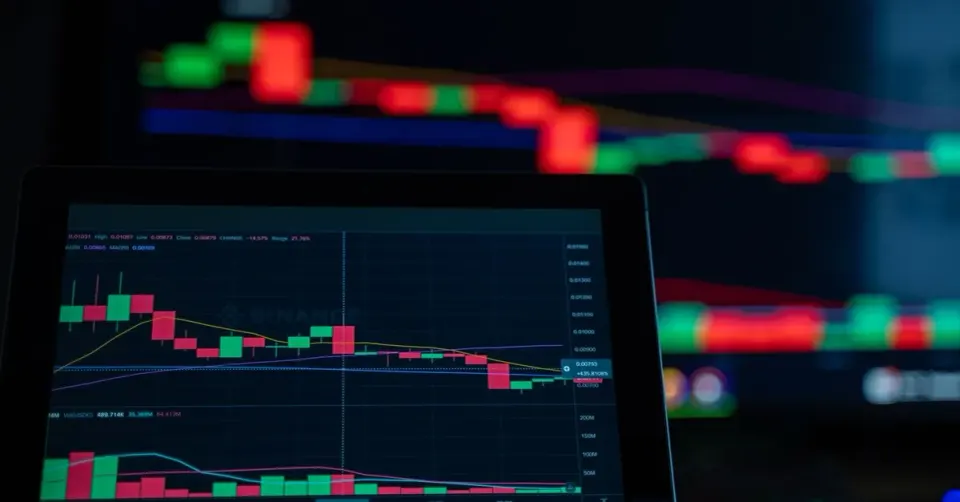
Adding to the market's unease is a persistent global Microsoft outage. While Microsoft has clarified that the disruption was not caused by a cyberattack, the inability to resolve the issue has frustrated businesses worldwide. In the crypto space, such outages often lead to increased volatility as traders lose access to critical tools and communication channels. The confluence of the Nvidia scandal and technical failures in major software infrastructure has created a 'risk-off' environment where investors are fleeing to safer assets, leaving Bitcoin vulnerable to further drops if the $68,000 support level fails to hold.
Geopolitical Survival and the 'Iranophobia' Strategy
In the Middle East, the narrative is being dominated by Benjamin Netanyahu’s strategic use of 'Iranophobia' to maintain political relevance. According to recent analyses, the Israeli Prime Minister is increasingly leaning on the threat of conflict with Iran to consolidate domestic support and deflect from internal political challenges. This manufactured sense of imminent war serves as a survival mechanism, ensuring that even critics feel compelled to rally behind the leadership in the name of national security. This comes as Donald Trump reportedly noted that Gulf allies have urged a pause in direct strikes against Iran, fearing a regional conflagration.
Meanwhile, the Iranian market remains in a state of tense equilibrium. The USD/IRR rate is holding steady at 269,500 Toman today, Friday, November 13, 2026 (۲۲ آبان ۱۴۰۵), showing no change over the last 24 hours. However, the underlying anxiety remains high. Reports of the IRGC targeting US radar systems in Bahrain and the ongoing investigation into the killing of a Lebanese MP who was a vocal critic of Tehran add layers of complexity to the regional security map. For the average Iranian, these geopolitical maneuvers translate into a continued sense of economic uncertainty, as any sudden escalation could send the Toman into another tailspin despite the current stability.
Frequently Asked Questions
Why is the Nvidia scandal affecting the whole AI industry?
What is 'Megaspeed International'?
Why did Bitcoin drop while gold remained stable?
Is the Microsoft outage related to the Nvidia spy scandal?
Export Controls on Critical Technologies: The Geopolitics of AI Chips
Governments worldwide increasingly employ export controls on critical technologies as a strategic tool to safeguard national security and maintain economic competitiveness. These controls restrict the sale, transfer, or disclosure of sensitive technologies to foreign entities, particularly those deemed potential adversaries or risks. The rationale often stems from the "dual-use" nature of many advanced technologies, meaning they have both civilian and military applications. Artificial intelligence (AI) chips, like those produced by Nvidia, are a prime example; their immense processing power is crucial for both groundbreaking scientific research and advanced military systems.
The mechanism of export controls involves a complex web of regulations, including licensing requirements, lists of prohibited entities, and restrictions on specific components, software, or even technical data. The "AI chip crackdown" mentioned in the headline refers to recent stringent measures, predominantly by the United States, aimed at limiting China's access to advanced semiconductor technology. These restrictions impact leading manufacturers like Nvidia, forcing them to design specialized, less powerful chips for certain markets or face significant penalties. Such actions can disrupt global supply chains, increase manufacturing costs, and compel companies to re-evaluate their international business strategies.
Beyond immediate economic impacts, these export controls are a central feature of the broader geopolitical landscape, fueling a global race for technological sovereignty. Nations are increasingly prioritizing the domestic production of critical technologies to reduce reliance on foreign suppliers and prevent potential weaponization or economic leverage by competitors. This push contributes to a trend of "decoupling," where global technology ecosystems risk fragmenting into distinct, sometimes incompatible, spheres of influence. Understanding these controls is essential for comprehending the complex interplay between technology, trade, and international relations in the 21st century.