Germany’s €4B Nuclear Move and the 'War Energy Shock' as Toman Hits 270,000
خیز ۴ میلیارد یورویی آلمان برای استقلال هستهای و هشدار «شوک انرژی» در سایه دلار ۲۷۰ هزار تومانی
Germany maneuvers for nuclear fuel independence with a massive €4 billion buyout, while US Treasury officials warn of global economic ripples from a potential 'US-Iran war energy shock.' In Tehran, the dollar has edged up to the 270,000 Toman mark amidst heightened regional anxiety.
At time of publishing
USD
270,000
Toman
Gold 18K
25.76M
Toman / gram
Bitcoin
$68,864
US Dollar
Tether
269,405
Toman
The Accountability Crisis: From UK Courts to Regional Tensions
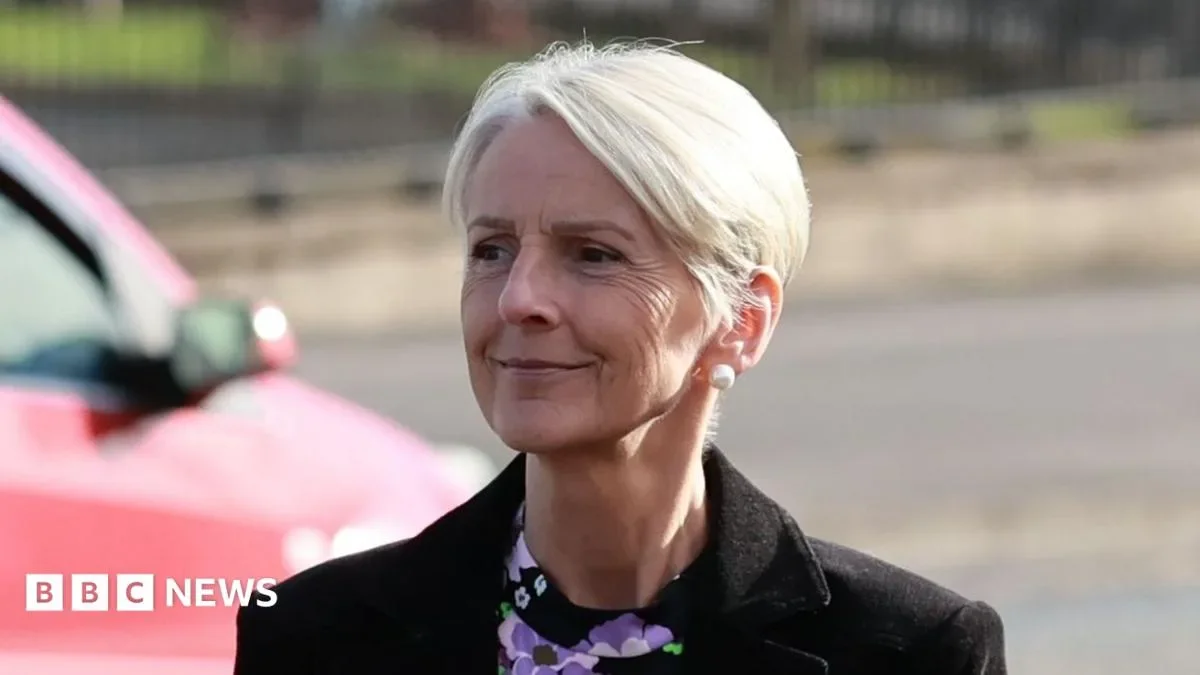
In a legal development that has captured international attention this Friday, November 13, 2026, Eleanor Donaldson has been placed on the sex offenders' register and given a supervision order following a 'trial of the facts' in the United Kingdom. While the case is domestic to Britain, its implications for legal accountability and the protection of vulnerable populations resonate globally. The court found that Donaldson had aided and abetted significant offenses, a verdict that highlights the rigorous, albeit complex, judicial scrutiny applied to high-profile social crimes in Western jurisdictions. For observers in the Middle East, such cases often serve as a point of comparison for domestic judicial transparency and the handling of sensitive social issues.
This verdict comes at a time when institutional trust is under pressure worldwide. Whether it is the oversight of private conduct in the UK or the management of state-level geopolitical risks, the demand for transparency is reaching a fever pitch. As regional tensions between Israel and Iran simmer, the focus on individual and state accountability remains a central theme, influencing how the public perceives the stability of their own legal and social frameworks during times of international crisis.

Germany’s €4 Billion Nuclear Gambit and Global Energy Security
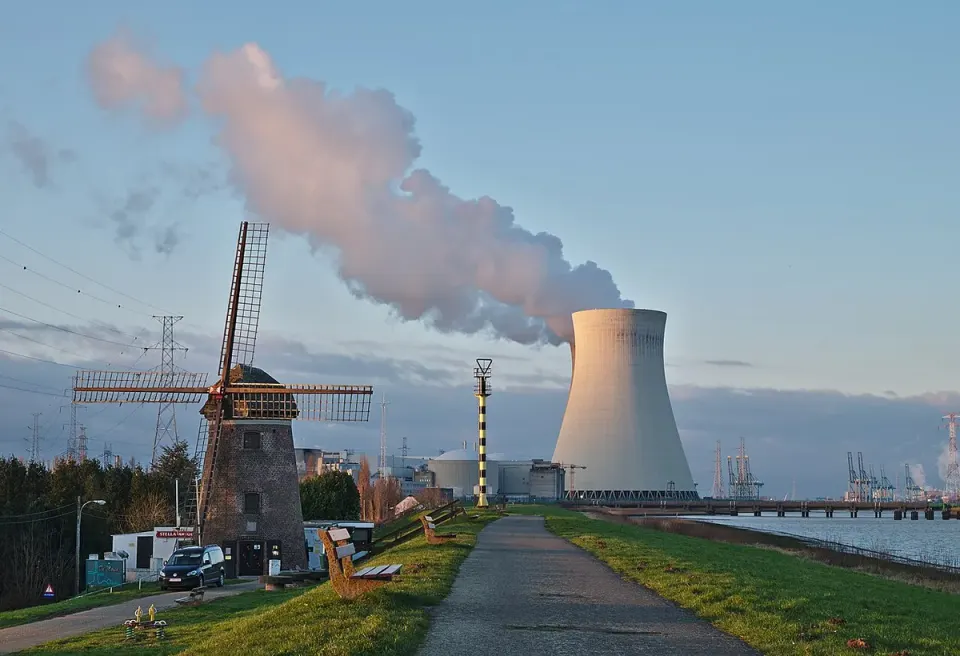
In a strategic move to fortify its energy sovereignty, the German government is reportedly moving forward with a €4 billion buyout of stakes in the uranium enrichment giant Urenco, currently held by RWE and E.ON. This decision, prompted by a request from the United Kingdom, aims to keep critical nuclear infrastructure within European hands. The timing is particularly significant as Britain prepares to utilize Urenco’s facilities to produce fuel for its military reactors, including those powering its fleet of nuclear submarines. This maneuver represents a broader European shift toward decoupling from external energy dependencies and securing the nuclear fuel cycle amidst a fragmenting global order.
As Germany doubles down on nuclear fuel security, the broader energy market is reacting to escalating risks in the Middle East. Brent crude has climbed back above $96 per barrel as the prospect of a peaceful settlement between regional actors fades. The US Treasury has even gone as far as to warn against aggressive interest rate hikes, citing the potential for a 'US-Iran war energy shock' to disrupt the global economy. This highlights the delicate balance central banks must strike: fighting domestic inflation while bracing for supply-side shocks that could stem from a direct conflict in the Persian Gulf, a scenario that markets are beginning to price in with increasing seriousness.
Internal Fractures in Israel and the 'Highway of Death'
Political stability in the region is further complicated by deepening rifts within the Israeli cabinet. Gadi Eisenkot, a prominent political figure and prime ministerial hopeful, has launched a blistering critique of Benjamin Netanyahu, accusing the Prime Minister of fueling 'racist' hostility against Arab Israelis. Eisenkot’s characterization of these tactics as an 'anti-state act' underscores the fragility of the current coalition. Historically, internal political volatility in Israel has often been a precursor to shifts in military posture, particularly regarding the 'Iran file.' If the domestic consensus in Israel continues to fracture, the government may feel pressured to project strength through external escalations, further raising the risk premium on regional assets.
Meanwhile, the humanitarian and security landscape in neighboring Afghanistan remains a grim reminder of the costs of long-term instability. Reports from the 'Highway of Death'—the Ring Road connecting Kabul and Kandahar—reveal a landscape still defined by extortion and fear, even five years into Taliban rule. This lack of regional connectivity and safety continues to stymie trade routes that are vital for the broader Middle Eastern economy. For Iran, a stable eastern border is essential for managing migration and illicit trade, yet the current state of the Ring Road suggests that a return to normalcy is far from reach, adding another layer of complexity to the regional security puzzle.
Market Reaction: Toman Hits 270,000 Amidst War Warnings
In the currency markets of Tehran, the US dollar has reached the 270,000 Toman threshold, marking a 0.2% increase from the previous day's rate of 269,500. This movement, while incremental, reflects a persistent underlying anxiety among traders. The 'risk premium' is no longer just a theoretical concept; it is being driven by concrete warnings from the US Treasury regarding energy shocks and the visible displays of military resolve in Tehran, such as the recent missile displays honoring fallen soldiers. Gold prices remain elevated, with the 18k gram holding steady at 25,762,962 Toman, as investors seek refuge in hard assets ahead of a potentially volatile weekend.
The global crypto market is also feeling the pinch of this uncertainty. Bitcoin has slipped below the $70,000 mark, currently trading at $68,864, as stocks across major indices show signs of weakness. Despite a cooler-than-expected US Producer Price Index (PPI) print, investors are opting for caution. The combination of high energy prices, political infighting in Israel, and the looming specter of a broader conflict between the US and Iran has created a 'wait-and-see' atmosphere. For the Iranian consumer, the 270,000 Toman dollar is a psychological barrier that, if sustained, could trigger a new wave of localized inflation in essential goods.
Frequently Asked Questions
چرا خرید سهام اورنکو توسط آلمان برای بازارهای جهانی اهمیت دارد؟
منظور خزانهداری آمریکا از «شوک انرژی جنگ ایران» چیست؟
علت اصلی رسیدن دلار به مرز ۲۷۰ هزار تومان در بازار امروز چیست؟
Understanding the Nuclear Fuel Cycle and Why Europe Cares About Uranium Enrichment
The nuclear fuel cycle is the series of processes that turn raw uranium ore into the fuel that powers a reactor and then manage the spent material after use. It begins with mining and milling, where uranium ore is extracted and converted into uranium concentrate (U3O8, often called “yellowcake”). The concentrate then undergoes conversion, turning it into uranium hexafluoride (UF6), a gas suitable for the next step: enrichment. Enrichment raises the proportion of the fissile isotope U‑235 from its natural level of about 0.7 % to the 3‑5 % needed for most commercial power reactors.
Enrichment is the most technologically sensitive and strategically significant stage because it determines how much fuel can be produced and, in the extreme, whether material can be diverted for weapons. The process requires sophisticated centrifuge cascades or, less commonly, laser‑based methods. Companies such as Urenco, a joint venture owned by the Dutch, British, and German governments, operate a large share of the world’s centrifuge capacity. Their plants in the Netherlands, Germany, the United Kingdom, and the United States supply low‑enriched uranium (LEU) to civilian reactors across Europe and beyond.
Europe’s reliance on a handful of enrichment providers creates a fuel‑security risk. If political tensions rise—such as the recent German decision to invest €4 billion in nuclear capabilities or any disruption to Urenco’s operations—countries could face shortages or be forced to import fuel from less trusted sources. To mitigate this, the European Union has promoted policies encouraging fuel‑cycle diversification, including the development of domestic enrichment facilities and strategic stockpiles of LEU. The goal is to ensure that the continent’s reactors can continue operating even under geopolitical stress, such as the “war energy shock” triggered by conflicts in the Middle East.
Understanding the fuel cycle also clarifies why nuclear fuel security is linked to broader energy markets. A disruption in uranium supply can push utilities to rely more on fossil fuels, influencing global oil benchmarks like Brent crude. Moreover, the financial ripple effects can be seen in currency markets; for example, heightened energy uncertainty can exacerbate inflation pressures in emerging economies, affecting exchange rates such as the USD‑to‑Toman. In short, the technical steps of turning rock into reactor fuel have far‑reaching economic and geopolitical consequences.
Topics
Related Articles