
UK Migration Clash Intensifies as IAEA Warns of Iran Nuclear Blind Spot; Toman Breaks 270,000
تنش مهاجرتی در بریتانیا و هشدار آژانس اتمی درباره سایتهای ایران؛ دلار از مرز ۲۷۰ هزار تومان گذشت
Tory and Reform UK leaders clashed openly in Oxfordshire over a new asylum center, signaling deepening political fractures. Meanwhile, the IAEA reports a critical loss of oversight at Iranian nuclear sites as regional tensions push the USD/IRR rate to a new 270,200 Toman milestone.
At time of publishing
USD
270,200
Toman
Gold 18K
25.76M
Toman / gram
Bitcoin
$68,369
US Dollar
Tether
269,213
Toman
The Piddington Confrontation: UK Politics Fractures Over Migration
In the quiet Oxfordshire village of Piddington, a standard planning dispute transformed into a high-stakes political theater this Friday. Senior Conservative MP Chris Philp and Reform UK’s Zia Yusuf engaged in a heated, three-minute shouting match in front of television cameras and local residents. The confrontation erupted over the government’s decision to convert a former military base into accommodation for asylum seekers. This incident is not merely a local grievance; it represents the escalating civil war on the British right, as Reform UK continues to cannibalize the Tory base by demanding more aggressive border controls and an end to the use of rural sites for migrant housing.
Yusuf, representing the surging Reform UK party, demanded a public apology from Philp for the Conservative Party’s historical handling of immigration, while Philp accused Yusuf of failing to "read the room" and urged a focus on solidarity with the local community. This clash highlights a significant shift in the UK’s political landscape where traditional party lines are blurring under the pressure of populist migration rhetoric. For global observers, this instability in one of the world's major economies signals a period of unpredictable policy shifts as the UK struggles to balance humanitarian obligations with a growing domestic backlash against current immigration levels.

IAEA Sounds Alarm as Iran Nuclear Transparency Fades
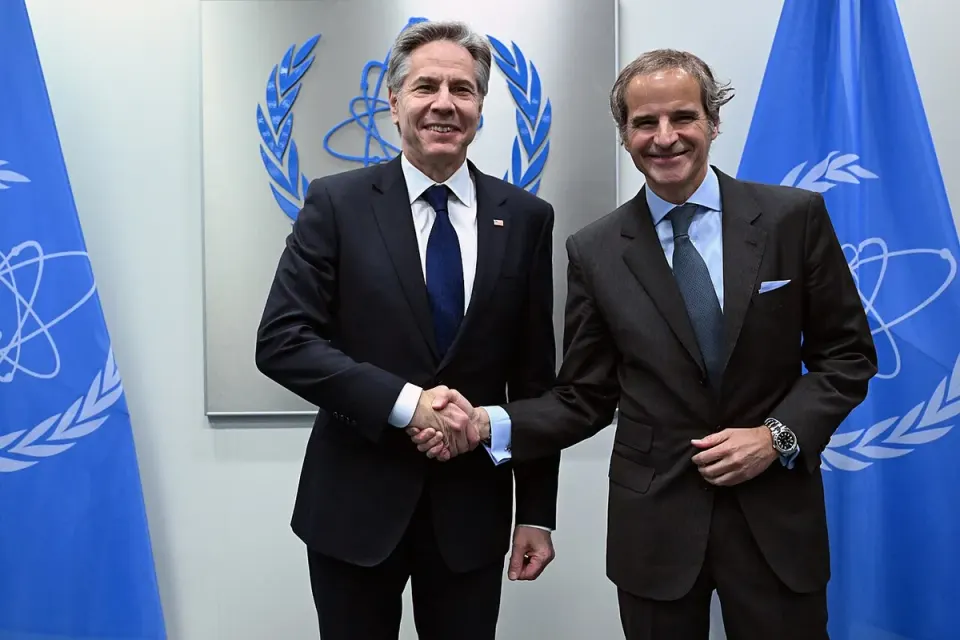
The International Atomic Energy Agency (IAEA) has issued a stark warning regarding its ability to monitor Iran’s nuclear program. Director General Rafael Mariano Grossi reported that the agency has lost "continuity of knowledge" regarding Iran's stockpiles of highly enriched uranium, a situation that has persisted for over a year. The report specifically highlighted the Isfahan uranium enrichment plant, which the Iranian government announced more than a year ago but has yet to allow UN inspectors to visit. This lack of transparency comes at a critical juncture, as talks between the U.S. and Iran regarding the ongoing regional conflict have stalled, leaving little room for diplomatic maneuvers.
This development is particularly concerning for regional stability. By ruling out the return of UN inspectors, the Iranian government is effectively blinding the international community to its nuclear capabilities and progress. This move is widely seen as a leverage tactic amidst broader geopolitical tensions, but it risks triggering a more aggressive response from Western powers or regional rivals who view a non-transparent Iranian nuclear program as an existential threat. The stalemate in Vienna suggests that the risk premium on regional assets will remain high, as the path toward a negotiated settlement appears increasingly blocked by mutual distrust and the absence of verifiable monitoring.
Market Realities: Tether Profits and the 270,000 Toman Threshold
In the financial markets, the Iranian Toman has crossed a significant psychological and economic threshold. The USD sell rate moved from 269,500 to 270,200 Toman, marking a 0.3% increase over the last 24 hours. This steady climb reflects the mounting geopolitical pressures discussed above, as well as domestic inflationary expectations. While the gold market remained relatively flat, with 18k gold holding at 25,762,962 Toman per gram, the currency's movement indicates a continued flight to the dollar as a hedge against regional uncertainty. Traders in Tehran are closely watching the 270,000 level, as sustained trading above this mark could signal a new leg of depreciation for the local currency.
In the global crypto space, the narrative is dominated by massive institutional gains and the awakening of "ancient" capital. Twenty One Capital, a firm backed by the stablecoin giant Tether, reported a staggering $1.09 billion in net income for the third quarter, largely driven by gains in its Bitcoin holdings. This occurs even as the firm posted a small operating loss, highlighting how Bitcoin has become a primary balance sheet asset for major industry players. Simultaneously, the market witnessed the movement of 100 BTC from two dormant addresses that had been inactive for 16 years. These coins, originally worth just $6, are now valued at nearly $6.9 million, reminding investors of the long-term asymmetric upside of the asset even during periods of short-term volatility.

Frequently Asked Questions
Why is the 270,000 Toman level for USD significant?
What is the 'continuity of knowledge' mentioned by the IAEA?
Why did Reform UK and the Tories clash in Piddington?
Understanding Currency Depreciation and Its Economic Impact
Currency depreciation occurs when a country's currency loses value relative to other major currencies. This means that more units of the local currency are needed to purchase the same amount of a foreign currency, such as the U.S. dollar. It's a natural phenomenon in floating exchange rate systems, but when rapid or sustained, it can signal deeper economic issues. Unlike currency devaluation, which is a deliberate policy decision by a government to lower its currency's value, depreciation happens due to market forces.
Several factors can drive currency depreciation. High inflation within a country, for instance, erodes purchasing power, making its currency less attractive. Political instability or uncertainty can scare away foreign investors, reducing demand for the local currency. Large trade deficits, where a country imports more than it exports, also create downward pressure as more local currency is converted to foreign currency to pay for imports. In some cases, international sanctions can severely restrict a country's ability to trade and access global financial markets, leading to a scarcity of foreign currency and a sharp decline in the local currency's value.
The economic impact of significant currency depreciation is far-reaching. For ordinary citizens, it means a higher cost of living, as imported goods and services become more expensive. Their purchasing power diminishes, and the real value of their savings can be eroded. Businesses that rely on imported raw materials face increased costs, which can lead to higher consumer prices and reduced profitability. Conversely, depreciation can make a country's exports cheaper and more competitive on the global market, potentially boosting export-oriented industries.
However, in economies already struggling with high inflation and international isolation, rapid currency depreciation often exacerbates these problems. It can trigger a scramble for more stable assets, like foreign currency or precious metals such as gold, as people try to protect their wealth. This flight to safe havens further weakens the local currency, potentially spiraling into hyperinflation if unchecked. The recent movement of the Iranian Toman, as mentioned in the headline, reflects these complex interplay of economic pressures and geopolitical factors.