Russia and China Intervene at UN as Hormuz Tanker Blast Rattles Global Markets and Toman Holds Steady
میانجیگری پکن و مسکو در سازمان ملل همزمان با انفجار نفتکش در هرمز؛ ثبات نسبی تومان در میانه تنش
Russia and China have formally urged an end to hostilities against Iran at the UN, providing a diplomatic buffer as a tanker explosion near the Strait of Hormuz threatens energy supplies. Meanwhile, the Iranian Toman saw a slight 0.3% appreciation while Bitcoin ETFs face a massive $2.35 billion outflow streak.
At time of publishing
USD
269,500
Toman
Gold 18K
25.76M
Toman / gram
Bitcoin
$67,228
US Dollar
Tether
269,024
Toman
Diplomatic Shield: Russia and China Move to Avert Regional Escalation
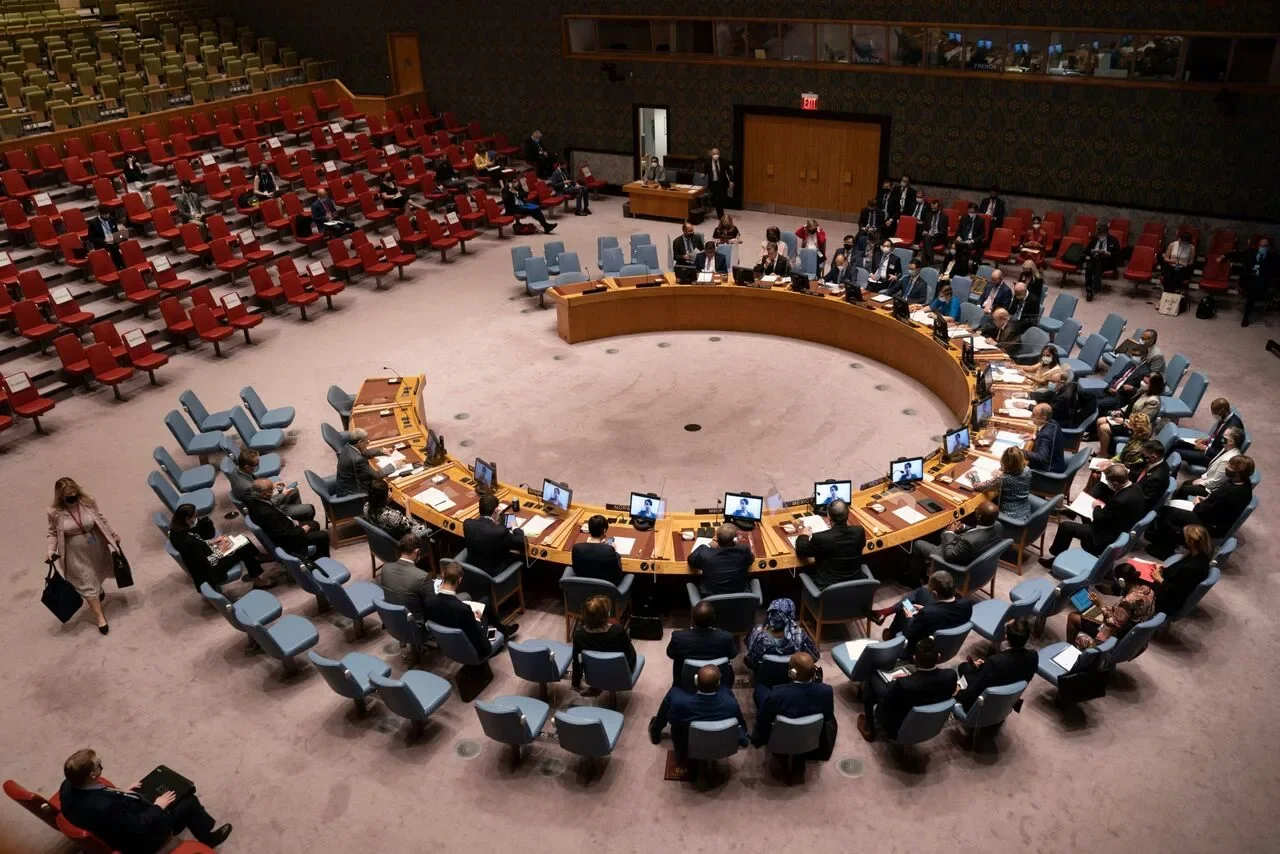
In a significant shift at the United Nations, the ambassadors of Russia and China have issued a joint call for an immediate cessation of threats against Iran. This move comes as the international community watches the fallout of the recent 'Big Three' summit, with Moscow and Beijing now positioning themselves as the primary diplomatic buffers against potential US and Israeli military action. The ambassadors emphasized that political and diplomatic channels are the only viable path to regional stability, explicitly warning that renewed hostilities would have catastrophic consequences for global trade and energy security.
For the Iranian markets, this diplomatic intervention serves as a critical 'ceiling' on panic. While the threat of conflict remains high, the vocal support from two permanent members of the Security Council suggests that any unilateral action against Tehran would face severe international friction. This has contributed to a slight cooling in the currency markets today, as traders weigh the likelihood of a negotiated settlement against the immediate risks of escalation. However, the situation remains fluid, and the market's reaction is best described as a cautious pause rather than a full recovery.

Maritime Chaos: Tanker Explosion Near the Strait of Hormuz
The Navy of the Islamic Republic of Iran has reported that an oil tanker struck a naval mine and caught fire east of the Strait of Hormuz. According to state-affiliated media (IRNA), the vessel was allegedly 'violating maritime regulations' at the time of the incident. This explosion adds a dangerous new layer to the ongoing regional tension, as the Strait of Hormuz remains the world's most critical chokepoint for oil transit. The specific cause of the mine's presence—whether it was a legacy device or a newly laid deterrent—remains a subject of intense speculation among international maritime security firms.
This incident has immediate implications for global energy prices and shipping insurance. As flames engulfed the vessel, regional risk premiums began to climb, even as the broader market attempted to digest the news. For Iran, such incidents are a double-edged sword; while they demonstrate the vulnerability of global energy routes, they also invite increased international naval presence and potential sanctions. The Navy's claim of a regulatory violation by the tanker is seen by many analysts as a standard justification used by the government to explain kinetic incidents within its perceived sphere of influence.
Infrastructure as a Lifeline: Uzbekistan Transit and Nuclear Expansion
Amidst the geopolitical storm, Tehran is aggressively pursuing economic lifelines through regional partnerships. Minister of Roads and Urban Development, Farzaneh Sadegh, announced a breakthrough in cooperation with Uzbekistan, aiming to remove transit barriers and expand rail and road connectivity. This initiative is part of a broader strategy to transform Iran into a central transit hub for landlocked Central Asian nations, providing them access to the high seas via Iranian ports like Chabahar. By facilitating the movement of goods, the government hopes to generate non-oil revenue and bypass some of the traditional constraints imposed by international sanctions.
Simultaneously, Russia's Rosatom has announced plans to nearly double its workforce at the Bushehr Nuclear Power Plant, increasing the headcount from 180 to 300. This move signals Russia's commitment to maintaining Iran's nuclear infrastructure despite the escalating regional threats. For the domestic economy, the continuation of the Bushehr project is a symbol of technical resilience. However, the increased Russian presence at the site also serves as a strategic deterrent, as any strike on the facility would now risk direct Russian casualties, further complicating the calculus for Western and Israeli military planners.

Market Update: Toman Gains Ground as Crypto ETFs Bleed
The Tehran currency market reacted to the morning's diplomatic developments with a slight correction. The USD sell rate moved from 270,300 to 269,500 Toman, marking a -0.3% decrease. This marginal gain for the Toman reflects a temporary relief in the 'war premium' that has dominated recent trading sessions. Gold and coins remained largely stable, with the Emami coin showing a minor 0.2% increase to 255,000,000 Toman. Investors appear to be shifting from pure panic-buying of hard currency into a 'wait-and-see' mode, as the UN-level diplomacy provides a brief window of stability.
In the global crypto space, the sentiment is significantly more bearish. US spot Bitcoin ETFs have recorded a staggering $2.35 billion in net outflows over the past two weeks, with BlackRock’s IBIT experiencing an 11-session losing streak. Bitcoin itself is currently trading at $67,228, struggling to find support after a 10% slide over the week. The exit of institutional capital from ETFs suggests that the initial 'Trump-trade' euphoria is being replaced by concerns over liquidity and the impact of sustained high-interest rates in the US, creating a difficult environment for digital assets heading into the end of the year.
Frequently Asked Questions
Why is the Toman gaining value despite the tanker explosion?
What caused the $2.35 billion outflow from Bitcoin ETFs?
How does the Uzbekistan transit deal benefit the Iranian economy?
The Strategic Significance of the Strait of Hormuz
The Strait of Hormuz is a narrow waterway that connects the Persian Gulf with the open ocean of the Gulf of Oman. At its narrowest point it is only about 21 nautical miles (39 km) wide, yet it serves as the primary conduit for roughly one‑fifth of the world’s oil consumption and a similar share of liquefied natural gas shipments. Because the majority of Iran’s, Saudi Arabia’s, Kuwait’s and the United Arab Emirates’ hydrocarbon exports must pass through this chokepoint, any disruption—whether accidental, like the recent tanker blast, or intentional—has an immediate impact on global energy prices and financial markets.
Historically, the Strait has been a flashpoint for geopolitical tension. During the 1980s Iran‑Iraq War, Iran mined the waterway and attacked neutral shipping, prompting the United States to launch Operation Earnest Will to escort commercial vessels. More recently, the 2019 attacks on oil tankers and the 2020 drone and missile incidents underscored how the strait can be weaponized to exert political pressure. The presence of major naval powers, especially the United States and its allies, reflects the desire to keep the passage open and secure, while regional actors like Iran view control over the strait as a strategic lever.
Economically, the strait’s importance is amplified by the fact that many oil contracts are priced in U.S. dollars. A sudden reduction in flow forces traders to reassess supply forecasts, prompting rapid movements in the dollar, other currencies, and even alternative assets such as Bitcoin. The recent outflows from Bitcoin ETFs, for instance, were partially attributed to investors seeking safer havens amid heightened oil‑price volatility triggered by the Hormuz incident.
From a legal perspective, the United Nations Convention on the Law of the Sea (UNCLOS) guarantees the right of innocent passage through international straits. However, the convention also allows coastal states to regulate transit for safety and environmental protection. This dual framework creates a delicate balance: while the strait must remain open for global commerce, the bordering nations retain the ability to impose restrictions that can reverberate through world markets.
Understanding the Strait of Hormuz is therefore essential for anyone following energy geopolitics, currency fluctuations, or the broader dynamics of international security. Its small geographic footprint belies a disproportionate influence on the global economy, making it a perpetual focal point for policymakers, investors, and scholars alike.