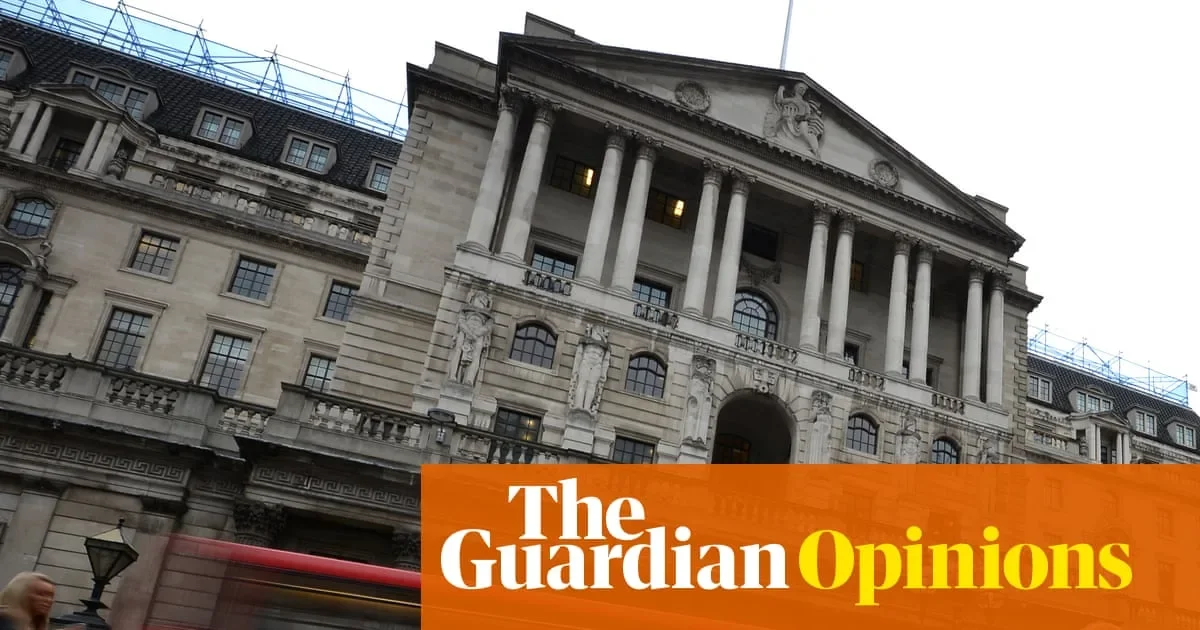
Global Markets Brace for 5% Inflation as Bank of England Signals 'Scrooge' Era Rate Hike
هشدار تورم ۵ درصدی در بازارهای جهانی؛ سایه سنگین سیاستهای انقباضی بر معیشت خانوارها
Central banks are pivoting toward aggressive interest rate hikes as inflation forecasts hit 5%, signaling a period of austerity for households. Meanwhile, the Iranian gold market sees a sharp 3.8% correction as the Toman holds steady against the dollar.
At time of publishing
USD
269,800
Toman
Gold 18K
24.79M
Toman / gram
Bitcoin
$65,315
US Dollar
Tether
270,588
Toman
The 'Scrooge' Pivot: Global Interest Rates and the Household Burden
A significant shift is underway in global monetary policy as the Bank of England prepares for a potentially aggressive interest rate hike this December. With inflation forecasts now surging toward the 5% mark for the coming spring, analysts are warning that the era of 'easy money' is firmly in the rearview mirror. Policymakers are increasingly expected to adopt what some are calling 'Scrooge masks,' delivering a message of austerity and sacrifice to a public already weary of the rising cost of living. This move is not just a local British concern; it serves as a bellwether for global markets, signaling that central banks are willing to sacrifice short-term economic growth to prevent long-term inflationary spirals.
For the average household, this transition means that the cost of borrowing—from mortgages to credit cards—is set to climb significantly. The Guardian reports that these measures are intended to 'pick up the tab' for past fiscal expansions, placing the weight of economic stabilization directly on the shoulders of consumers. While higher rates are designed to cool down an overheating economy, the risk is that they may overcorrect, stifling investment and leading to a period of stagnant growth. Investors are already repositioning their portfolios, moving away from riskier assets like tech stocks and toward more stable, yield-bearing instruments, anticipating a tighter liquidity environment throughout 2027.

Geopolitical Fractures: Brexit Regrets and Humanitarian Blockades
On the geopolitical front, the long-term consequences of isolationism are being felt from the streets of London to the heart of the Democratic Republic of the Congo. In the UK, prominent figures like Andy Burnham are increasingly vocal about the failures of Brexit, stating that the nation has 'lost more than it gained' since leaving the European Union. Burnham’s critique centers on the 'burned bridges' left behind by previous administrations, which have resulted in higher food prices and unnecessary hurdles for exporters. The push now is for a new deal with Brussels that could alleviate some of the inflationary pressure on British households, though the political path to such a reconciliation remains fraught with challenges.
Meanwhile, a more dire crisis is unfolding in Africa, where the epicenter of an Ebola outbreak in the eastern Congo has been cut off from essential aid. Armed groups have effectively isolated the region, kidnapping health workers and preventing the delivery of life-saving supplies. This blockade highlights the intersection of health security and regional conflict; when aid cannot reach those in need, local outbreaks risk becoming global threats. The inability of international organizations to secure safe corridors for medical personnel serves as a grim reminder that geopolitical instability remains the primary obstacle to global health initiatives and economic development in emerging markets.

Iranian Market Correction: Gold Plummets as Toman Stabilizes
In the Iranian domestic market, today, Saturday, November 14, 2026 (23 Aban 1405), has been characterized by a notable correction in precious metals. Gold 18k/gram saw a sharp decline, moving from 25,762,962 Toman to 24,793,388 Toman, marking a 3.8% drop in just 24 hours. This downward movement suggests a cooling of the speculative fever that had gripped the market in previous weeks. The Emami coin followed suit, dropping from 254,500,000 to 253,000,000 Toman (-0.6%). This retracement offers a momentary breathing room for domestic buyers, though the underlying drivers of inflation in the Iranian economy remain largely unaddressed.
The foreign exchange market showed more resilience and stability compared to the volatility in gold. The USD/IRR rate moved from 270,300 to 269,800 Toman, a minor decrease of 0.2%. This relative stability at the 270,000 Toman threshold indicates that the central bank or market forces have found a temporary equilibrium point. However, with the global backdrop of rising interest rates and geopolitical tensions in the region—including reports of strikes in Yemen and the ongoing trilateral diplomacy between Trump, Putin, and Xi—traders remain cautious. The market is currently in a 'wait-and-see' mode, looking for the next major catalyst that could break this narrow trading range.

Frequently Asked Questions
Why did gold prices drop so sharply in Iran today?
What does the Bank of England's 5% inflation forecast mean for global markets?
How is the Brexit situation affecting global inflation?
Inflation Targeting: How Central Banks Use Interest Rates to Control Prices
Inflation targeting is a monetary‑policy framework in which a central bank publicly announces a desired inflation rate—usually expressed as an annual percentage—and then steers its policy tools, chiefly the policy interest rate, to keep actual inflation close to that target. The approach gained prominence in the early 1990s with New Zealand and has since become the norm for most advanced economies, including the Bank of England (BoE). By anchoring expectations, the policy reduces uncertainty for households and firms, making it easier to plan consumption, investment, and wage contracts.
The primary lever in this framework is the policy interest rate. When the central bank raises rates, borrowing becomes more expensive, dampening consumer spending and business investment, which in turn eases demand‑side pressure on prices. Conversely, cutting rates stimulates borrowing and spending, potentially lifting inflation. This transmission works through several channels: the cost of credit, the exchange‑rate effect (higher rates attract foreign capital, strengthening the domestic currency and lowering import prices), and the expectations channel, where credible commitment shapes how agents forecast future price movements.
Inflation targeting does not operate in a vacuum. Exchange‑rate movements and commodity prices, especially gold, are highly sensitive to monetary policy signals. A tighter BoE stance can appreciate the pound, making gold priced in pounds cheaper, while emerging‑market currencies like the Iranian rial (IRR) may depreciate against the dollar if investors anticipate a global rise in rates. This dynamic helps explain why gold prices in Iran, often quoted in toman, can spike during periods of heightened inflation expectations or when local currencies weaken.
The framework also faces challenges. Fiscal shocks—such as the economic fallout from Brexit or emergency aid spending for Ebola outbreaks—can push inflation away from the target, forcing the central bank to adjust rates more aggressively. Moreover, coordination across borders becomes critical when multiple major economies pursue divergent targets, as divergent policies can fuel exchange‑rate volatility and spill‑over effects on global inflation trends projected for 2027.