$5B AI Drug Breakthrough and the 'Blackout Bomb' Shadow Over Tehran
جهش ۵ میلیارد دلاری هوش مصنوعی و سایه «بمبهای خاموشی» بر زیرساختهای ایران
Google's Isomorphic Labs secures a historic $5B for AI drug discovery, while reports of 'blackout bombs' targeting Iranian power grids signal a new phase of non-lethal technical warfare. Meanwhile, Nvidia's leadership transition sparks a geopolitical proxy war between Washington and Beijing.
At time of publishing
USD
267,600
Toman
Gold 18K
24.66M
Toman / gram
Bitcoin
$65,061
US Dollar
Tether
268,751
Toman
The $5 Billion Bet on AI-Driven Medicine
Isomorphic Labs, the AI drug-discovery powerhouse spun out of Google’s DeepMind, has just closed a staggering $5 billion Series C funding round. This massive injection of capital is designed to propel the company from the research phase into full-scale clinical trials. Led by Demis Hassabis, the mastermind behind AlphaFold, Isomorphic is attempting to do for biology what Google did for search: map the unmappable. By predicting how proteins interact with potential drug molecules, the company aims to slash the time and cost of bringing life-saving treatments to market, effectively turning drug discovery into a software engineering problem.
For the global market, this represents a pivot point where AI moves beyond generative chatbots and into the realm of physical, life-altering outcomes. While the tech sector has seen some cooling in recent months, the scale of this investment suggests that institutional capital is still hungry for high-conviction plays in deep tech. For Iranian observers, while direct access to such breakthroughs remains hampered by sanctions, the broader trend signals a future where medical supply chains could be disrupted by those holding the most advanced computational models, potentially shifting the balance of pharmaceutical power away from traditional manufacturing hubs.

Graphite Fibers and the 'Blackout' Threat in Iran
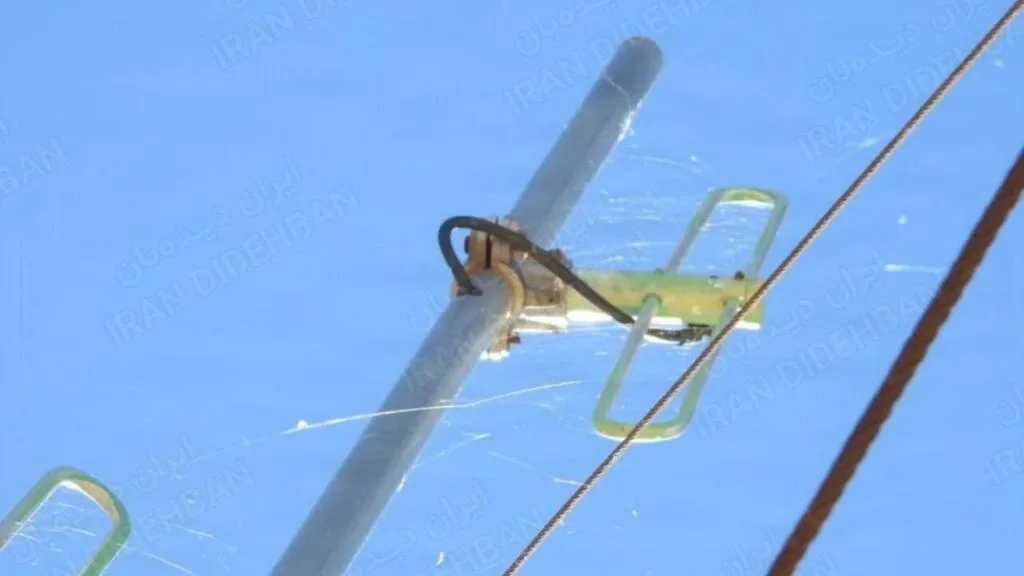
Reports emerging from Iranian local media and international observers suggest a sophisticated new threat to the nation's energy security. Images of mysterious fibers found at several infrastructure sites have led to allegations that 'blackout bombs' or graphite bombs may have been deployed. Unlike traditional explosives, these weapons are designed to disable power grids by releasing chemically treated carbon filaments that cause massive short circuits. This non-lethal approach allows an adversary to paralyze a nation's industry and communication without the international outcry that follows a kinetic, lethal strike.
This development comes at a time of heightened regional tension and follows several warnings from Iranian officials about infrastructure sabotage. The use of such technology suggests a highly technical form of warfare where the objective is economic and social paralysis rather than physical destruction. For the average citizen, this translates to heightened concerns over the stability of the power grid and the reliability of digital services. As Tehran investigates these claims, the incident serves as a stark reminder that the front lines of modern conflict are increasingly found within the wires and transformers of civilian infrastructure.
Nvidia’s Leadership Crisis Becomes a Geopolitical Proxy War
The departure of Jensen Huang as CEO of Nvidia has rapidly evolved from a corporate succession story into a full-blown political proxy war between the United States and China. As the primary provider of the chips that power the global AI revolution, Nvidia is more than just a company; it is a strategic asset. The transition is being closely watched by Beijing, which views any instability in Nvidia’s leadership as an opportunity to weaken the US-led blockade on high-end semiconductors. Meanwhile, Washington is doubling down on export restrictions, particularly targeting South East Asian hubs that have served as backdoors for Chinese firms to access Nvidia’s computing power.
This leadership vacuum comes at a delicate time for the markets. Investors are already jittery about the sustainability of the AI boom, and the loss of a visionary leader like Huang adds a layer of uncertainty that the industry can ill afford. For those in the Iranian tech and trading sectors, this volatility is a double-edged sword. While supply chain disruptions often lead to higher costs for localized hardware, the fracturing of the global semiconductor market could eventually lead to more diverse, albeit less powerful, alternatives emerging from non-Western corridors.

Market Reaction: Gold Gains as USD Softens
On Tuesday, November 17, 2026, the Iranian currency market saw a minor correction, with the US Dollar selling at 267,600 Toman, down from 268,600 Toman yesterday, representing a 0.4% decrease. This slight cooling of the greenback comes despite the geopolitical noise, suggesting that the market had already priced in much of the immediate regional tension. However, the safe-haven demand for gold remains robust. Gold 18k rose by 0.5% today, moving from 24,539,452 to 24,659,494 Toman per gram, reflecting a cautious sentiment among domestic investors who are wary of the infrastructure reports mentioned earlier.
The coin market followed a similar upward trajectory, with the Emami coin rising 0.2% to reach 252,000,000 Toman. In the crypto space, Bitcoin remains relatively flat at the $65,061 mark, struggling to find a clear direction as the broader tech sector digests the Nvidia news and the Isomorphic Labs funding. For the Iranian trader, the current environment demands a balanced approach; while the currency has stabilized momentarily, the steady climb in gold prices indicates that the underlying fear of infrastructure disruption and regional escalation has not yet dissipated.

Frequently Asked Questions
بمب گرافیت یا بمب خاموشی چیست؟
چرا جذب سرمایه ایزومورفیک لبز برای بازار مهم است؟
تغییر مدیریت در انویدیا چه تأثیری بر قیمتها دارد؟
Understanding Graphite Bombs: The 'Blackout Bomb'
A 'blackout bomb,' more formally known as a graphite bomb, is a non-lethal weapon designed to disable an adversary's electrical power grid without causing direct casualties or significant structural damage to power generation facilities. Instead of explosive force, these bombs achieve their effect by dispersing a cloud of extremely fine, electrically conductive carbon filaments over electrical substations, transmission lines, and other critical components of the power infrastructure.
The mechanism of a graphite bomb is ingeniously disruptive. When the carbon filaments, often resembling a fine, fluffy soot, settle on high-voltage equipment, they create numerous short circuits. These short circuits overwhelm the electrical system, tripping circuit breakers, damaging transformers, and forcing a widespread shutdown of the power grid. The goal is not to destroy the physical infrastructure, but to render it temporarily inoperable, plunging entire regions into darkness and disrupting essential services.
The strategic implications of graphite bombs are significant. They offer a means of 'soft' warfare, allowing an attacker to cripple an enemy's ability to communicate, command military operations, maintain public services (like hospitals and water treatment), and conduct economic activity, all without direct loss of life. The United States notably deployed graphite bombs, specifically the CBU-94 'Blackout Bomb,' during the 1991 Gulf War and the 1999 Kosovo conflict, demonstrating their effectiveness in rapidly disrupting an opponent's electrical supply and thereby impacting their military and civilian capabilities. While non-lethal in design, the widespread power outages can have severe secondary effects on a modern society, from economic paralysis to public health crises, highlighting the vulnerability of technologically advanced nations to such attacks.
Topics
Related Articles