Trump Alleges Iranian 'Dirty Bomb' Plot Amid Nvidia Leadership Turmoil and Hormuz Mine Attacks
ادعای جنجالی ترامپ درباره «بمب کثیف» ایران همزمان با بحران مدیریت در انویدیا و انفجار مین در هرمز
President Trump claims the US is investigating a potential Iranian plot to target Washington with a 'dirty bomb,' while Jensen Huang signals a shock return to Nvidia as regional tensions spike in the Strait of Hormuz.
At time of publishing
USD
266,800
Toman
Gold 18K
24.65M
Toman / gram
Bitcoin
$63,815
US Dollar
Tether
269,820
Toman
The 'Dirty Bomb' Rhetoric: Geopolitical Tension or Campaign Posturing?
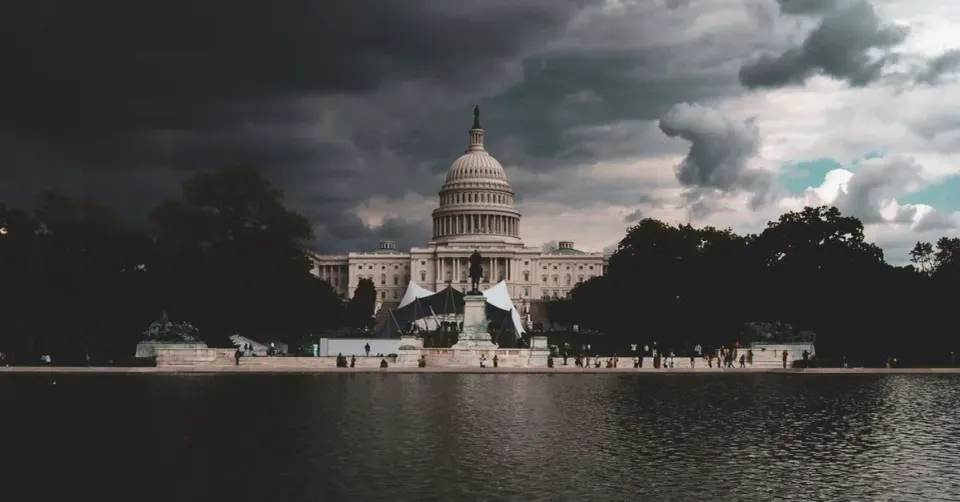
In a move that has sent ripples through diplomatic circles, President Donald Trump announced on Tuesday, November 17, 2026, that his administration is closely investigating reports of an Iranian-backed plot to detonate a "dirty bomb" in Washington, D.C. While the White House and intelligence officials have been quick to clarify that there are currently "no credible threats" to the capital, Trump emphasized that the reports are being taken "very seriously." This discrepancy between the President’s rhetoric and the official intelligence assessment suggests a high-stakes political play, potentially aimed at justifying further economic or military pressure on Tehran.
The reaction from Tehran was swift and predictable, with state media and officials dismissing the allegations as "fabricated" and part of a broader psychological warfare campaign. For Iranian citizens and market participants, this verbal escalation carries immediate consequences. Despite the US Dollar in the local Tehran market slipping slightly from 268,600 to 266,800 Toman (-0.7%), the threat of renewed conflict or tighter sanctions keeps the market on edge. History shows that such high-level accusations often precede a shift in US foreign policy, and investors are already pricing in a "risk premium" that prevents the Toman from gaining any meaningful ground against the greenback.
Nvidia’s Leadership Vacuum: The Return of Jensen Huang?
Just one week after his shock resignation, Jensen Huang has signaled his willingness to return as the CEO of Nvidia. Speaking to the Wall Street Journal, Huang noted an "outpouring" of support from investors and employees who are reeling from the leadership vacuum left in his wake. His departure was originally linked to a widening probe by the US Justice and Commerce Departments into Megaspeed, a Singapore-based data center firm. The investigation, which officials confirmed today is very much active, centers on potential violations of chip export restrictions to China—a critical issue for Nvidia’s long-term revenue and legal standing.
The potential return of the AI visionary has created a volatile atmosphere for tech stocks. Investors are torn between the stability Huang provides and the legal risks associated with the ongoing federal investigation. If Huang returns, it may stabilize Nvidia’s stock in the short term, but it does not erase the regulatory hurdles the company faces as the US government tightens the noose on high-end semiconductor exports to Southeast Asian hubs. For the broader market, this saga highlights the fragile nature of the AI boom, which remains heavily dependent on both individual leadership and the shifting sands of US-China trade policy.

Chaos in Hormuz: Naval Mines and the $93 Brent Ceiling
The Strait of Hormuz has once again become a flashpoint for global energy markets. Iranian state media (IRNA) reported on Tuesday that a third oil tanker struck a naval mine and caught fire east of the strait. These incidents have effectively neutralized the downward pressure on prices that might have come from surging exports in the Gulf of Mexico. Consequently, Brent crude remains stuck near $93 per barrel, as the physical risk to shipping through the world's most important oil chokepoint outweighs the increase in global supply. This localized instability is a direct driver of the flight to safety seen in the Iranian gold market today.
In Tehran, Gold 18k rose from 24,539,452 to 24,654,877 Toman per gram (+0.5%), while the Emami coin saw a modest increase of 0.2% to reach 252,000,000 Toman. The divergence between the falling Dollar and rising Gold suggests that domestic investors are more concerned about regional military escalation than currency fluctuations. As long as tankers continue to hit mines in the Persian Gulf, the "safe haven" status of gold will likely remain unchallenged, even as global markets grapple with the implications of new US import bans on Chinese tech components, which helped boost stocks like Coherent and Lumentum today.
Frequently Asked Questions
What is a 'dirty bomb' and why did Trump mention it?
Why is Jensen Huang considering a return to Nvidia so soon?
How did the Strait of Hormuz incidents affect the Iranian market?
The Geopolitical and Economic Significance of the Strait of Hormuz
The Strait of Hormuz is one of the world's most critical maritime chokepoints, a narrow sea lane connecting the Persian Gulf to the Arabian Sea and the broader Indian Ocean. Flanked by Iran to the north and Oman's Musandam Governorate to the south, its strategic importance stems from its geography: at its narrowest point, the shipping channel is only about 21 nautical miles wide, with traffic restricted to two 2-mile-wide channels for inbound and outbound tankers, separated by a 2-mile buffer zone.
Economically, the Strait is unparalleled. It is the conduit for a substantial portion of the world's seaborne oil and liquefied natural gas (LNG) exports, particularly from major producers like Saudi Arabia, Iran, UAE, Kuwait, and Iraq. Estimates suggest that over 20% of global petroleum liquids consumption and approximately one-third of the world's LNG trade pass through this waterway daily. Any disruption, even minor, can trigger significant volatility in global energy markets, directly impacting crude oil prices like Brent, and subsequently, the economies of importing nations worldwide.
Geopolitically, the Strait of Hormuz is a perpetual flashpoint. Its proximity to Iran, a nation often at odds with Western powers, means that regional tensions frequently manifest as threats to shipping. Incidents such as mine attacks on tankers, as alluded to in the headline, or naval confrontations, underscore the fragility of global energy supply lines. The ability of any power to threaten or control passage through the Strait represents a significant leverage point, making it a focal point for international diplomacy, military posturing, and concerns over energy security. Understanding this vital artery is key to comprehending global energy dynamics and geopolitical stability.