Triple Alliance Sets IAEA Red Lines as Bangladesh Legal Storm Hits London and Bitcoin Eyes 2027 Dominance
خطونشان «تثلیث شرق» برای آژانس هستهای و طوفان حقوقی بنگلادش در قلب لندن
Iran, Russia, and China have unified their conditions for IAEA verification, while UK MP Tulip Siddiq launches a legal battle against Bangladesh’s interim leadership. Meanwhile, new forecasts suggest Bitcoin carry trades will outperform US Treasury bills by 2027.
At time of publishing
USD
266,300
Toman
Gold 18K
24.31M
Toman / gram
Bitcoin
$63,466
US Dollar
Tether
270,312
Toman
The 'Triple Alliance' Redefines Nuclear Diplomacy
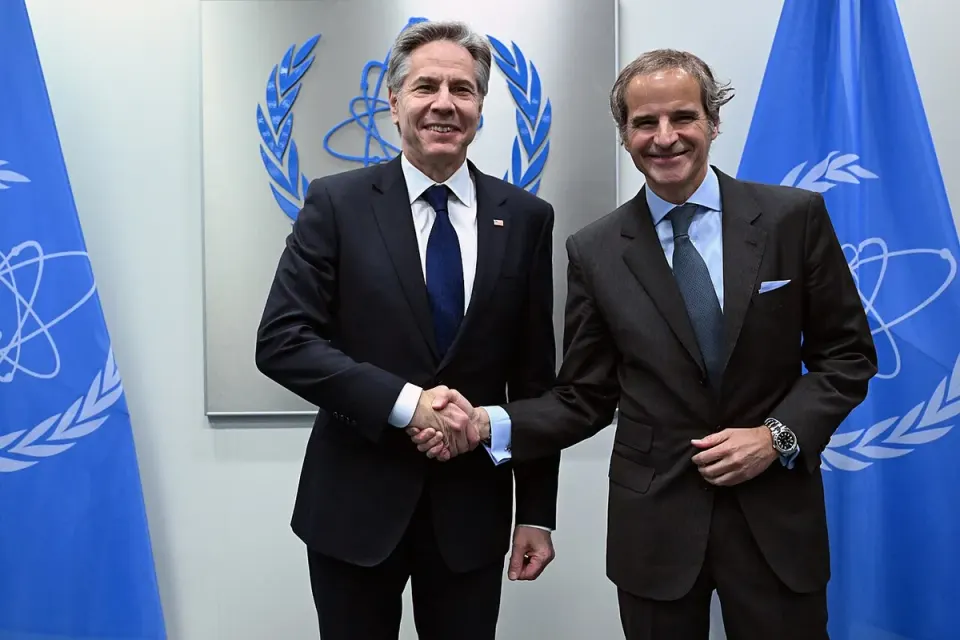
In a significant shift in the geopolitical landscape, Iran, China, and Russia have issued a joint set of conditions for the resumption of International Atomic Energy Agency (IAEA) verification activities. According to reports from Iranian state media, the three nations are demanding a complete cessation of 'hostile acts,' the removal of military threats, and 'credible guarantees' against future attacks as prerequisites for allowing full monitoring of Iran's nuclear facilities. This unified front suggests that Tehran is no longer negotiating in isolation but is instead leaning heavily on its strategic partnership with Moscow and Beijing to counter Western pressure.
For the Iranian economy, this development is a double-edged sword. While it provides a sense of diplomatic cover, it also signals a deepening stalemate with the West. The insistence on 'credible guarantees'—a recurring demand that has stymied previous negotiations—suggests that a swift return to the JCPOA or any equivalent deal remains unlikely in the near term. As long as these high-stakes diplomatic hurdles remain, the Iranian Rial (IRR) is expected to remain under pressure, as market participants see little hope for the lifting of primary sanctions.
Bangladesh’s Political Crisis Spills into London Courts
Tulip Siddiq, a prominent British Member of Parliament for Hampstead and Highgate and a former minister, has announced she is considering legal action against the former interim leadership of Bangladesh. Siddiq, who resigned from the UK government last year following corruption allegations made by the Bangladeshi administration in Dhaka, claims she was the victim of 'malicious prosecution.' The allegations against her were linked to her aunt, Sheikh Hasina, the former Prime Minister of Bangladesh who was ousted and is currently facing trial in absentia for crimes against humanity. This case highlights the increasing 'legalization' of international political disputes, where domestic power shifts in South Asia directly impact the political careers of diaspora figures in the West.
This legal battle matters because it underscores the volatility of Bangladesh’s political transition and its potential to disrupt international relations. For global observers and those in the region, the case serves as a reminder of how quickly political fortunes can turn and the long reach of 'lawfare' in the modern era. The outcome of Siddiq's legal challenge could set a precedent for how former officials and their relatives handle accusations from successor regimes, potentially complicating diplomatic ties between London and Dhaka at a time when regional stability is already fragile.

Bitcoin’s Long Game: Outperforming the Treasury by 2027
While the crypto market experiences its usual volatility, institutional analysts are looking toward a more structured future. Sygnum, a leading digital asset bank, has predicted that Bitcoin 'carry trades'—a strategy involving buying spot Bitcoin and selling futures to capture the funding rate—could potentially outperform US Treasury bills by 2027. This forecast comes after a challenging 2026 where funding rates dropped significantly, making the strategy less attractive. However, with funding rates recovering to an annualized 8% by late October, the narrative is shifting back toward crypto as a sophisticated yield-generating asset class rather than just a speculative vehicle.
For investors, this signifies the continued 'financialization' of Bitcoin. If Bitcoin-based strategies can reliably beat the 'risk-free rate' of US Treasuries, it will likely trigger a massive influx of institutional capital that has previously stayed on the sidelines. In the Iranian context, where Tether (USDT) often serves as a hedge against local currency depreciation, the maturation of these global crypto-yield strategies offers a glimpse into a future where digital assets are integrated into standard portfolio management, potentially stabilizing the broader market's wild swings over the next decade.
The Urban Energy Paradox: London’s Growing Traffic
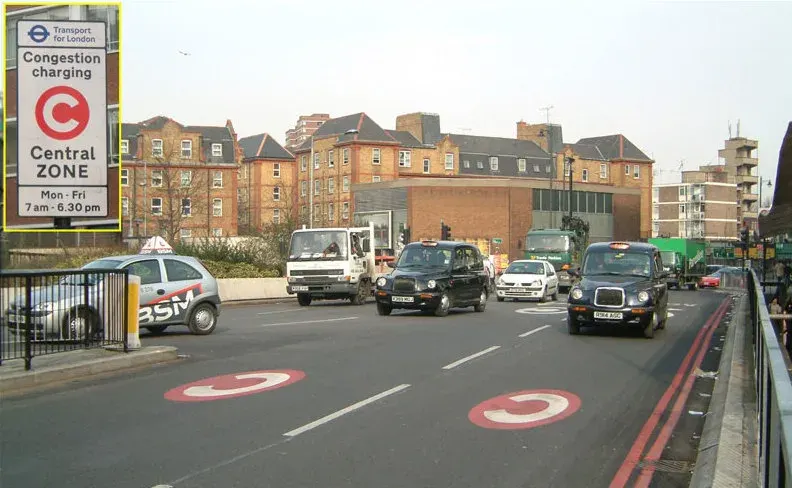
Despite aggressive environmental goals and the expansion of low-emission zones, new modeling from the London Mayor’s office and Transport for London (TfL) suggests that car use in the UK capital will actually rise by 10% over the next decade. This forecast threatens Mayor Sadiq Khan’s promises on air quality and suggests that the transition to public transport and cycling is hitting a ceiling. The report indicates that a growing population and slowing bus speeds due to road congestion are pushing residents back into private vehicles, creating a feedback loop of gridlock.
This trend is a microcosm of a global challenge: the difficulty of decoupling economic and population growth from traditional energy consumption. For global oil markets, such forecasts provide a 'floor' for demand expectations, even as the world attempts to pivot toward electric vehicles and green energy. If a major, developed city like London cannot reduce car dependency, it raises serious questions about the feasibility of rapid decarbonization in emerging economies. For the average reader, this means that energy prices—and by extension, the cost of living—will likely remain tied to the efficiencies (or inefficiencies) of urban infrastructure for years to come.
Frequently Asked Questions
What are the specific conditions set by Iran, Russia, and China for the IAEA?
Why is Tulip Siddiq taking legal action against Bangladesh?
What is a 'Bitcoin carry trade' and why does it matter?
The IAEA’s Additional Protocol: How International Nuclear Verification Works
The International Atomic Energy Agency (IAEA) is the United Nations‑run body tasked with promoting the peaceful use of nuclear energy and preventing its diversion for weapons. While the agency routinely inspects declared nuclear facilities under the basic safeguards agreement, the Additional Protocol is a voluntary, legally binding extension that gives inspectors much broader access. It requires states to provide a complete inventory of all nuclear material and related activities, including those at research reactors, fuel cycle sites, and even undeclared locations, and it grants the IAEA rights to conduct short‑notice inspections.
The protocol’s core mechanisms are complementary access and environmental sampling. Complementary access allows inspectors to visit any site they suspect of undeclared nuclear work, often with only 24‑hour notice, while environmental sampling lets them detect trace amounts of nuclear material in soil, water, or equipment, revealing hidden activities that might otherwise go unnoticed. These tools dramatically increase the agency’s ability to detect clandestine enrichment or reprocessing programs, which is why the IAEA often draws “red lines” for states that refuse to adopt the protocol.
For Iran, the Additional Protocol has been a focal point of diplomatic negotiations. After the 2015 Joint Comprehensive Plan of Action (JCPOA), Iran agreed to implement the protocol, giving the IAEA unprecedented insight into its nuclear program. The United States and European allies have repeatedly warned that any rollback of the protocol would trigger a verification crisis, potentially leading to renewed sanctions. Understanding how the protocol works helps explain why its suspension is seen as a major escalation in non‑proliferation politics.
The protocol also illustrates a broader principle of international law: verification as a confidence‑building measure. By allowing transparent, third‑party monitoring, states can reassure each other of peaceful intent, reducing the security dilemma that often drives arms races. The IAEA’s model has inspired similar regimes in chemical weapons (the OPCW) and biological research, showing that verification can be a powerful tool for global security.
In short, the Additional Protocol is not just a technical add‑on; it is a cornerstone of the modern non‑proliferation architecture, enabling the IAEA to move from “trust but verify” to “verify with robust, independent tools.” Its presence—or absence—shapes diplomatic negotiations, sanctions regimes, and the geopolitical calculus of countries like Iran, Russia, and China.