
Global Extremist Funding Exposed as Toman Gains 1.2% and AI Claims Mathematical Breakthrough
رسوایی تأمین مالی نئونازیها در استرالیا و سقوط ۴.۲ درصدی قیمت سکه همزمان با ادعای علمی بزرگ هوش مصنوعی
Australian neo-Nazis have been caught raising hundreds of thousands via global crowdfunding, while the Iranian Toman shows surprising resilience with a 1.2% gain. Meanwhile, an Anthropic mathematician claims Claude AI has solved the legendary Riemann hypothesis, potentially marking a historic milestone in mathematics.
At time of publishing
USD
269,700
Toman
Gold 18K
23.28M
Toman / gram
Bitcoin
$60,209
US Dollar
Tether
272,319
Toman
The Shadow Economy of Extremism: Australian Neo-Nazis and Global Crowdfunding
A disturbing investigation has revealed that Australian neo-Nazi groups, specifically the 'White Australia' party, have successfully raised hundreds of thousands of dollars through the global crowdfunding platform GiveSendGo. This platform has increasingly become a sanctuary for far-right entities that have been deplatformed by mainstream financial services like PayPal or GoFundMe. The 'White Australia' party alone reportedly raised $200,000 to fund a High Court battle aimed at overturning its designation as a hate group. This highlights a growing challenge for global regulators: the decentralization of extremist financing through niche platforms that claim neutrality but effectively facilitate the growth of radical ideologies.
The implications of this funding go beyond simple litigation. By securing significant capital, these groups can professionalize their propaganda, expand their recruitment efforts, and challenge legal frameworks designed to curb hate speech. While GiveSendGo maintains that it does not condone violence or discrimination, the sheer volume of funds flowing to designated hate groups suggests that the platform's moderation policies are either insufficient or intentionally porous. For global security agencies, this represents a shifting front in the war against domestic terrorism, where digital wallets and crowdfunding are becoming as critical as physical training camps.

Currency and Commodities: Toman Rallies as Emami Coin Bleeds 4.2%
In the Iranian markets on Saturday, November 21, 2026 (شنبه ۳۰ آبان ۱۴۰۵), the Toman showed unexpected strength despite lingering regional tensions. The USD sell rate moved from 272,900 to 269,700, marking a 1.2% gain for the local currency. This appreciation comes at a time when the broader economy is grappling with inflationary pressures, yet technical corrections and perhaps increased central bank intervention have provided a temporary floor for the Toman. Interestingly, while the dollar saw a moderate decline, the gold market experienced a much sharper correction. The Emami coin crashed from 250,000,000 to 239,500,000, a significant -4.2% drop that caught many retail investors off guard.
This divergence between the dollar and gold suggests a shift in local risk appetite or a liquidity squeeze within the gold market. Gold 18k/gram also dipped slightly by 0.3% to 23,281,314 Toman. Meanwhile, the global energy market is sending mixed signals; while gasoline prices in the US have fallen nearly 60 cents in a month, analysts warn that Thanksgiving travelers might still face record-breaking costs at the pump due to structural supply issues. For the Iranian consumer, the drop in coin prices might offer a temporary window for entry, but the underlying volatility remains a stark reminder of the fragile economic equilibrium.
Geopolitical Friction: Pentagon Limits Canadian Ties and Regional Maritime Risks
In a surprising diplomatic shift, the Pentagon has issued a memo limiting 'social activities' with the Canadian military. While this does not yet affect critical joint operations like NORAD or shared airspace command, it signals a cooling in the historically warm relationship between the two North American neighbors. The reasons behind this cooling remain opaque, but it likely stems from diverging defense priorities or security protocols. This friction comes at a time when Western alliances are under pressure from internal political shifts and external threats, suggesting that even the most stable partnerships are no longer immune to bureaucratic and political distancing.
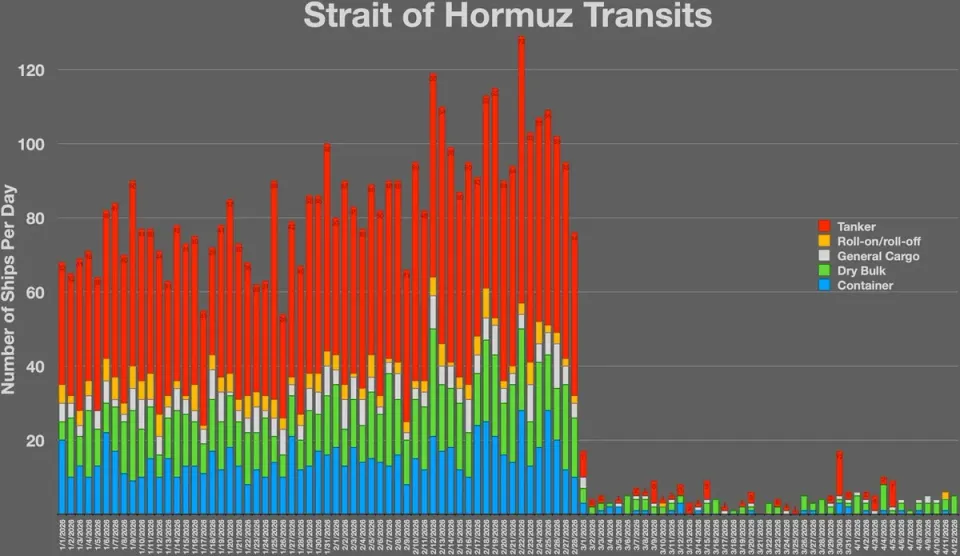
Closer to home, the Persian Gulf remains a theater of high-stakes tension. Recent reports indicate that tankers have been hit in the Strait of Hormuz, with one vessel reportedly catching fire due to a naval mine. While the Iranian Army spokesperson, Brigadier General Mohammad Akraminia, asserts that the Armed Forces are stronger than ever and ready for a 'swift and decisive' response to aggression, these maritime incidents create a climate of fear for global shipping. The tightening grip on shipping lanes not only threatens global energy security but also keeps the risk premium on regional currencies and commodities elevated, regardless of short-term market rallies.
AI’s Mathematical Frontier: Anthropic Claims Breakthrough on Riemann Hypothesis
The world of artificial intelligence has been rocked by a claim from Levent Alpöge, a mathematician at Anthropic, who contends that the Claude AI model has helped solve the Riemann hypothesis. This 19th-century mathematical problem, which concerns the distribution of prime numbers, is considered one of the most important unsolved puzzles in history, with a $1 million prize attached to it. Alpöge claims that over a six-week period, Claude assisted in developing a solution that could finally put the hypothesis to rest. If verified by the broader mathematical community, this would represent a paradigm shift in how scientific discovery is conducted, moving from human-led intuition to AI-augmented proof.
However, the scientific community remains cautious. Solving the Riemann hypothesis requires a level of logical consistency and abstract reasoning that has historically eluded even the most advanced algorithms. If Claude has indeed succeeded, it would validate the massive investments in Large Language Models (LLMs) and suggest that AI is moving beyond simple text generation into the realm of pure logic and advanced science. For the tech industry, this is a 'Sputnik moment' that could trigger a new arms race in AI capabilities, as companies scramble to prove their models can tackle the world's most intractable problems.

Frequently Asked Questions
Why did the Emami coin drop more significantly than the US dollar today?
What is the significance of the Riemann hypothesis solution claim?
How are extremist groups using crowdfunding to bypass sanctions?
Cryptocurrency and Sanctions Evasion: How Digital Coins Fuel Extremist Funding
Cryptocurrencies are digital assets that use cryptographic techniques to secure transactions and control the creation of new units. Because they operate on decentralized networks, they can be transferred across borders without the need for traditional banks, making them attractive for actors looking to bypass international sanctions. In recent months, platforms like GiveSendGo have been accused of channeling donations to extremist groups, while Iranian crypto‑related tokens such as the Emami coin have seen sharp price drops as the rial (IRR) and toman weaken against the US dollar.
Sanctions‑evasion schemes typically exploit the anonymity and speed of crypto transfers. Donors can convert fiat currency into a stablecoin (e.g., USDC) or a privacy‑focused coin, send it to a wallet linked to a front organization, and then cash out in a jurisdiction with looser regulatory oversight. This workflow allows extremist networks to fund operations, purchase equipment, or move money out of restricted economies like Iran, where the official exchange rate for the toman has diverged dramatically from the market rate in November 2026.
The Iranian context adds another layer of complexity. Iran’s official exchange rate for the toman is set by the Central Bank, but a parallel market often trades at a far lower value, reflecting inflation and sanctions pressure. When the rial depreciates, Iranians turn to crypto as a hedge, driving demand for locally issued tokens. However, price volatility—evident in the recent plunge of the Emami coin—can erode savings and make illicit fundraising more risky, prompting extremist groups to diversify across multiple digital assets.
Governments and financial watchdogs are responding by tightening AML/KYC requirements for crypto exchanges and expanding the reach of sanctions lists to include wallet addresses. The U.S. Treasury’s Office of Foreign Assets Control (OFAC) now publishes guidance on cryptocurrency sanctions compliance, and platforms that fail to screen transactions can face penalties. Understanding how digital currencies intersect with sanctions regimes is crucial for policymakers, investors, and anyone monitoring extremist financing.
For those who want to explore further, the following resources provide deeper insight into the mechanics of crypto‑based sanctions evasion, the GiveSendGo controversy, and Iran’s monetary challenges.
Topics
Related Articles