Chaos in D.C.: Trump Evacuated After Shooting at Correspondents' Dinner; IRGC Warns of Strategic Response
وحشت در واشینگتن؛ تیراندازی در ضیافت شام کاخ سفید و هشدار سپاه به ماجراجوییهای آمریکا
A shocking shooting at the White House Correspondents' Dinner has sent ripples through global markets, while the IRGC issues a 'beyond expectation' warning following US aggression. Meanwhile, the Strait of Hormuz faces a structural crisis despite official reopening efforts.
At time of publishing
USD
155,950
Toman
Gold 18K
17.89M
Toman / gram
Bitcoin
$78,034
US Dollar
Tether
15,384.5
Toman
Market Open — Stability Amidst Global Turbulence
As the Tehran market opens this Sunday morning, the currency landscape shows a rare moment of nominal stability despite the chaotic headlines filtering in from Washington. The US Dollar (USD/IRR) is currently trading at 155,950 for sellers and 155,027 for buyers, holding steady with a 0.0% change over the last 24 hours. While the spot rate remains flat, the underlying tension is palpable in the gold market. The Emami coin has climbed to 177,000,000 Toman, marking a 1.1% increase from yesterday's 175,000,000, signaling that local investors are still seeking the safety of hard assets as geopolitical rhetoric heats up.
In the global arena, the gold ounce is hovering at a staggering $4,710.80, reflecting a world that feels increasingly unmoored. Bitcoin (BTC) remains a pillar of the new financial order, trading at $78,034. For the Iranian trader, the Tether (USDT) rate at 15,385 Toman remains the primary gateway for capital flight and international settlement, especially as the 'Hormuz risk' continues to fluctuate. The lack of movement in the official USD rate this morning should not be mistaken for calm; it is likely a 'wait-and-see' pause as the market digests the dramatic events of the last 12 hours.
Terror at the Hilton: Trump Evacuated During Correspondents' Dinner
In a scene that felt like a haunting echo of past attempts, President Donald Trump was abruptly evacuated from the annual White House Correspondents' Association dinner at the Washington Hilton on Saturday night. Gunshots erupted in the hotel lobby, sending the 'Hollywoodified' event into a state of pure panic. Trump later remarked that he initially mistook the sound of the gunfire for a falling tray, a testament to the surreal environment of the evening. Secret Service agents acted instantly, with one agent reportedly saved by a bulletproof vest as they neutralized a suspect armed with both knives and firearms.

This incident has profound implications for global market sentiment. Political instability in the world's largest economy typically triggers a 'flight to quality,' boosting assets like gold and BTC. World leaders from Canada to Australia have already issued statements condemning the violence, but the damage to the perception of American stability is done. For Iranian observers, this chaos in D.C. complicates the diplomatic chessboard, as a domestic crisis in the U.S. often leads to unpredictable foreign policy pivots or, conversely, a period of paralyzed decision-making.
The IRGC Warning and the 'Broken' Strait of Hormuz
The Islamic Revolution Guards Corps (IRGC) has issued a stern warning this morning, stating that any further aggression against Iran will be met with a response that goes 'beyond expectations.' This follows recent U.S. military actions in southern Isfahan province, which Tehran views as a direct provocation. The IRGC’s rhetoric suggests a shift toward 'strategic deterrence,' implying that the next phase of conflict could involve assets or tactics not yet seen in the regional theater. This escalation comes as Foreign Minister Abbas Araghchi continues a diplomatic marathon, moving from Oman to Pakistan and then to Moscow.
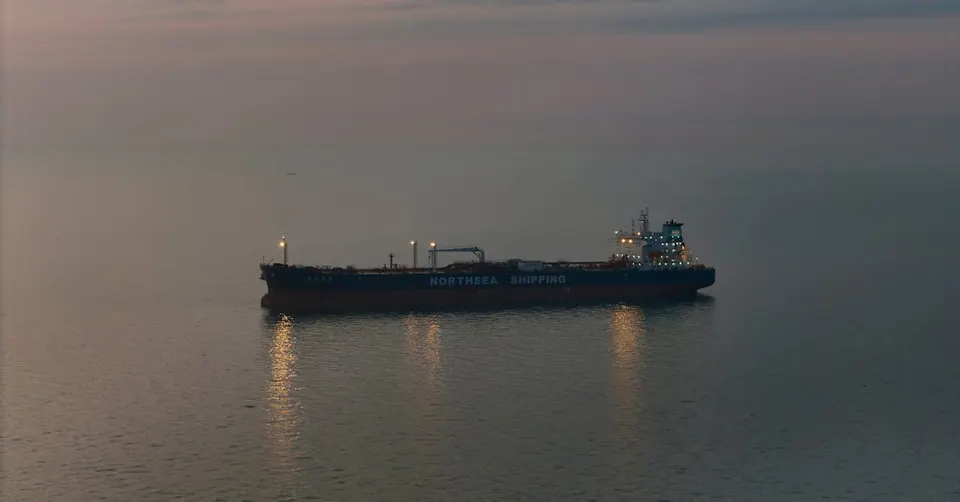
Parallel to the military tension is a growing crisis in global energy logistics. While both Washington and Tehran have made public gestures toward keeping the Strait of Hormuz open, analysts are warning that the 'system is broken.' Maritime traffic data for April 2026 shows a near-collapse in vessel movements through the world's most vital oil chokepoint. Even when the Strait is technically 'open,' the prohibitive costs of insurance and the sheer physical risk of transit have created a de facto blockade. For the Iranian economy, this is a double-edged sword: while it drives up global oil prices, it also complicates the actual export of crude, as evidenced by the market's continued struggle to find reliable shipping lanes.
Crypto’s New Frontier: AI Agents and Institutional Milestones
While the physical world grapples with bullets and blockades, the digital economy is hitting massive new milestones. BlackRock’s IBIT Bitcoin ETF has just reached a level of options open interest that surpasses traditional platforms like Deribit, signaling that Wall Street has fully institutionalized crypto derivatives. This isn't just about price speculation anymore; it’s about the integration of Bitcoin into the very plumbing of the global financial system. Bitcoin’s ability to hold steady at $78,034 despite the shooting in Washington proves its resilience as a non-sovereign store of value.
Perhaps more provocatively, Alchemy’s CEO Nikil Viswanathan argued overnight that the next wave of commerce won't be driven by humans at all. He suggests that the global financial system was designed for people, but crypto is being built for AI agents. In this vision, AI entities will represent buyers and sellers, striking deals and moving value natively on the blockchain. We are moving toward a reality where the Iranian trader might not be competing with a banker in London, but with an AI bot optimized for 24/7 arbitrage. This shift underscores why staying 'crypto-literate' is no longer optional for anyone looking to preserve wealth in 2026.
Watch
Dozens reportedly killed in Iran protests after Trump warned US is ‘locked and loaded’
CNN
Frequently Asked Questions
How did the shooting at the White House Correspondents' Dinner affect the Iranian market?
What is the current situation in the Strait of Hormuz according to latest reports?
What was the IRGC's response to recent US military actions?
Why the Strait of Hormuz Matters: A Geopolitical Chokepoint and Its Economic Ripple Effects
The Strait of Hormuz, a narrow waterway between the Persian Gulf and the Gulf of Oman, is only about 21 nautical miles wide at its narrowest point. Despite its modest dimensions, it serves as the sole maritime passage for roughly 20% of the world’s petroleum—about 21 million barrels of oil and 6 million barrels of petroleum products flow through it every day. This concentration makes the strait a critical artery for global energy supply, linking major oil‑producing nations such as Saudi Arabia, Iran, the United Arab Emirates, and Kuwait to international markets.
Because the strait is so vital, it has become a focal point for geopolitical tension. Nations with naval capabilities, especially the United States and Iran’s Islamic Revolutionary Guard Corps (IRGC), have repeatedly demonstrated their ability to influence traffic through the waterway. Historical flashpoints include the 1980s “Tanker War” during the Iran‑Iraq conflict, the 2019 seizure of the Kokuka by Iran, and more recent threats of closure in response to sanctions or perceived aggression. The IRGC’s recent warning of a “strategic response” to U.S. actions underscores how quickly the strait can shift from a commercial corridor to a potential flashpoint.
The economic consequences of any disruption are immediate and far‑reaching. A temporary closure can cause oil prices to spike within hours, as traders price in the risk of supply shortages. Such price shocks ripple through currency markets, affecting exchange rates like the USD/IRR (U.S. dollar to Iranian rial) and prompting investors to seek safe‑haven assets such as gold. In 2026, heightened tensions have already contributed to volatility in the gold market, with Iranian gold prices reacting sharply to each new development in the Hormuz corridor.
Beyond oil, the strait’s importance extends to emerging financial sectors. The rise of crypto‑linked assets, such as Bitcoin ETFs (e.g., BlackRock’s recent launch) and AI‑driven crypto commerce platforms, is increasingly sensitive to macro‑economic shocks. A surge in oil prices can depress risk appetite, influencing the valuation of digital assets and even niche tokens like the Emami coin, which has shown price swings correlated with regional geopolitical news.
Understanding the Strait of Hormuz is therefore essential for anyone tracking global markets, energy policy, or security dynamics. While diplomatic efforts aim to keep the waterway open, the inherent strategic value means that any escalation—whether a diplomatic spat or a military incident—can quickly cascade into broader economic turbulence. Investors, policymakers, and scholars alike should monitor developments in the Hormuz corridor as a barometer of both regional stability and global economic health.