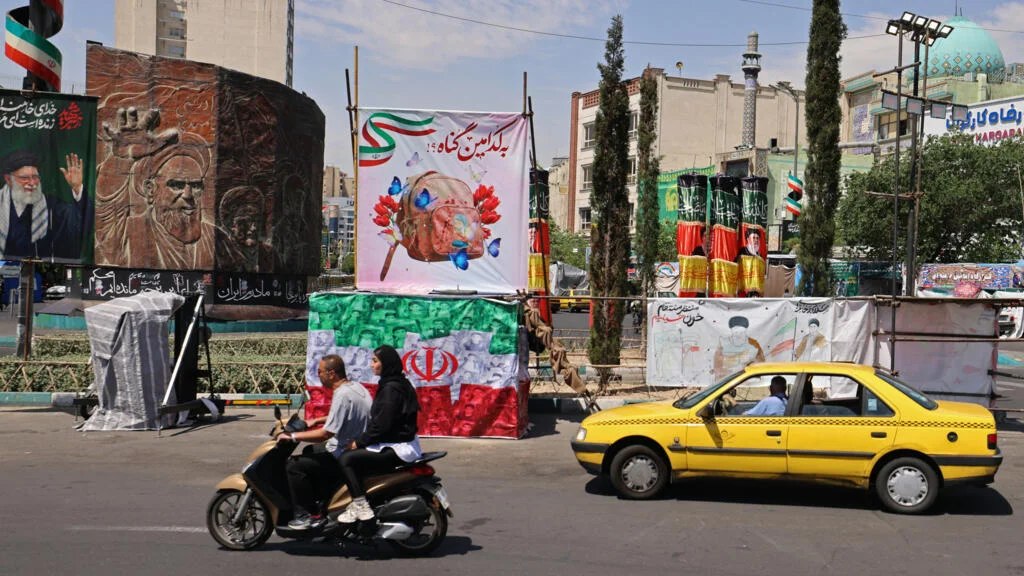
War 'Terminated'? Trump’s Bold Letter to Congress as Oil Pirates Roam the Strait
پایان مخاصمه یا بنبست سیاسی؟ نامه جنجالی ترامپ به کنگره و نبرد «دزدان دریایی» در هرمز
Donald Trump has officially notified Congress that hostilities with Iran have 'terminated' following the April ceasefire, effectively bypassing the 60-day war authorization deadline. Meanwhile, the President’s own rhetoric labeling US forces as 'pirates' seizing Iranian oil has sent shockwaves through energy markets.
At time of publishing
USD
178,600
Toman
Gold 18K
20.02M
Toman / gram
Bitcoin
$78,193
US Dollar
Tether
17,778
Toman
Market Open — Tensions Simmer as Toman Inches Higher
Good morning from the Arzbin desk. As Tehran wakes up this Saturday, the foreign exchange market is showing signs of cautious movement. The US Dollar (USD/IRR) opened at 178,600 Toman, marking a slight 0.3% increase from its previous position of 178,000. This minor uptick reflects a market that is still digesting the mixed signals coming out of Washington and the Persian Gulf. While the currency sees some volatility, the gold market remains remarkably stable; 18k gold is holding steady at 20,023,777 Toman per gram, and the Emami coin is unchanged at 203,000,000 Toman.
In the digital asset space, Bitcoin continues its impressive run, trading at $78,193. Despite the rally, institutional caution is evident as options markets only price in a 25% chance of hitting $84,000 by the end of May. For Iranian investors, the stable Tether (USDT) price of 17,778 Toman remains the primary gateway for hedging against local currency fluctuations. The overall mood is one of 'wait and see,' as geopolitical declarations overnight have yet to translate into a clear trend for the week ahead.
Trump’s Constitutional Gambit: War 'Terminated'
In a move that has ignited a firestorm on Capitol Hill, President Donald Trump has formally notified House Speaker Mike Johnson and Senate President pro tempore Chuck Grassley that hostilities with Iran have 'terminated.' This declaration comes exactly as a 60-day deadline for securing congressional approval for military action was set to expire. By claiming the April ceasefire has ended the conflict, Trump is effectively arguing that he no longer requires the War Powers Act's authorization to maintain a military posture in the region. This is a classic Trumpian maneuver: using a diplomatic pause to bypass legislative oversight.

However, the reaction from Democrats has been scathing, with many calling the claim 'bullshit.' They argue that while a ceasefire may be in place, the underlying state of conflict remains, and the President is simply trying to avoid a humiliating vote in a divided Congress. For the Iranian reader, this means the threat of sudden military escalation has been legally 'shelved' for now, but the diplomatic architecture remains incredibly fragile. The White House has also refused to disclose details of a new peace proposal submitted by Iran through Pakistani mediators, suggesting that while the shooting has stopped, the high-stakes poker game is far from over.
The 'Pirate' Rhetoric and the Oil War
Adding a surreal layer to the geopolitical landscape, President Trump recently described US forces operating near the Strait of Hormuz as being 'like pirates' for their role in seizing Iranian oil tankers and cargo. This blunt admission—or perhaps accusation—highlights the ongoing shadow war over energy exports. As the war nears its 10th week, the economic toll is becoming visible in the US, where the cost to fill up a standard vehicle has surged to $160, with gas prices up nearly 50% since hostilities began.
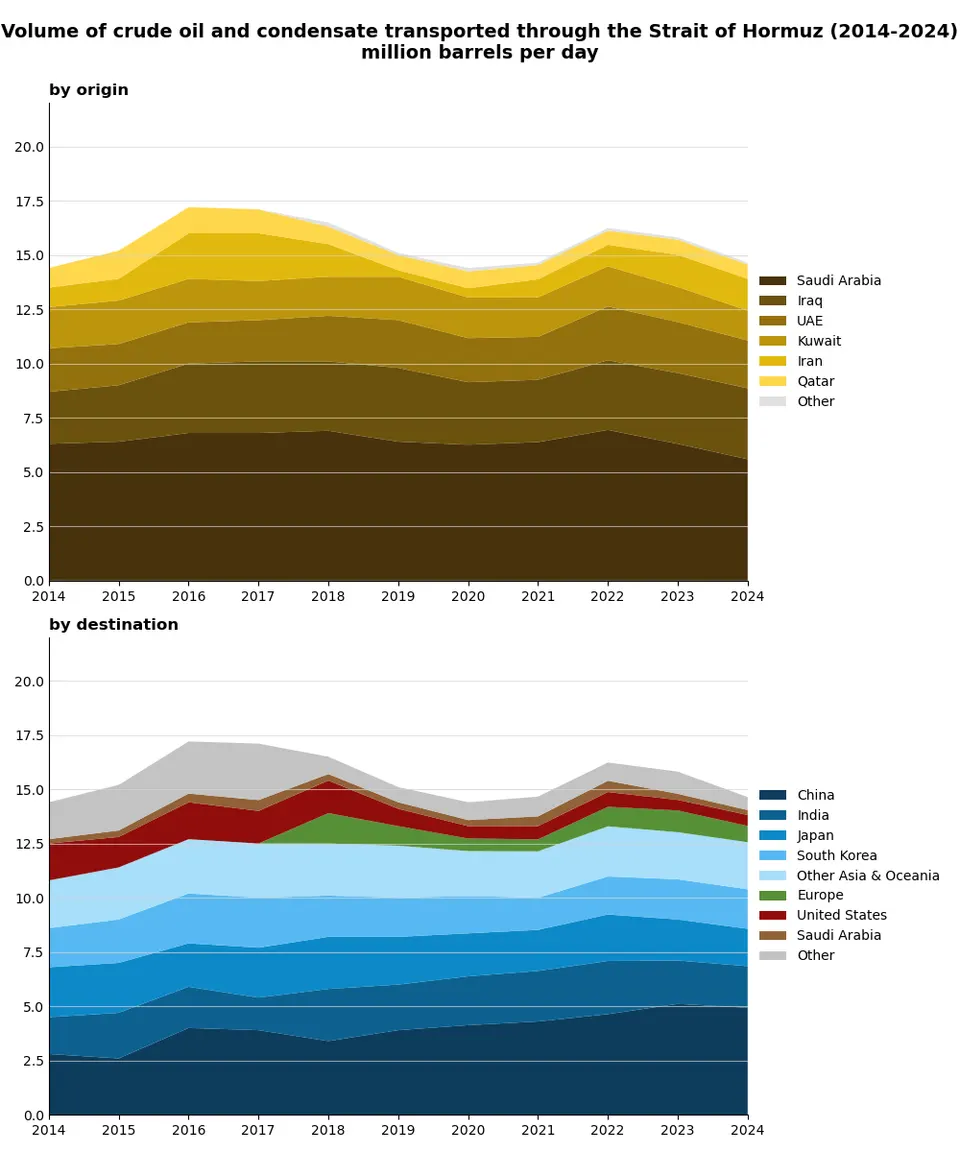
This 'piracy' narrative is more than just colorful language; it signals a potential shift in how the US manages the blockade. If the US administration views its own enforcement actions through such a lens, it may indicate a desire to monetize these seizures or use them as more aggressive leverage in the ongoing 'terminated' conflict. For Iran, the ability to export oil remains the lifeblood of the economy, and any escalation in these 'piratical' activities directly threatens the stability of the Toman and the national budget. The Strait remains the world's most sensitive chokepoint, and the rhetoric coming out of the Oval Office suggests it will remain a flashpoint for the foreseeable future.
The Tipping Point: A World of Fewer Births
While the headlines are dominated by war and oil, a more silent crisis is reaching a tipping point globally. New data shows that in 2024, 21 out of 27 EU countries saw deaths outnumber births. This demographic shift is no longer a futuristic theory; it is a present-day reality hitting Japan, Italy, and even the UK. In Japan, specialized companies now exist solely to clean the apartments of the 'lonely dead,' while in Italy, entire villages are being sold for one Euro to prevent them from becoming ghost towns.

This matters to the global economy because a shrinking workforce leads to stagnant growth and immense pressure on pension systems. For countries like Iran, which is also facing its own demographic challenges, the global trend suggests that the era of 'cheap labor' and 'endless growth' is ending. As the world ages, capital will likely flow toward automation and AI—a trend reinforced by the Pentagon’s recent announcement to become an 'AI-first' fighting force. The intersection of declining populations and rising machine intelligence will be the defining economic story of the late 2020s, reshaping everything from real estate to the stock market.
Frequently Asked Questions
Why did Trump tell Congress that hostilities in Iran have terminated?
What does the 'pirate' comment mean for Iranian oil exports?
How is the demographic 'tipping point' affecting global markets?
Understanding the U.S. War Powers Resolution
The War Powers Resolution, often called the War Powers Act, is a 1973 federal law that seeks to balance the President’s authority to conduct military operations with Congress’s constitutional power to declare war. Prompted by the Vietnam War’s unchecked escalation, the legislation requires the President to notify Congress within 48 hours of deploying armed forces into hostilities and limits the deployment to 60 days (with a possible 30‑day extension) unless Congress authorizes a longer engagement. This framework was intended to prevent future presidents from unilaterally committing U.S. troops to prolonged conflicts.
In practice, the Resolution has been a source of persistent tension between the executive and legislative branches. Presidents have often viewed the law as an unconstitutional constraint on the Commander‑in‑Chief’s flexibility, while many members of Congress see it as a vital check on executive overreach. Notably, the Obama administration sought congressional approval for the 2011 military intervention in Libya, and the Trump administration faced criticism for its 2019 move to withdraw forces from Syria without a clear congressional vote, highlighting the ongoing relevance of the law.
The War Powers Resolution becomes especially pertinent when discussing potential U.S. actions against Iran. Any large‑scale military operation—such as a strike in the Strait of Hormuz or a broader campaign—would likely trigger the notification and time‑limit provisions, forcing the President to seek explicit congressional authorization to continue beyond the initial 60‑day window. This legal backdrop informs the political calculus behind bold diplomatic overtures, like the hypothetical cease‑fire letter from former President Trump, because any escalation would be scrutinized under the Resolution’s requirements.
Critics argue that the law is both ineffective and unenforced; presidents have routinely sidestepped its reporting requirements, and Congress has rarely exercised its power to compel withdrawal. Nonetheless, the Resolution remains a cornerstone of the constitutional dialogue on war powers, serving as a reminder that the decision to go to war is not solely an executive prerogative but a shared responsibility of the entire government.
For anyone following the evolving U.S.–Iran relationship, understanding the War Powers Resolution clarifies why congressional debate, public scrutiny, and legal constraints are integral to any future military decision, no matter how bold the rhetoric.