Trump’s NATO Ultimatum, Tehran’s Grand Farewell, and Gold’s Resilient Climb
اولتیماتوم ناتویی ترامپ، وداع بزرگ در تهران و تداوم صعود طلا
As Donald Trump labels NATO 'ridiculous' ahead of the Ankara summit, Tehran prepares for a massive six-day funeral for the Supreme Leader, while gold prices edge higher in a cautious market.
At time of publishing
USD
175,050
Toman
Gold 18K
17.75M
Toman / gram
Bitcoin
$61,686
US Dollar
Tether
176,586
Toman
Market Open — Gold Shines While USD Holds Steady
Good morning from the Arzbin desk. As we open this Friday, July 3, 2026, the Iranian market is showing a tale of two assets. The US Dollar remains remarkably stable at the 175,050 Toman mark, showing 0.0% volatility over the last 24 hours. This stability suggests that despite the massive geopolitical shifts occurring globally, the local currency market has already priced in the current state of regional tensions. However, the real story is in the yellow metal.
Gold 18k has climbed to 17,752,435 Toman per gram, a 0.5% increase from yesterday's 17,660,095. This move mirrors the global gold ounce, which sits at a staggering $4,169.00. Investors are clearly seeking a hedge against the uncertainty of the upcoming NATO summit and the domestic transition in Iran. Meanwhile, Bitcoin has managed to hold its ground at $61,686, showing that the 'digital gold' narrative is still very much alive as traditional markets navigate a complex holiday weekend in the West.
Trump’s NATO Bombshell: 'Ridiculous' and 'One-Sided'
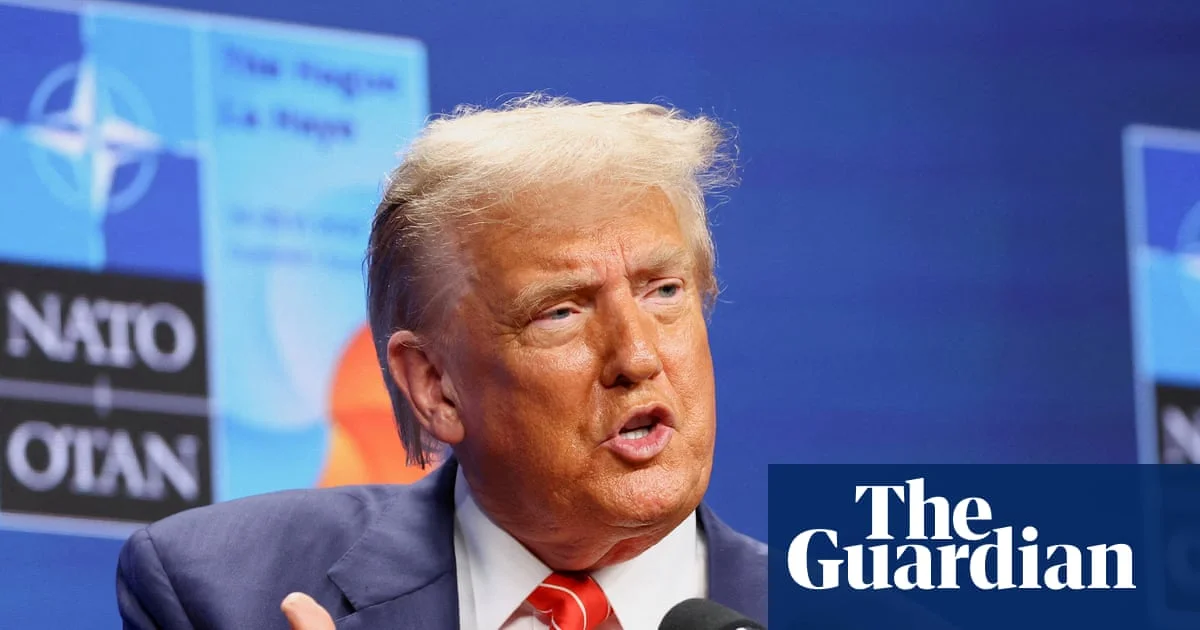
Donald Trump has once again sent shockwaves through the international community. Just days before the pivotal NATO summit in Ankara, the former president and current frontrunner took to Truth Social to lambast the military alliance. He described Washington’s relationship with NATO as "not reciprocal" and, in a move that directly touches on regional history, claimed that NATO members "were not there for us" during the critical phases of the Iran war. This rhetoric suggests a fundamental shift in US foreign policy should he return to power, potentially leaving Europe to fend for itself.
What does this mean for our readers? A fracturing NATO usually leads to increased regional volatility. If the US scales back its commitment, the security architecture of the Middle East and Eastern Europe will be rewritten. For the Iranian market, this implies a period of high-stakes diplomacy where traditional alliances are no longer guaranteed. Trump’s insistence that the relationship is "one-sided" signals that he may demand direct financial compensation or strategic concessions from allies to maintain the status quo, further destabilizing the global trade environment.

Tehran’s 'Red Fist': A Six-Day Farewell to an Era
Tehran is transforming into a city of mourning and a symbol of national resilience. The long-awaited six-day funeral for Ayatollah Ali Khamenei is set to begin this Friday, with millions expected to flood the streets of five major cities. The regime is using this moment to send a clear message of "resistance" to the world, following the US-Israeli strikes in February. The streets are already festooned with the "red fist" symbol and the slogan "We must rise," signaling that the transition of power will be framed as a moment of national cohesion rather than vulnerability.
For the economy, this period of mourning usually brings a temporary lull in commercial activity, but the underlying message is one of continuity. The scale of the event is designed to demonstrate that the state's institutions remain robust despite the loss of its long-time leader. Investors are watching closely to see how the "PM-in-waiting" or the transitional council manages the crowds and the narrative, as any sign of instability could immediately impact the Toman’s hard-won stability. This is more than a funeral; it is a strategic display of power intended to deter external opportunism.
America at 250: A Divided Jubilee
As the United States hits its 250th anniversary, the celebrations are as polarized as the country itself. While official "Freedom 250" events attempt to tell a traditional story of American history, much of the nation is looking at a different reality. Trump’s idiosyncratic celebration plans—ranging from cage fighting on the White House lawn to sparse state fairs—contrast sharply with the attempts of various communities to reclaim histories often left out of the mainstream narrative. This internal cultural friction is occurring just as the US faces significant economic questions, including a funding gap that mirrors the fiscal pressures seen in the UK under prospective leaders like Andy Burnham.
This "Semiquincentennial" is not just a birthday; it’s a stress test for the world’s largest economy. The global market is watching how the US handles its internal divisions while simultaneously engaging in trade wars and military posturing. For Iranians, a distracted or internally conflicted America often means a shift in sanction enforcement or a change in the pace of diplomatic pressure. As the US bops to its own beat, the rest of the world—from the Canadian oil pipelines seeking to bypass US trade wars to the Indian coal plants surging to meet demand—is learning to build an economy that is less dependent on Washington's stability.
Frequently Asked Questions
Why did Donald Trump call NATO 'ridiculous'?
How is the Iranian market reacting to the Supreme Leader's funeral?
What is the significance of the 'Ankara Summit' mentioned by Trump?
Why is the global price of gold over $4,000 per ounce?
Gold as a Safe-Haven Asset Amidst Geopolitical Uncertainty
In times of global instability, political upheaval, or economic uncertainty, investors often seek refuge in assets perceived as stable and reliable. Among these, gold stands out as the quintessential "safe-haven" asset. Unlike currencies, stocks, or bonds, which are tied to the performance of specific economies or governments, gold has maintained its intrinsic value across civilizations and millennia. Its tangibility, universal recognition, and limited supply make it an attractive store of value when traditional financial markets become volatile or unpredictable.
The recent headline, with its references to "Trump’s NATO Ultimatum" and "Iran War Geopolitics," highlights exactly the kind of geopolitical tensions that historically drive up gold prices. When the specter of conflict, trade wars, or significant political transitions (like the "Tehran’s Grand Farewell" might imply) looms, the demand for gold typically rises. Investors, both institutional and individual, reallocate portions of their portfolios from riskier assets into gold, seeking to preserve their wealth against potential economic fallout or currency depreciation.
This flight to safety is a well-documented phenomenon. Gold's price often moves inversely to the perceived risk in the global financial system. During periods of calm, its appeal might wane, but when geopolitical tremors shake confidence, gold's resilience shines through. It acts as a hedge against inflation, a buffer against economic downturns, and, most prominently in scenarios like those described in the headline, a sanctuary for capital when the world feels uncertain. Understanding this dynamic is crucial for anyone looking to comprehend global market reactions to political events.