IRGC Seizes Tankers as US Thwarts Missile Strike: Oil Surges Amid Middle East Flare-up
توقیف نفتکشها توسط سپاه و دفع حملات موشکی؛ جهش قیمت نفت در پی تنشهای جدید
A brief lull in Middle East tensions shattered overnight as the IRGC seized three tankers and the US intercepted a ballistic missile barrage. Global oil prices have spiked nearly 5%, while gold hits historic highs, signaling a volatile morning for Iranian markets.
At time of publishing
USD
191,000
Toman
Gold 18K
18.73M
Toman / gram
Bitcoin
$63,999
US Dollar
Tether
193,191
Toman
Market Open — Gold Leads the Charge
Good morning from the Arzbin desk. The relative calm we saw earlier this week has evaporated overnight. In the Tehran market, the US Dollar (USD/IRR) remained surprisingly stable, edging down slightly from 191,200 to 191,000 Toman (-0.1%). However, this stability is deceptive. The real action is in the gold market, where prices are aggressively pricing in regional risk. Gold 18k per gram surged 2.2% to 18,733,551 Toman, while the Emami coin rose 1.4% to 186.5 million Toman.
Globally, Bitcoin is showing remarkable resilience, holding firm at $63,999 despite a massive 17% crash in South Korean chip stocks. The divergence between a flat dollar and surging gold suggests that while the Central Bank may be intervening to hold the currency line, the public and professional traders are rushing into gold as a safe haven against the overnight military escalations. If the geopolitical situation doesn't de-escalate by noon, expect the currency market to eventually follow gold's lead.
IRGC Seizes Tankers as US Intercepts Missile Barrage
The brief pause in hostilities between Tehran and Washington has been shattered. Overnight, the IRGC Navy reported that it targeted and stopped three oil tankers in the Strait of Hormuz, claiming the vessels had violated maritime regulations and ignored warnings. This move directly targets the world's most sensitive energy chokepoint and follows weeks of simmering threats. While state media portrays this as a regulatory enforcement, global markets are viewing it as a significant escalation in the ongoing shadow war.
Simultaneously, the US military reported a much more direct confrontation. US Central Command (CENTCOM) claimed it intercepted a "surprise" ballistic missile barrage launched from Iran. According to officials, the missiles were targeting a US base in Jordan. To complicate matters, the US joined forces with Saudi Arabia to conduct retaliatory strikes against militia sites in Iraq. This coordinated US-Saudi response marks a hardening of the regional alliance and suggests that the era of "limited responses" may be ending in favor of a more comprehensive containment strategy.
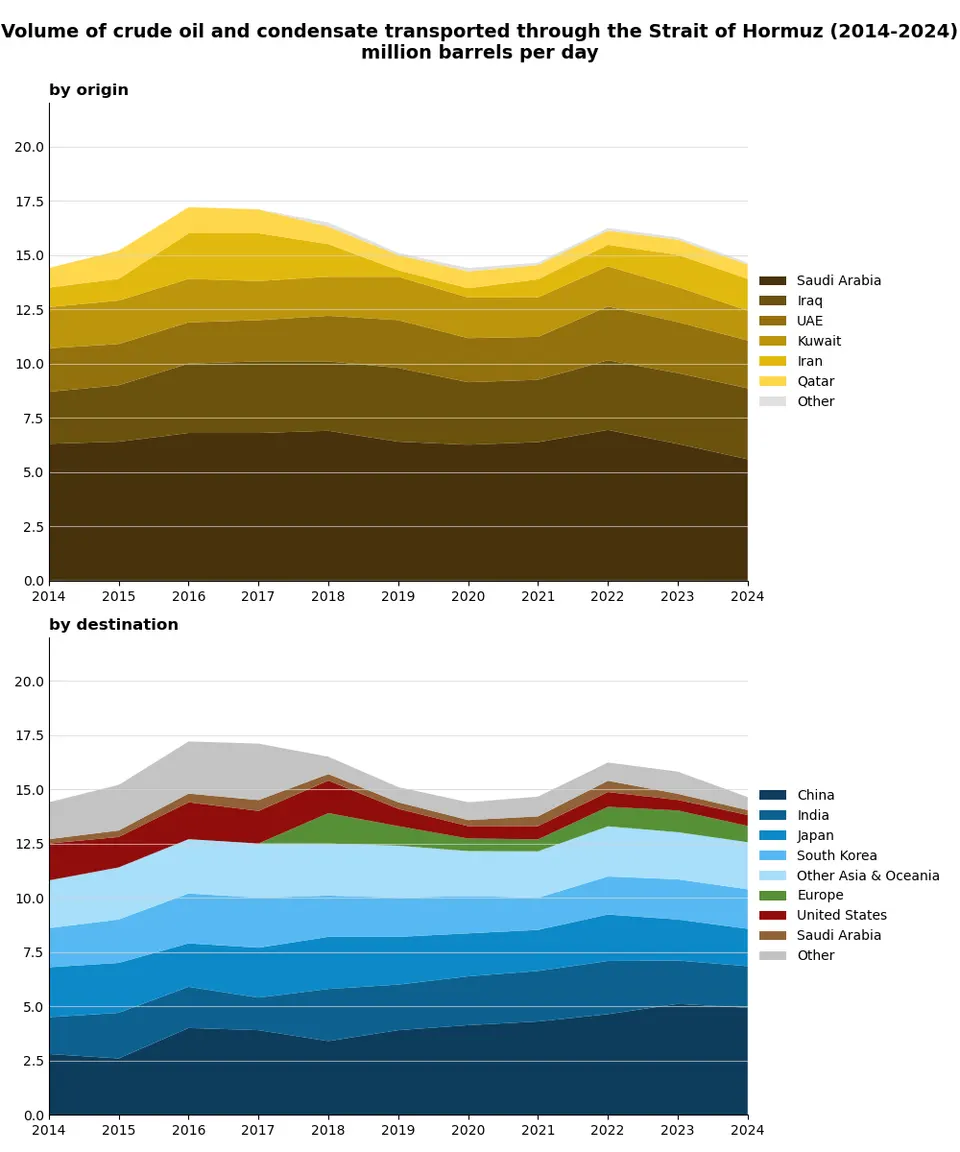
What this means for the average reader is a return to a "war footing" economy. The Strait of Hormuz is the lifeblood of global oil trade, and any disruption there leads to immediate pressure on the Iranian economy through shipping costs and insurance premiums. The failure of Oman’s recent proposal to manage the waterway suggests that diplomatic channels are currently blocked, leaving the military as the primary actor on both sides.
Oil and Gold Surge as Global Risk Reaches Fever Pitch
The financial fallout from the overnight strikes was instantaneous. Brent crude oil prices spiked 4.59% to nearly $88 per barrel, erasing nearly two weeks of steady declines. This surge wasn't just driven by the news of the tanker seizures; a bullish US inventory report from the API added fuel to the fire. For Iran, higher oil prices are a double-edged sword: while they theoretically increase state revenue, the accompanying threat of tighter sanctions and regional instability often offsets the gains by devaluing the Rial.

Gold has also breached the psychological barrier of $4,000 per ounce globally, currently trading at $4,036.30. This is a historic milestone. Investors are fleeing to hard assets as the threat of a wider conflict grows. In Iran, the 2.2% jump in 18k gold is a direct reflection of this global panic. When gold moves this much faster than the dollar, it indicates that the market is pricing in a "black swan" event—something unexpected and potentially catastrophic that hasn't fully hit the currency exchange yet.
US Senate Hands Trump New Sanctions and Tariff Powers
While missiles were flying in the Middle East, the US Senate was busy reshaping the future of global trade. In a resounding 86-to-12 vote, the Senate advanced a sweeping Russia sanctions bill. However, the fine print of this bill is what matters most: it grants the President unprecedented discretion to waive sanctions or impose tariffs. This move is widely seen as a bipartisan effort to give Donald Trump (should he return to office or continue his influence) a massive "war chest" of economic tools for his upcoming meetings.
This legislative shift occurred just as President Zelenskyy met with Trump in Washington. The meeting was described as "positive and productive," a sharp contrast to the often-tense relationship of the past. The combination of new tariff powers and a potential shift in the Ukraine conflict's trajectory means that the global trade environment is becoming increasingly transactional. For Iran, this is a warning sign. If the US executive branch gains more unilateral power to impose or waive sanctions, Tehran’s ability to navigate international trade will become even more dependent on direct, high-stakes negotiations with Washington rather than established international norms.
This "new era of tariffs" could also impact Iranian exports indirectly through China. If the US administration uses these new powers to penalize countries trading with sanctioned entities, the pressure on Iran’s remaining trade partners will intensify. Today's market is not just reacting to the missiles of last night, but to the structural economic shifts being built in Washington for the years to come.
Frequently Asked Questions
Why is gold rising faster than the US Dollar in Iran today?
What is the significance of the IRGC seizing three tankers?
How does the US Senate's new bill affect Iran?
Is the 4.5% jump in oil prices sustainable?
The Strategic Importance of the Strait of Hormuz
The Strait of Hormuz is a narrow waterway that connects the Persian Gulf with the Gulf of Oman and the open ocean. At roughly 21 nautical miles wide at its narrowest point, it is one of the world’s most critical maritime chokepoints because about a fifth of global oil consumption passes through it each day. Any disruption—whether from geopolitical tension, piracy, or accidents—can instantly tighten global oil supplies and push prices upward.
Because the surrounding region is politically volatile, the strait has repeatedly become a flashpoint. Nations that rely heavily on oil imports, such as Japan, South Korea, and many European countries, closely monitor naval movements there. When the Islamic Revolutionary Guard Corps (IRGC) seizes tankers or threatens to close the passage, markets react sharply, as seen in the recent surge of oil and gold prices following the IRGC’s actions and the U.S. response.
The economic impact of a strait closure can be modeled using supply‑and‑demand fundamentals. A sudden cut in oil flow reduces supply while demand remains relatively inelastic in the short run, leading to price spikes. This mechanism also influences related commodities like gold, which investors often buy as a hedge against oil‑driven inflation and market uncertainty.
Historically, the 1980s Iran‑Iraq War saw repeated attacks on tankers in the strait, prompting the U.S. Navy to escort commercial vessels. More recently, in 2019, attacks on oil tankers near Hormuz caused a brief but sharp rise in Brent crude prices. These episodes underscore why the strait remains a barometer for geopolitical risk in energy markets.
Understanding the Strait of Hormuz’s role helps explain why policymakers, investors, and analysts watch news of naval seizures, sanctions, or diplomatic meetings—like the recent Trump‑Zelenskyy encounter—with such intensity. The waterway’s strategic value translates directly into global economic stability.
Topics
Related Articles