US Warns of 'Advanced' Iranian Plot; Bitcoin Eyes $84k Amid Global Unrest
هشدار واشینگتن درباره «مراحل پیشرفته» حملات ایران؛ خیز بیتکوین برای قله ۸۴ هزار دلاری
US officials report Iran is in advanced stages of planning attacks, leading to diplomatic withdrawals in Saudi Arabia. Meanwhile, Bitcoin defies geopolitical gravity, aiming for $84,000 as global instability spreads from Paris to the West Bank.
At time of publishing
USD
269,600
Toman
Gold 18K
26.26M
Toman / gram
Bitcoin
$80,634
US Dollar
Tether
268,625
Toman
Market Open — Saturday, October 24, 2026
The Tehran market opens this Saturday, October 24, with a sense of cautious anticipation. Despite the heavy geopolitical headlines overnight, the US Dollar (USD/IRR) has shown remarkable resilience, holding steady at 269,600 Toman. This stability suggests that local traders are currently in a "wait-and-see" mode, balancing the risk of regional escalation against the lack of immediate physical disruption to trade. While the dollar remains flat, the precious metals market is seeing some cooling; 18k gold fell by 0.6% to 26,259,291 Toman per gram, and the Emami coin dropped by 1.5%, settling at 270,000,000 Toman.
This divergence between a stable dollar and falling gold prices in the local market often indicates a temporary exhaustion of buyers. After weeks of price hikes driven by regional tensions, the market is looking for fresh catalysts. However, with global gold prices hovering near a staggering $3,996 per ounce, any significant domestic drop remains unlikely as long as the global safe-haven demand stays this high. Traders should watch the 270-million-Toman support level for the Emami coin closely today.
The Shadow of Escalation: US Warns of 'Advanced' Iranian Plots
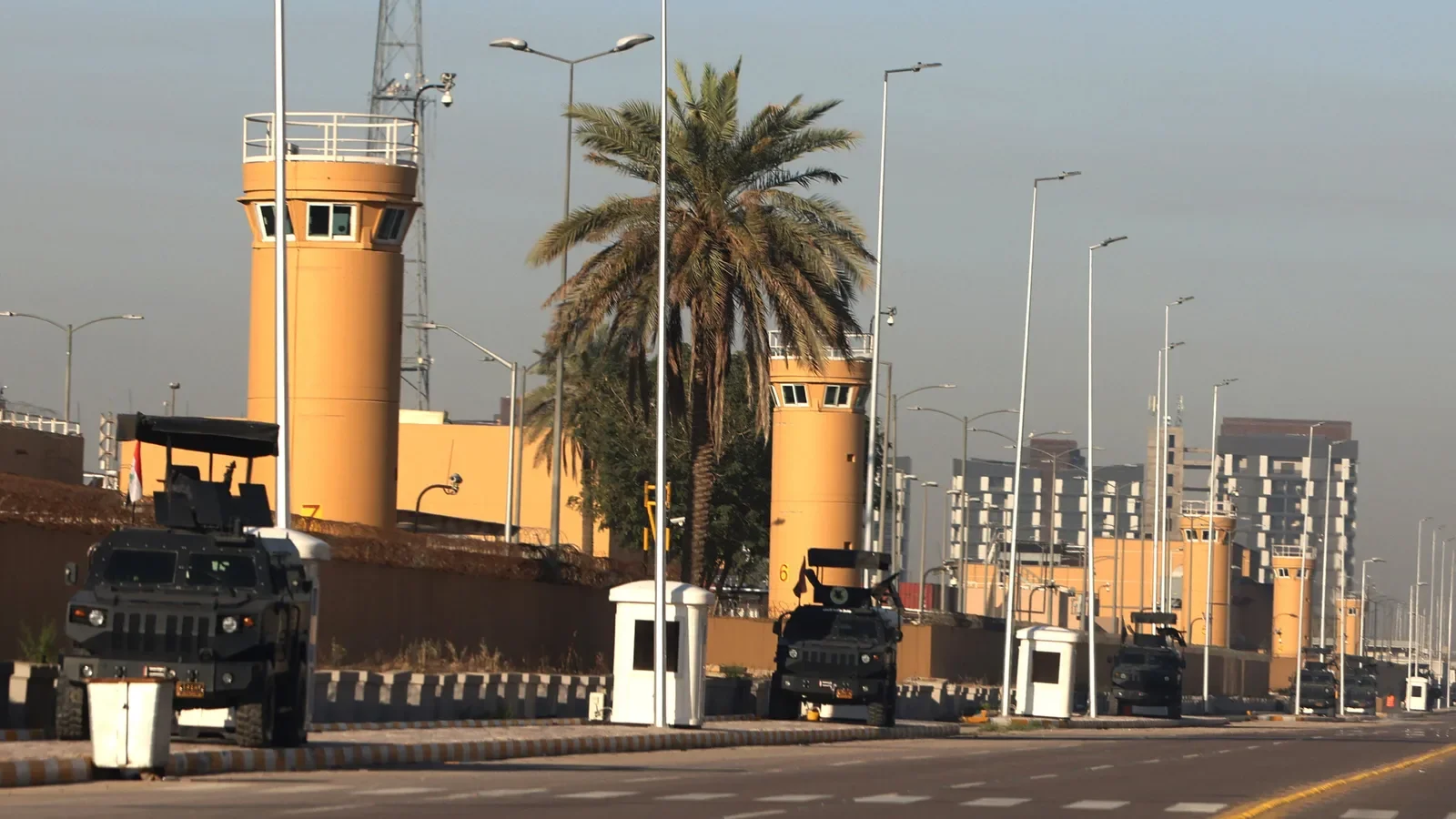
In a development that has sent shockwaves through regional diplomatic circles, the U.S. government has reportedly ordered a significant drawdown of its personnel in Saudi Arabia and other Middle Eastern missions. According to officials cited by the New York Times, intelligence suggests that Iran is in the "advanced stages" of planning attacks against American interests in the region. This move is not just a standard security precaution; the departure of diplomats often signals that Washington perceives a military or paramilitary threat as imminent and credible.
What makes this situation particularly volatile is the timing. With the U.S. midterm elections approaching and Israel facing its own internal political crossroads, any regional flare-up could have disproportionate effects on global energy prices and diplomatic alignments. For Iranian readers, this means the "war premium" on the dollar is unlikely to vanish anytime soon. Even if the market remains flat today, the underlying tension acts as a floor for prices, preventing any meaningful correction in the exchange rate as long as the threat of direct confrontation looms.

Bitcoin’s Gravity-Defying Run Toward $84,000
While traditional markets are grappling with geopolitical fear, the cryptocurrency world is celebrating. Bitcoin (BTC) has surged past the $80,000 mark and is now eyeing $84,000. This rally is backed by significant "whale" activity—large-scale investors moving their holdings out of exchanges and into private cold storage. Historically, this behavior signals a supply shock, as fewer coins are available for sale, driving prices higher. Institutional interest is also at an all-time high, with major financial entities treating Bitcoin as a legitimate alternative to gold during times of global instability.
For the Iranian investor, Bitcoin’s ascent provides a dual-layered hedge. Not only does it protect against the devaluation of the Rial, but it also offers a way to participate in global growth that is decoupled from local regional risks. As institutional activity grows, the volatility that once defined crypto is being replaced by a steady, upward trend. If Bitcoin hits the $84,000 target, it could trigger a new wave of FOMO (fear of missing out) that might push the entire crypto market to new record highs before the year ends.
A World on Edge: Civil Unrest in Paris and Violence in the West Bank
Beyond the Middle East, the globe is witnessing a surge in civil and military unrest. In France, the government is taking the extraordinary step of deploying 70,000 police officers this Saturday to prevent a repeat of last weekend’s violent cost-of-living protests. The use of elite counter-terrorism units for domestic crowd control highlights just how fragile social stability has become in Europe’s second-largest economy. High inflation and energy costs are pushing the European working class to the brink, creating a political headache for the Macron administration.
Meanwhile, in the West Bank, a deadly shooting incident has reignited fears of a major military offensive. Palestinian gunmen opened fire on Israeli soldiers, resulting in casualties on both sides and a vow from Prime Minister Benjamin Netanyahu for a "major offensive." This cycle of violence adds another layer of complexity to the regional security puzzle. When combined with the unrest in Europe, it paints a picture of a world where traditional safe havens are under pressure, and investors are increasingly looking toward assets like gold and Bitcoin to protect their wealth from systemic collapse.

Frequently Asked Questions
چرا قیمت دلار با وجود هشدارهای امنیتی آمریکا تغییر نکرد؟
آیا خروج نهنگها از صرافیها برای بیتکوین نشانه مثبتی است؟
تاثیر استقرار ۷۰ هزار پلیس در فرانسه بر بازارهای جهانی چیست؟
Understanding Safe-Haven Assets Amid Global Unrest
Global news headlines often highlight geopolitical tensions and civil unrest, which frequently correlate with significant movements in financial markets. A key concept for understanding these shifts is the Safe-Haven Asset. These are investments that are expected to retain or even increase in value during periods of market turbulence, economic downturns, or political instability, offering a refuge for capital when other assets are declining. Investors flock to them to preserve wealth and mitigate risk during uncertain times.
Traditionally, gold has been the quintessential safe-haven asset, revered for millennia as a store of value due to its intrinsic worth, scarcity, and universal acceptance. Other established safe havens include certain government bonds, particularly those issued by highly stable economies like the United States (Treasuries) or Switzerland (Swiss Franc), which are perceived as having a low risk of default. These assets offer reliability and liquidity when confidence in other markets wanes, making them attractive during crises like the "Iran-US tensions" or "France civil unrest" mentioned in the keywords.
More recently, assets like Bitcoin have emerged in discussions about safe havens, though their role is far more debated. While Bitcoin shares some characteristics with gold—scarcity, decentralization, and independence from traditional financial systems—its extreme volatility makes many analysts hesitant to label it a true safe haven. However, in specific contexts, such as regions with high inflation, capital controls, or a lack of trust in local currencies, Bitcoin can act as an alternative store of value or a means to bypass traditional financial systems, attracting "crypto whale activity" during periods of global unrest.
The appeal of safe-haven assets is directly tied to the level of perceived risk in the global environment. When headlines report "US warns of 'advanced' Iranian plot" or "Saudi Arabia evacuation," these events heighten investor anxiety, prompting a flight to quality. Whether it's the steady gleam of gold or the volatile promise of digital currencies like Bitcoin, understanding the dynamics of safe-haven assets is crucial for deciphering how global instability translates into market movements.