Brent Erases War Premium as Hormuz Flows Recover; Toman Holds Steady Amid Global Crypto Slump
پایان «حقالعمل جنگ» در بازار نفت؛ آرامش نسبی تومان در سایه سقوط آزاد کریپتو
This week marked a significant shift in market psychology as the 'war premium' on Brent crude evaporated, signaling a return to maritime normalcy in the Strait of Hormuz. While the Iranian Toman saw a marginal 0.7% dip, Bitcoin’s struggle to hold the $60,000 level and a landmark corruption trial in Morocco dominated the global narrative.
At time of publishing
USD
164,550
Toman
Gold 18K
16.27M
Toman / gram
Bitcoin
$60,086
US Dollar
Tether
166,187
Toman
The Great De-escalation: Oil’s War Premium Vanishes
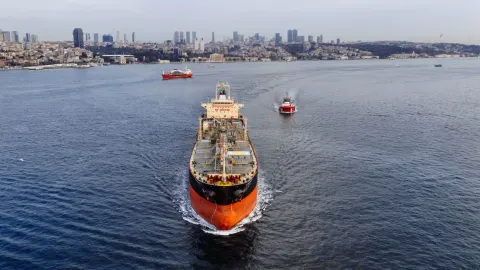
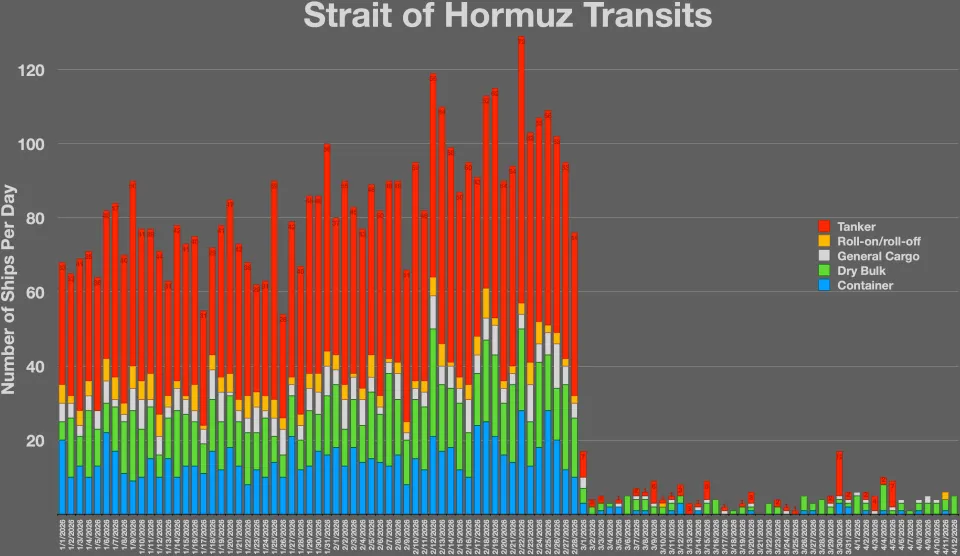
The dominant narrative of the past week has been the surprising resilience of global logistics and the subsequent cooling of energy markets. After weeks of heightened tension in the Persian Gulf, Brent crude has effectively erased its 'war premium,' with prices tumbling as markets bet that disruptions in the Strait of Hormuz will ease sooner than expected. While ship transits are not yet back to their historical peaks of 140 per day, the shift of Middle Eastern crude benchmarks like Dubai and Murban into 'contango'—a state where current prices are lower than future ones—suggests a temporary oversupply. This is a massive sigh of relief for global inflation watchers, though it puts pressure on oil-dependent budgets.
For the Iranian reader, this cooling of the energy market coincided with a relatively stable week for the national currency. The USD/IRR rate closed the week at 164,550 Toman, marking a modest 0.7% decrease from the previous 24-hour reference of 165,750. This stability persists despite the Iranian Foreign Ministry’s sharp criticism of the joint US-PGCC statement, which Tehran labeled a "distortion of truth." The market seems to be ignoring the diplomatic rhetoric in favor of the physical reality of recovering oil flows, suggesting that traders are prioritizing pragmatism over geopolitical headlines.
The 'Escobar of the Sahara' and the Global Crackdown on Illicit Flows
Beyond the immediate price charts, a landmark judicial event in Morocco sent shockwaves through regional political and financial circles. A Casablanca court sentenced 29 individuals, including prominent politicians and sports figures, in the infamous 'Escobar of the Sahara' drug trafficking trial. This case, involving the billionaire drug lord Abderrahmane el-Haj, highlights a growing global trend: the tightening of institutional grip on money laundering and the intersection of organized crime with high-level politics. For Iranian investors, such events are a reminder of the increasing scrutiny on cross-border capital flows and the risks associated with jurisdictions undergoing radical transparency reforms.
This trial underscores why institutional integrity matters for market confidence. When high-ranking officials are jailed for involvement in illicit trade, it often precedes a period of stricter financial oversight. As Iran continues to navigate its own complex relationship with international financial standards and sanctions, the Moroccan case serves as a case study in how domestic policy shifts can suddenly impact the perceived 'safety' of regional trade hubs. The ripple effects of these crackdowns often manifest in currency volatility or shifts in how regional 'hot money' is parked, often flowing back into safer havens like gold or stablecoins.
Crypto’s Cold Summer and the Macro Drag
In the digital asset space, the mood was decidedly bearish. Bitcoin (BTC) made its first sub-$60,000 close since late 2024, ending the week at $60,086. The weakness in crypto was mirrored by a broader slump in global tech stocks, which some analysts are now describing as a 'deep bear market.' The pressure on Bitcoin is not just coming from within the industry; it is a symptom of a 'risk-off' sentiment as investors grapple with extreme weather events, such as the record-breaking June heatwaves in the UK and Europe, which have tested energy grids and raised concerns about agricultural output and subsequent inflation.
Locally, the Iranian gold market showed a slight decoupling from the crypto gloom. Gold 18k rose by 0.4% to reach 16,268,756 Toman per gram, while the Emami Coin held steady at 163,000,000 Toman. This suggests that Iranian investors are still viewing gold as the primary hedge against both local currency fluctuations and global tech volatility. As the nation watches the national football team’s journey in the World Cup—a journey defined by decades of political tension—the economic sentiment remains one of cautious waiting. The market is looking for a catalyst, whether it be a breakthrough in regional diplomacy or a reversal in the global tech sell-off.
The Week Ahead: What to Watch
As we move into the first week of July, the primary focus will remain on the Strait of Hormuz. If ship transits continue to climb toward their historical norms, we could see oil prices stabilize at these lower levels, potentially easing some of the inflationary pressure on the Toman. However, any new 'projectile incidents' like the one recently reported near Oman could instantly bring the war premium back.
Investors should also keep a close eye on the $60,000 support level for Bitcoin. If BTC fails to reclaim this level decisively, we may see further outflows from digital assets into traditional havens like gold. Finally, the internal dynamics in Russia as it seeks fuel from Kazakhstan suggest that the energy crisis is far from over in the East. For the Iranian market, the interplay between regional stability and global commodity prices remains the only story that truly matters. Watch the Gold ounce price ($4,082.20) closely; its performance against a weakening tech sector will dictate the pace of the local coin market in the coming days.
Frequently Asked Questions
Why did oil prices drop despite ongoing tensions in the Strait of Hormuz?
What does the Morocco 'Escobar of the Sahara' trial mean for regional markets?
Is the Toman's 0.7% dip a sign of a new trend?
Understanding the "War Premium" in Oil Markets
The term "war premium" refers to the additional cost built into the price of a commodity, most notably crude oil, due to geopolitical instability or the threat of conflict. This premium arises from market participants' fears that a potential conflict could disrupt supply chains, damage production facilities, or restrict critical transit routes. Even if actual disruptions haven't occurred, the perception of increased risk is enough to drive prices higher as traders factor in potential future scarcity and increased costs.
A classic example of where a war premium can manifest is around vital chokepoints like the Strait of Hormuz. Through this narrow waterway, a significant portion of the world's seaborne oil supply passes daily. Any threat to shipping in the Strait, whether from regional tensions or military confrontations, immediately triggers concerns about global oil availability. This uncertainty leads to higher futures prices as buyers scramble to secure supplies and sellers anticipate higher demand and reduced risk tolerance.
The "war premium" is distinct from fundamental supply-demand dynamics. While actual supply cuts would directly impact prices, the premium is driven by expected or potential cuts. It reflects the market's assessment of risk, acting as a form of insurance against future disruptions. When geopolitical tensions ease, or the perceived threat diminishes—as suggested by the headline's "Hormuz Flows Recover"—this premium tends to dissipate, causing prices to fall back towards levels dictated by underlying supply and demand fundamentals. Understanding this concept is crucial for interpreting sudden fluctuations in global energy markets and their broader economic implications.