

Gold vs. USDT: Navigating Hidden Costs and Political Tides in Iran’s New Transition
طلا یا تتر؟ واکاوی هزینههای پنهان و امواج سیاسی در دوران گذار اقتصاد ایران
As Tehran observes the funeral of the Supreme Leader, the markets show a curious divergence: gold is creeping up while the Toman holds its ground. We analyze whether the 'digital dollar' or physical gold offers better protection against the hidden risks of 2026.
At time of publishing
USD
174,050
Toman
Gold 18K
17.71M
Toman / gram
Bitcoin
$62,746
US Dollar
Tether
174,120
Toman
The Arcare Lesson: Paying for What You Can’t Use
In a recent class action lawsuit in Australia, the aged care provider Arcare stands accused of charging residents for 'lifestyle' services like high teas and exercise classes that many were physically or cognitively unable to attend. This legal battle in the federal court highlights a fundamental truth in finance: you must always audit what you are paying for. For the Iranian saver, this 'Arcare effect' manifests in the hidden costs of holding assets. When you buy physical gold, you pay a premium (hobab) and storage risks; when you buy USDT, you pay in the form of platform risk and the potential for account freezes.
Today's market snapshot shows 18k gold at 17,706,265 Toman, a slight 0.4% increase, while the USD sell rate dipped 0.1% to 174,050. This subtle divergence suggests that while the currency market is in a 'wait-and-see' mode following the funeral of the Supreme Leader, gold is already pricing in a hedge against uncertainty. Just as Arcare residents paid for services they couldn't access, many USDT holders may find themselves paying for 'liquidity' that could be snatched away by centralized exchanges or shifting international sanctions.

The Trump Factor: When Assets Become Political
Donald Trump’s recent financial disclosures, revealing a $2 billion windfall from branded bibles, cologne, and cryptocurrency, underscore a new era where digital assets are inextricably linked to political personas. For an Iranian investor, this adds a layer of complexity to the USDT vs. Gold debate. USDT is a centralized tool; it is the 'digital shadow' of the US Treasury. If the global political landscape shifts toward a more transactional or 'grifter-friendly' model, as critics of Trump’s $2bn bonanza suggest, the neutrality of the US dollar—and by extension, USDT—comes into question.
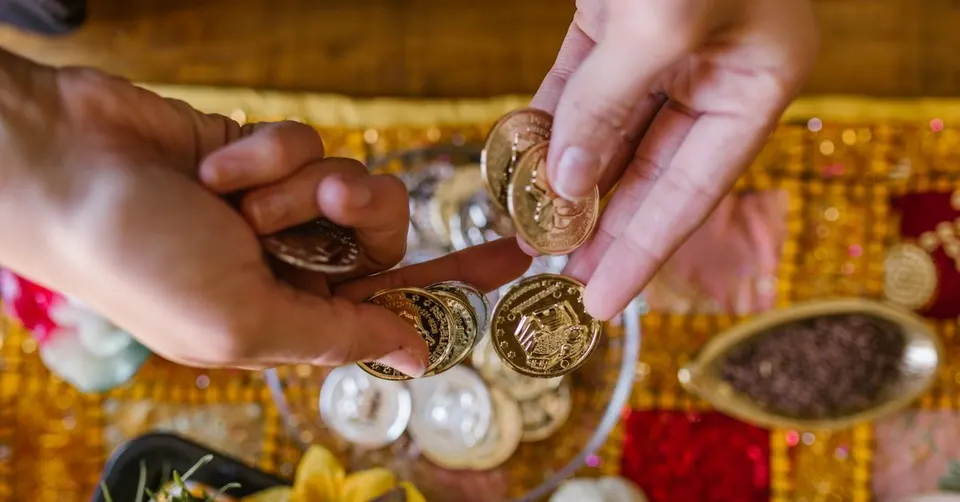
Gold, by contrast, remains the ultimate 'apolitical' asset. It doesn't care who is in the White House or who is absent from a funeral in Tehran. While millions gathered for the funeral prayers of Ayatollah Khamenei, the gold market reflected a global reality: in times of leadership transition and regional conflict, the tangible weight of a coin often outweighs the digital promise of a stablecoin. The Emami coin sitting at 177,000,000 Toman today represents a static store of value that requires no internet connection and no approval from a foreign corporation to trade.
The Verdict: Liquidity vs. Sovereignty
Experts now suggest that Iran may need to 'normalize relations with the US' to save its economy, which remains in tatters after months of conflict. This macro-economic pressure forces a choice. USDT offers unparalleled liquidity; you can move billions across borders in seconds to hedge against a sudden Toman collapse. However, as seen in the South African tax authorities' move to tighten crypto guidance, the 'wild west' era of digital assets is ending. Centralization is the price of adoption, and for Iranians, centralization usually means vulnerability.
If your horizon is the next 48 hours of potential volatility, USDT’s slight premium over the physical dollar (174,120 vs 174,050) is a small price for the ability to exit the Toman instantly. But if your horizon is the 'post-transition' era of the next decade, the 0.4% gain in gold today is a reminder of its historical resilience. Gold doesn't just protect against inflation; it protects against the 'unaccounted for' risks—the missing funds in political campaigns or the frozen accounts of a geopolitical standoff. Choosing between them isn't about which will rise more; it's about which one you will actually be allowed to hold when the dust settles.
Concept Diagram
Frequently Asked Questions
Why did gold rise today while the USD exchange rate fell?
Is USDT safer than physical dollars for Iranians in 2026?
What are the 'hidden costs' of holding gold in Iran?
How does the leadership transition in Iran affect asset choices?
Understanding Stablecoins: Risks and Realities for Economies Under Sanctions
Stablecoins are a class of cryptocurrencies that aim to keep their price pegged to a stable asset, most commonly the U.S. dollar. They achieve this peg through various mechanisms: collateralized backing (e.g., USDC holds dollars in reserve), algorithmic supply adjustments (e.g., Terra before its collapse), or hybrid models. In theory, they combine the speed and borderless nature of crypto with the price stability of fiat, making them attractive for people who cannot easily access foreign currency.
For countries like Iran, where international sanctions restrict the flow of dollars and other hard currencies, stablecoins have become a de‑facto substitute for the official exchange rate. Users can buy USDT on peer‑to‑peer platforms, bypassing the official Toman‑to‑dollar market and shielding themselves from the volatile official rates that can swing dramatically in a single day. However, this convenience comes with hidden costs: transaction fees, exchange spreads on informal markets, and the risk that the stablecoin issuer cannot honor the peg during periods of stress.
The primary risk of stablecoins lies in their collateral and regulatory oversight. If a stablecoin is backed by fiat held in a single jurisdiction, sanctions can freeze those reserves, rendering the token effectively worthless for users in the targeted country. Moreover, many stablecoins operate without clear auditing standards, leaving investors uncertain about the true amount of backing assets. In a sanctions‑heavy environment, sudden regulatory crackdowns or banking restrictions can cause a rapid de‑pegging, as witnessed during the 2022 USDC liquidity squeeze.
Another layer of risk is the political and macro‑economic context. Fluctuations in the price of gold—a traditional safe‑haven in Iran—can influence demand for stablecoins, while events such as high‑profile funerals or geopolitical shifts can trigger market panic, amplifying price dislocations. Users therefore need to weigh the apparent stability of a token against the systemic vulnerabilities of the broader financial system they operate within.
In practice, the safest approach for individuals in sanction‑hit economies is diversification: holding a mix of gold, locally accepted currencies, and only a modest portion of stablecoins, while staying informed about the issuer’s reserve policies and any emerging regulatory actions.
Topics
Related Articles



We use cookies for analytics and advertising. You can accept or reject. See ourPrivacy PolicyandCookiesfor details.