
The Golden Paradox: Why Global Scandals and $4,710 Ounces Can't Stop the Rush for Emami Coins
پارادوکس طلایی: چرا رسواییهای جهانی و انس ۴۷۰۰ دلاری مانع هجوم به سکه امامی نمیشود؟
Recent investigations reveal drug cartel gold in the US Mint, yet gold remains the world's favorite crisis hedge. We explore how global supply chain scandals and regional tensions are pushing Tehran's gold prices higher even when the dollar stays flat.
At time of publishing
USD
155,950
Toman
Gold 18K
17.89M
Toman / gram
Bitcoin
$77,998
US Dollar
Tether
15,480.9
Toman
The Dirty Secret Behind the World's Cleanest Asset
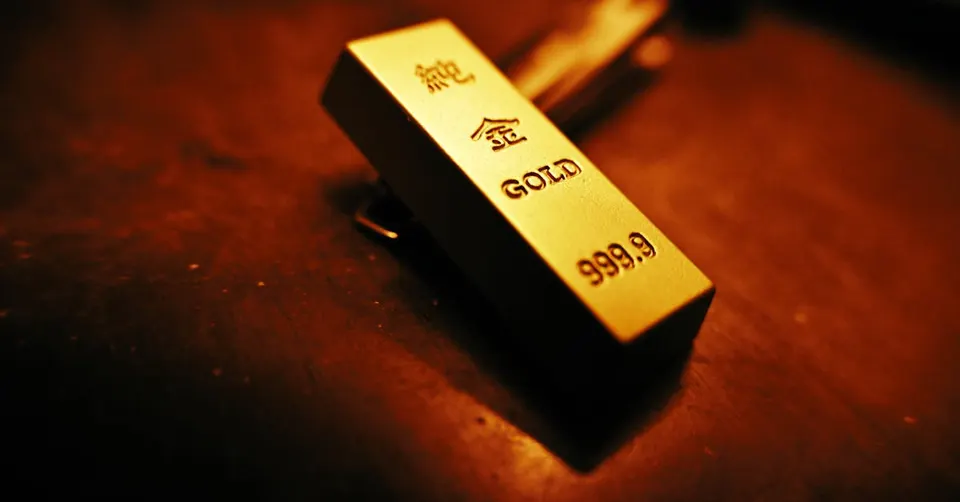
Gold has long been marketed as the ultimate "clean" asset—a pure, immutable store of value that exists outside the messy world of central bank printing presses. However, a bombshell investigation recently revealed a darker side to the yellow metal. Reports from the New York Times have traced gold supply chains from illegal, cartel-run mines in Colombia directly to the U.S. Mint. This means that the gold coins or bars held by global investors might have started their journey in a drug-funded jungle operation before being laundered through foreign pawn shops and finally stamped with an official government seal.
For the average investor, this might seem like a distant ethical dilemma, but it has profound implications for market trust. Gold is what economists call a "fungible" asset—once it is melted down, you cannot tell the difference between gold mined by a regulated corporation and gold mined by a criminal organization. This fungibility is exactly why gold remains so valuable in times of crisis; it is untraceable and universally accepted. As global geopolitical tensions rise, especially following the chaotic shooting of Donald Trump at the White House Correspondents' Dinner, the market's appetite for gold has pushed the global ounce price to a staggering $4,710.80.
Why Tehran's Gold Is Moving While the Dollar Sits Still
In the local Iranian market today, we are witnessing a fascinating phenomenon. While the USD/IRR rate has remained perfectly flat at 155,950 Toman, the price of the Emami Gold Coin has climbed by 0.6%, reaching 176,000,000 Toman. Usually, these two move in lockstep. When the dollar doesn't move but gold does, it tells us that the "Gold Ounce" is doing the heavy lifting, fueled by international fear. The cancellation of peace talks between the U.S. and Pakistan, following the security vacuum in Washington, has sent a clear signal to investors: the world is getting riskier, and cash is a liability.
When you buy an Emami coin in Tehran, you aren't just buying gold; you are buying a "call option" on global chaos. The 0.6% rise today reflects a localized scramble for safety. Iranians have learned through decades of experience that when the news cycle turns dark—like the recent reports of U.S. military mistakes in regional airstrikes or the paralysis of diplomatic channels—gold is the only asset that doesn't need a government's permission to be valuable. It is the ultimate hedge against a world where even the most "secure" institutions, like the U.S. Mint, are found to have cracks in their integrity.

Understanding the 'Risk Premium' in Your Pocket
To understand why you are paying 176 million Toman for a single coin, you have to understand the concept of a "Risk Premium." In finance, this is the extra return (or price) investors demand for taking on uncertainty. Right now, the world is facing a triple threat: supply chain scandals in the gold market, political instability in the world's largest economy, and the potential for a total breakdown in maritime shipping as the UN warns of the humanitarian consequences of vessel restrictions. All of these factors add layers of cost to gold.
Think of gold like a global insurance policy. When the neighborhood is peaceful, the insurance is cheap. When there is a fire down the street—or in this case, a literal shooting of a presidential candidate—the premium skyrockets. Even if the Iranian Rial stays stable for a few hours, the global price of that "insurance" is being bid up by nervous investors from New York to Tehran. For the smart investor, the lesson is clear: gold's value isn't just about what it is, but what it isn't. It isn't a bank deposit, it isn't a political promise, and as we've seen today, it isn't even always as "clean" as we thought—but it is always, invariably, worth something.
Concept Diagram
Frequently Asked Questions
How does the US Mint scandal affect the price of gold in Iran?
Why did Emami coin rise 0.6% while the USD/IRR remained unchanged today?
What is the 'Gold Bubble' often mentioned in the Iranian market?
Does 'cartel gold' mean the gold I buy in Iran is illegal?
Safe‑Haven Assets: Why Gold and Certain Coins Shine in Turbulent Times
When markets wobble—whether because of a political scandal, a sudden policy shift, or a geopolitical shock—investors scramble for assets that are expected to retain value. These are called safe‑haven assets. Historically, gold has been the archetype: it is scarce, globally recognized, and not tied to any single country's fiscal health. The recent US Mint gold scandal and the high‑profile Trump shooting incident illustrate how quickly confidence in traditional securities can erode, prompting a surge in demand for tangible stores of wealth like gold bullion and niche coins such as Iran’s Emami series.
The appeal of a safe haven lies in its risk premium—the extra return investors require for holding a risky asset versus a safe one. In calm periods, the premium on gold may be modest, but during crises it widens dramatically, pushing prices up (e.g., the $4,710 per ounce level mentioned in 2026). This premium reflects both the cost of insurance against loss and the scarcity premium that emerges when supply chains, such as the alleged gold cartel, become constrained.
Not every “safe” asset is created equal. While gold is a non‑yielding commodity, certain sovereign or private‑minted coins can combine the metal’s intrinsic value with a collectible premium, offering higher potential upside. The Emami coins, minted in Tehran, have attracted attention because they blend local demand, limited mintage, and the perception of being insulated from Western sanctions—attributes that can amplify their safe‑haven status for regional investors.
Understanding safe‑haven dynamics helps investors decide how much of a portfolio to allocate to such assets. A common rule of thumb is the “10‑20% rule”: keep roughly a tenth to a fifth of total holdings in liquid, low‑correlation assets like gold or high‑grade sovereign bonds. This cushion can smooth returns when equities or fiat currencies plunge, preserving purchasing power until markets recover.
For deeper insight, explore the economics of risk premiums, the historical performance of gold during crises, and the specific regulatory environment surrounding Iranian precious‑metal markets. Grasping these concepts equips you to navigate the paradox of rising gold prices amid scandal‑laden markets and to assess whether niche coins truly offer a safer harbor.