The Efficiency Trap: What Kraken’s AI Layoffs and Bitcoin ATM Bankruptcies Mean for Your Portfolio
تله بهینهسازی: تعدیل نیروهای هوش مصنوعی در کراکن و ورشکستگی عابربانکهای بیتکوین چه معنایی برای شما دارد؟
As Kraken cuts staff to favor AI and the world's largest Bitcoin ATM operator files for bankruptcy, the crypto landscape is shifting toward extreme automation. Understand how these structural changes affect market stability and why 'bridges' remain the weakest link in your investment chain.
At time of publishing
USD
180,850
Toman
Gold 18K
19.90M
Toman / gram
Bitcoin
$76,894
US Dollar
Tether
17,954.7
Toman
The Rise of the Algorithmic Employee
The cryptocurrency market is currently witnessing a paradoxical shift. While Bitcoin remains robust at $76,894, the infrastructure supporting it is undergoing a painful 'efficiency' makeover. Kraken, one of the world's oldest and most respected exchanges, recently announced it is cutting 150 staff members. The reason? A pivot toward AI-driven efficiencies. This isn't just about saving money; it's a strategic move to clean up the balance sheet ahead of a potential IPO. For the average user, this means that the person reviewing your KYC documents or answering your support ticket might soon be a large language model rather than a human specialist.
While AI can process data at lightning speed, it often lacks the nuanced judgment required during high-volatility events. For Iranian traders who often face unique compliance hurdles, a shift toward automated support could lead to more rigid account freezes or slower resolutions for edge-case problems. We are entering an era where 'efficiency' for the corporation might mean 'friction' for the user. This trend is a signal that the industry is maturing, moving away from the 'move fast and break things' culture toward a lean, corporate model that prioritizes profit margins over human-centric service.

---
The Collapse of the Physical Bridge
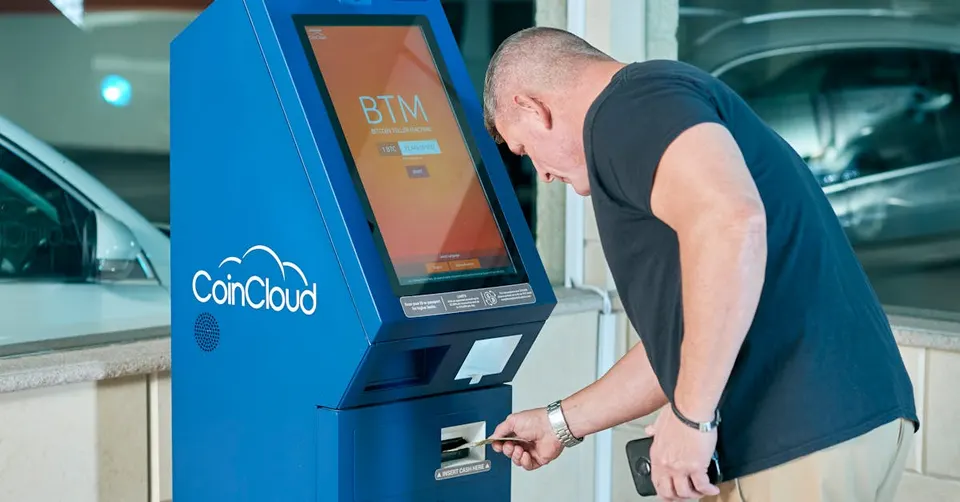
If Kraken represents the digital future, Bitcoin Depot’s recent Chapter 11 bankruptcy filing represents the failure of the physical past. As the largest operator of Bitcoin ATMs in North America, Bitcoin Depot was supposed to be the bridge between cash-heavy traditional economies and the digital frontier. Their failure suggests that the 'convenience' of buying crypto at a physical kiosk is losing its appeal, likely due to high transaction fees and the increasing ease of mobile banking apps. This is a crucial lesson for investors: just because a service is widespread doesn't mean its business model is sustainable.
In Iran, where physical access to global financial markets is restricted, we often look for 'physical' metaphors of safety. However, the bankruptcy of a Nasdaq-listed giant like Bitcoin Depot reminds us that the real value in crypto lies in its decentralized, digital nature, not in the hardware that tries to mimic traditional banking. When physical infrastructure fails, it often leaves a vacuum that is quickly filled by more agile, purely digital competitors. This shift confirms that the future of finance is not in 'kiosks' but in the palm of your hand, provided you can navigate the technical risks.
---
The Fragility of the Digital Glue
While exchanges automate and ATMs fail, the 'glue' that holds different blockchains together—known as bridges—remains dangerously fragile. The recent exploit of the Verus Ethereum bridge, resulting in an $11.6 million loss, is a sobering reminder of this reality. Hackers managed to drain over 1,600 Ether, which was quickly converted and moved. This is not an isolated incident; cross-chain bridges have become the primary target for sophisticated cyber-attacks because they represent a single point of failure in an otherwise decentralized ecosystem.
For the Iranian investor, using bridges to move assets between networks (like moving USDT from Tron to Ethereum) feels like a routine task. However, every time you use a bridge, you are trusting a piece of code that is constantly being probed by hackers worldwide. Today’s market data shows USD at 180,850 Toman and Gold 18k at nearly 19.9 million Toman per gram. In such a high-stakes environment, losing assets to a technical exploit is a risk that many cannot afford. The takeaway is clear: minimize your time spent 'in transit' on bridges and prioritize holding assets on well-established, secure networks or cold storage.

Concept Diagram
Frequently Asked Questions
Why is Kraken replacing human staff with AI?
What caused the bankruptcy of Bitcoin Depot?
How do DeFi bridge exploits like the Verus hack affect me?
Should I be worried about my account on major exchanges due to AI shifts?
Understanding the 'Efficiency Trap' in Modern Business
The "Efficiency Trap" describes a phenomenon where an organization's relentless pursuit of operational efficiency, while seemingly beneficial, inadvertently leads to negative long-term consequences such as reduced adaptability, stifled innovation, or increased systemic fragility. In an effort to streamline processes, cut costs, and maximize output, businesses may strip away redundancies, cross-functional knowledge, or human oversight that are crucial for resilience and strategic agility in dynamic environments. This trap becomes particularly pronounced in rapidly evolving sectors like technology and finance.
In the context of the provided headline, "Kraken’s AI Layoffs" exemplify how an over-reliance on artificial intelligence for efficiency can lead to job reductions, potentially sacrificing human intuition, creativity, and complex problem-solving capabilities that AI may not fully replicate. Similarly, "Bitcoin ATM Bankruptcies" could stem from businesses optimizing for specific market conditions or operational efficiencies without building in the flexibility to adapt to regulatory changes, shifts in customer demand, or intense competition. Such singular focus on efficiency can make a business brittle, unable to pivot when its core assumptions are challenged.
For investors, understanding the efficiency trap is crucial when evaluating companies, especially those heavily investing in automation or new technologies like AI and blockchain. While efficiency gains can drive short-term profits, they can also mask underlying vulnerabilities. A company that appears highly efficient today might be sacrificing the very elements—like diverse skill sets, robust contingency plans, or investment in exploratory R&D—that would allow it to innovate and survive future disruptions. A balanced approach that prioritizes both efficiency and resilience, fostering a culture of continuous learning and adaptation, is often a more sustainable path to long-term success.