The Integrity Premium: What Reality TV Scandals and Bitcoin Outflows Reveal About Risk
حقالامتیاز اعتبار؛ درسهای رسواییهای تلویزیونی و خروج سرمایه از بیتکوین برای سرمایهگذاران
When institutions fail to protect their participants or their investors, the market reacts with brutal efficiency. From the UK government's investigation into 'Married at First Sight' to the $1 billion exodus from Bitcoin, we explore why trust is the ultimate currency in 2026.
At time of publishing
USD
178,800
Toman
Gold 18K
19.66M
Toman / gram
Bitcoin
$76,694
US Dollar
Tether
17,807.9
Toman
The High Cost of Institutional Negligence
In the world of finance, we often talk about numbers, charts, and interest rates. But beneath every transaction lies a more fundamental layer: trust. Today, two seemingly unrelated stories highlight what happens when that trust is compromised. In the United Kingdom, the Department for Culture, Media and Sport (DCMS) has called for a rigorous investigation into allegations of sexual violence during the filming of Married at First Sight UK. The BBC reports that multiple women have come forward with claims of rape and non-consensual acts involving their onscreen partners. This isn't just a tabloid scandal; it is a failure of corporate governance and due diligence by Channel 4 and its production partners.
For an investor, the lesson here is about 'reputational risk.' When a major entity—whether it’s a media conglomerate or a financial institution—fails to vet its participants or protect its environment, the consequences are swift. Regulators step in, advertisers flee, and the brand's value erodes. In today’s hyper-connected world, negligence is a liability that carries a heavy price tag. If a production company cannot ensure the basic safety of its cast, how can shareholders trust its management of multi-million dollar budgets? This same logic applies to the digital assets we trade every day.

Crypto’s Great Rotation: Beyond the $1 Billion Exodus
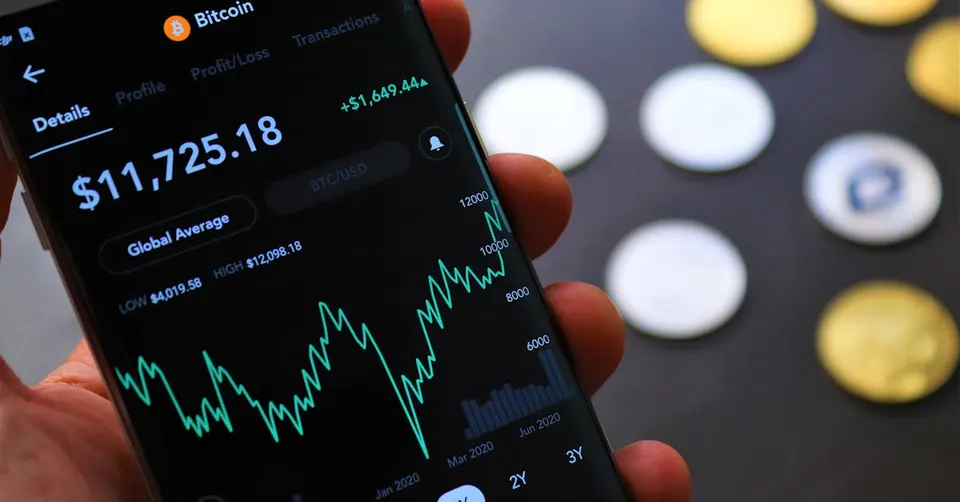
While the UK deals with media ethics, the cryptocurrency market is undergoing its own crisis of confidence. Recent data from CoinShares shows that Bitcoin products have seen outflows hitting nearly $1 billion in a single week. Specifically, spot Bitcoin ETFs logged $649 million in net outflows—the largest since January. This selloff isn't happening in a vacuum. Analysts point to a toxic cocktail of geopolitical tensions, persistent inflation fears, and rising U.S. Treasury yields. When 'safe' government bonds offer higher returns, the appetite for volatile assets like Bitcoin naturally diminishes.
However, the story isn't just about money leaving the system; it’s about where it’s going. While Bitcoin and Ethereum are bleeding, investors are rotating into XRP and Solana funds. This suggests that the market is becoming more discerning. Investors are no longer just buying 'crypto' as a monolith; they are looking for specific utility or perceived undervalued opportunities. Meanwhile, the Ethereum Foundation is facing its own internal 'integrity' test, with two more high-profile researchers, Julian Ma and Carl Beek, resigning. This brings the total departures to eight this year, raising questions about the nonprofit’s internal stability and its ability to lead the network through its next phase of evolution.
Navigating the Noise: The Iranian Perspective
For the Iranian investor, these global shifts manifest in unique ways. Today, the USD/IRR rate in the open market saw a slight cooling, dropping from 179,650 to 178,800 Toman (-0.5%). Similarly, 18k gold followed the global trend, dipping 0.5% to 19,657,648 Toman per gram. Yet, interestingly, the Emami gold coin rose by 0.5% to reach 192,000,000 Toman. This divergence often happens when local retail buyers seek a physical 'hedge' against uncertainty, even when the underlying global spot price or the local dollar rate softens.
The takeaway for our audience at Arzbin is clear: risk management is not just about watching a price chart. It is about understanding the health of the institutions you are betting on. Whether it is a TV network facing a criminal investigation or a crypto foundation losing its best minds, 'red flags' in governance often precede a crash in value. In 2026, the most successful investors are those who can distinguish between a temporary price dip and a fundamental breakdown in institutional integrity. Stay skeptical, do your own due diligence, and remember that in a volatile market, information is your only real shield.

Frequently Asked Questions
Why did Bitcoin see such massive outflows while XRP and Solana saw inflows?
How does a TV scandal in the UK affect financial markets?
Why is the Emami coin rising when the USD and gold gram are falling in Iran?
What do the resignations at the Ethereum Foundation mean for ETH price?
Understanding Reputational Risk in a Volatile World
In an increasingly interconnected and transparent world, the concept of Reputational Risk has become paramount for individuals, organizations, and even digital assets. Reputational risk refers to the potential for damage to an entity's standing or public perception, often stemming from ethical lapses, poor governance, scandals, or negative publicity. This damage can erode trust, diminish loyalty, and ultimately lead to significant financial and operational consequences. It’s not just about what an entity does, but also about how it's perceived to be doing it.
The recent headlines, from investigations into reality TV shows like MAFS UK to resignations within the Ethereum Foundation, and the subsequent "Bitcoin outflows" or "crypto rotation" to seemingly more stable assets like Solana, vividly illustrate reputational risk in action. When trust is shaken—whether by questions of integrity in a TV production or concerns about leadership in a major blockchain project—investors and the public react. This reaction can manifest as a flight of capital, as seen with crypto outflows, where participants move their assets away from perceived instability towards alternatives believed to have stronger governance or a more reliable public image.
Effective corporate governance and a strong commitment to integrity are crucial safeguards against reputational risk. Companies and projects that demonstrate transparency, accountability, and ethical conduct build an "integrity premium," fostering greater trust and resilience against market volatility or unexpected challenges. Conversely, a lack of these qualities can quickly lead to a loss of confidence, making an entity vulnerable to rapid devaluation and a struggle to regain its footing. Understanding and actively managing reputational risk is therefore not just a matter of public relations, but a fundamental aspect of long-term sustainability and value preservation in any sector, from traditional finance to nascent crypto markets.