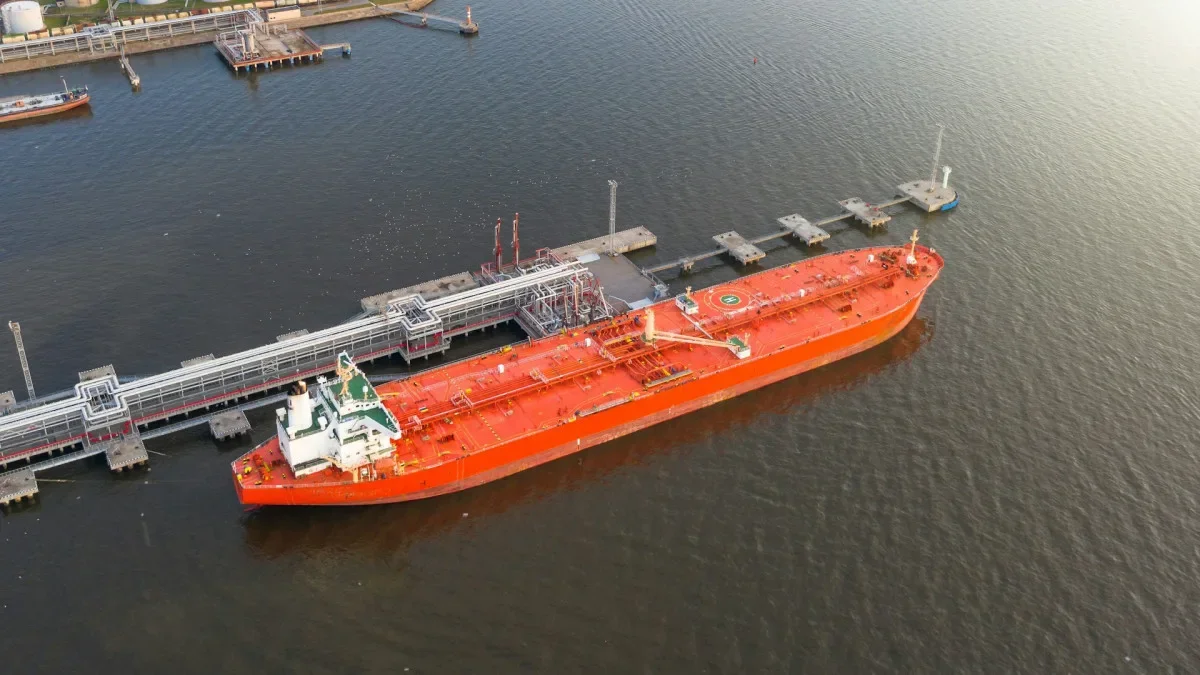
Hormuz Transit Collapse: Oil Prices Soar as Strait Sees Single-Digit Tanker Traffic
فروپاشی تردد نفتکش در تنگه هرمز: قیمت نفت با تردد تک رقمی نفتکشها صعودی شد
The vital Strait of Hormuz is experiencing a dramatic drop in tanker traffic, plunging to single digits. This crisis is sending ripples through global energy markets, pushing oil prices higher and increasing regional risk premiums.
At time of publishing
USD
234,200
Toman
Gold 18K
23.84M
Toman / gram
Bitcoin
$84,769
US Dollar
Tether
232,397
Toman
The Strait of Hormuz: A Critical Chokepoint Under Siege
The Strait of Hormuz, a narrow waterway connecting the Persian Gulf to the open ocean, is one of the world's most critical maritime arteries. Typically, it sees dozens of commodity carriers pass through daily, serving as a vital conduit for global energy supplies. However, recent reports indicate a severe decline in traffic, with Reuters noting only nine commodity carriers transiting the strait on Thursday, the majority of which were exiting.
This drastic reduction, from a 10-day average of 18 vessels to single digits, signals a deepening crisis. The vessels that did pass included a mix of crude carriers (VLCCs), Panamaxes, Supramaxes, and smaller tankers, alongside a ballast gas carrier. While the exact causes are not fully detailed in the initial reports, the implications for global energy markets are immediate and profound. Reduced passage through the strait inevitably tightens supply, leading to upward pressure on oil prices.
Concept Diagram
Frequently Asked Questions
What is the Strait of Hormuz and why is it important?
What does a decrease in tanker traffic mean for oil prices?
How can this crisis affect Iran and the surrounding region?
Are there any alternative routes for oil transport if the Strait of Hormuz becomes impassable?
The Strategic Significance of Global Choke Points in Energy Security
In the intricate web of global trade, certain geographical features stand out for their disproportionate influence: these are known as choke points. A choke point is a narrow channel or passage, such as a strait or canal, that is crucial for maritime trade and transportation. Their strategic importance stems from the fact that a significant volume of global commerce, particularly energy resources, must pass through them. Any disruption, whether due to political instability, military conflict, natural disaster, or even piracy, can have immediate and far-reaching consequences for international markets and energy security.
The Strait of Hormuz, highlighted in the news, serves as a quintessential example of a critical choke point. Situated between Oman and Iran, it is the sole maritime passage from the Persian Gulf to the open ocean, making it an indispensable conduit for a substantial portion of the world's oil supply. Roughly 20% of global petroleum liquids consumption, or about one-third of all seaborne oil, transits this narrow strait daily. Countries like Saudi Arabia, Iran, UAE, Kuwait, and Iraq rely on it to export their vast oil reserves, while major economies in Asia, Europe, and North America depend on its uninterrupted flow for their energy needs.
When tanker traffic through such a vital artery is threatened or collapses, the immediate economic impact is a supply shock. Even the threat of disruption can trigger a sharp increase in oil prices, reflecting a "geopolitical risk premium" as traders factor in potential scarcity and higher future costs. This volatility not only affects consumers at the pump but also has broader implications for inflation, economic growth, and the stability of global financial markets. Furthermore, it compels nations to reassess their energy security strategies, potentially leading to increased investment in alternative energy sources, strategic petroleum reserves, or efforts to diversify supply routes.
Understanding choke points like the Strait of Hormuz is crucial for grasping the geopolitical realities of energy markets. They represent vulnerable links in the global supply chain, where local events can rapidly escalate into international crises, underscoring the delicate balance between geography, economics, and international relations.