
The Crypto Engine Upgrade: Why Infrastructure Matters More Than the $83,000 Bitcoin Price Tag
ارتقای موتور رمزارزها: چرا زیرساختهای فنی از بیتکوین ۸۳ هزار دلاری مهمتر هستند؟
As Bitcoin tests critical support levels near $83,000, major exchanges like Gemini are quietly rebuilding the technology that powers the market. Understanding these structural shifts is the key to knowing why your transactions are getting faster and how global trade tensions are reshaping your digital wallet.
At time of publishing
USD
254,500
Toman
Gold 18K
25.71M
Toman / gram
Bitcoin
$83,379
US Dollar
Tether
254,401
Toman
The Hidden Plumbing of the Crypto World
While most Iranian investors spend their mornings refreshing price charts to see if Bitcoin has finally conquered the $84,000 mark, a more significant revolution is happening in the 'plumbing' of the financial system. Today, the Winklevoss-owned exchange Gemini announced it has successfully switched its Zcash software to the new 'Zakura' nodes. This might sound like technical jargon, but the result is a massive leap in efficiency: the new software syncs with the network in six hours compared to the previous 24-hour slog. This upgrade prepares the infrastructure for much faster 25-second blocks, a move that signals a broader trend in the industry—speed is becoming the new gold standard.
For the average user in Tehran, these infrastructure upgrades are the reason why 'waiting for confirmations' is slowly becoming a thing of the past. When major global exchanges optimize their backend, it reduces the friction for liquidity to move across borders. In a market where Bitcoin is currently hovering at $83,379, the ability to move assets quickly during high volatility can be the difference between a successful trade and a missed opportunity. As we saw today, with the USD/IRR rate dipping slightly by 0.5% to 254,500 Toman, the efficiency of your crypto on-ramp becomes even more critical for local arbitrage and wealth preservation.

Defending the Line: Bitcoin’s $83,000 Battle
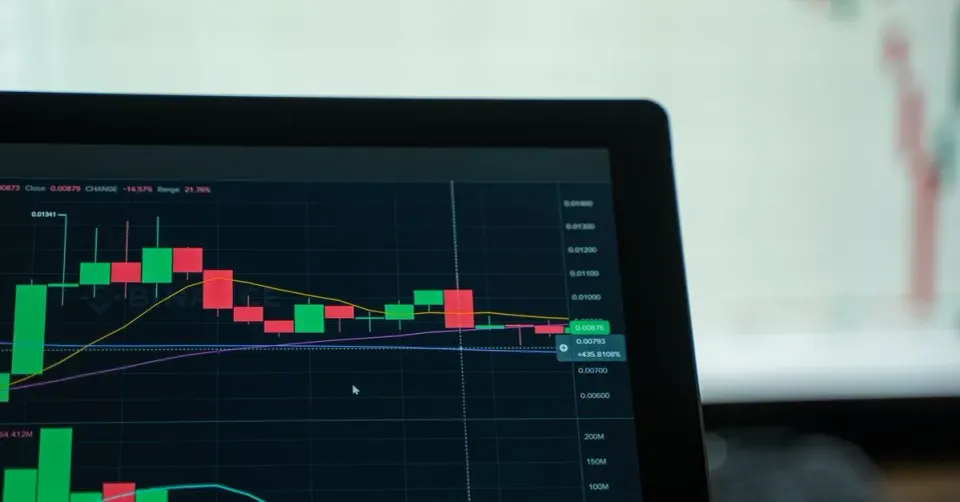
Technically speaking, the market is at a crossroads. Bitcoin is currently testing a support level at approximately $82,975. In the world of trading, a 'support level' is like a floor; if the price stays above it, the 'bulls' (those betting on a price increase) remain in control. Analysts are watching this level closely because it marks the completion of a 'bull flag' pattern—a technical formation that often precedes a major breakout. If Bitcoin holds this line, the path toward $90,000 looks clear. However, if it falls below, we might see a temporary retreat as the market catches its breath.
This technical tension is reflected in the local Iranian market's behavior today. While the US Dollar saw a minor decline, the price of Gold 18k rose by 1.1% to 25,705,249 Toman per gram. This divergence suggests that Iranian investors are not just looking at the greenback; they are seeking refuge in 'hard' assets. The Emami coin also saw a significant 2.4% jump, reaching 261,000,000 Toman. This tells us that even when the global crypto market 'stalls' at $83,000, local demand for inflation hedges remains incredibly aggressive, driven by domestic economic expectations rather than just global charts.
The Dollar Trap and New Ways to Hedge
One of the most fascinating developments in the global crypto space is the launch of Bitcoin products in Europe that are 'hedged' against the US Dollar. Traditionally, if you buy Bitcoin, you are taking two risks: the price of Bitcoin itself and the value of the USD. For Iranians, this is a double-edged sword. Most use USDT (Tether) to escape Toman inflation, but if the US Dollar weakens globally against other currencies or gold, the 'purchasing power' of that USDT can still drop. New products in London and Frankfurt are now allowing investors to buy Bitcoin without this 'Dollar risk,' using Euros or Pounds instead.
This matters to the Arzbin audience because it highlights a sophisticated way of thinking about wealth. As the G20 trade ministers meet in Milwaukee today, the shadow of potential new tariffs from the US looms large. These geopolitical shifts can cause the US Dollar to fluctuate wildly on the global stage. If you are holding your life savings in USDT, you are essentially betting on the stability of the US economy. Watching how European investors are diversifying away from 'Dollar-only' exposure provides a valuable lesson: true financial security comes from understanding that even your 'safe haven' currency has its own risks. In a world where gold is climbing toward $4,188 per ounce, keeping an eye on the relationship between crypto, fiat, and metals is no longer optional—it is a survival skill.
Concept Diagram
Frequently Asked Questions
چرا ارتقای نرمافزاری صرافی جمینای برای من مهم است؟
سطح حمایتی ۸۲,۹۷۵ دلار برای بیتکوین چه معنایی دارد؟
چرا با وجود کاهش قیمت دلار در ایران، قیمت سکه بالا رفته است؟
Understanding Cryptocurrency Infrastructure: The Backbone of Digital Finance
Cryptocurrency often grabs headlines with its volatile price swings, but beneath the speculative fervor lies a complex and crucial foundation: cryptocurrency infrastructure. This isn't just about Bitcoin's latest valuation; it encompasses the entire technological ecosystem that enables digital assets to exist, function, and be exchanged securely and efficiently. Think of it as the roads, bridges, power grids, and communication networks that allow a modern city to thrive – without them, even the most valuable buildings would be inaccessible and useless.
At its core, cryptocurrency infrastructure comprises several vital components. Central to this are nodes, which are computers running the blockchain software, validating transactions, and maintaining a distributed ledger of all network activity. These nodes, like the "Zakura nodes" mentioned in the context of specific projects, are fundamental to the decentralized nature and security of cryptocurrencies. Other critical elements include mining or staking mechanisms (depending on the blockchain's consensus algorithm) that secure the network and create new blocks, as well as exchanges (like Gemini, which undergoes upgrades for various assets like Zcash) where users can buy, sell, and trade digital currencies. Wallets, which store and manage private keys, and Layer-2 solutions designed to enhance scalability and speed, also form integral parts of this evolving landscape.
The significance of robust cryptocurrency infrastructure cannot be overstated. A well-developed infrastructure ensures the security of transactions and assets, making the network resilient against attacks and fraud. It dictates the scalability of a blockchain, determining how many transactions it can process per second, which is vital for mainstream adoption. Furthermore, it underpins reliability and accessibility, making it easier for both individual users and institutions to interact with digital assets. As the headline suggests, focusing on these foundational upgrades and developments is paramount because they are the true drivers of long-term value, utility, and innovation within the digital economy, far outweighing short-term price fluctuations.