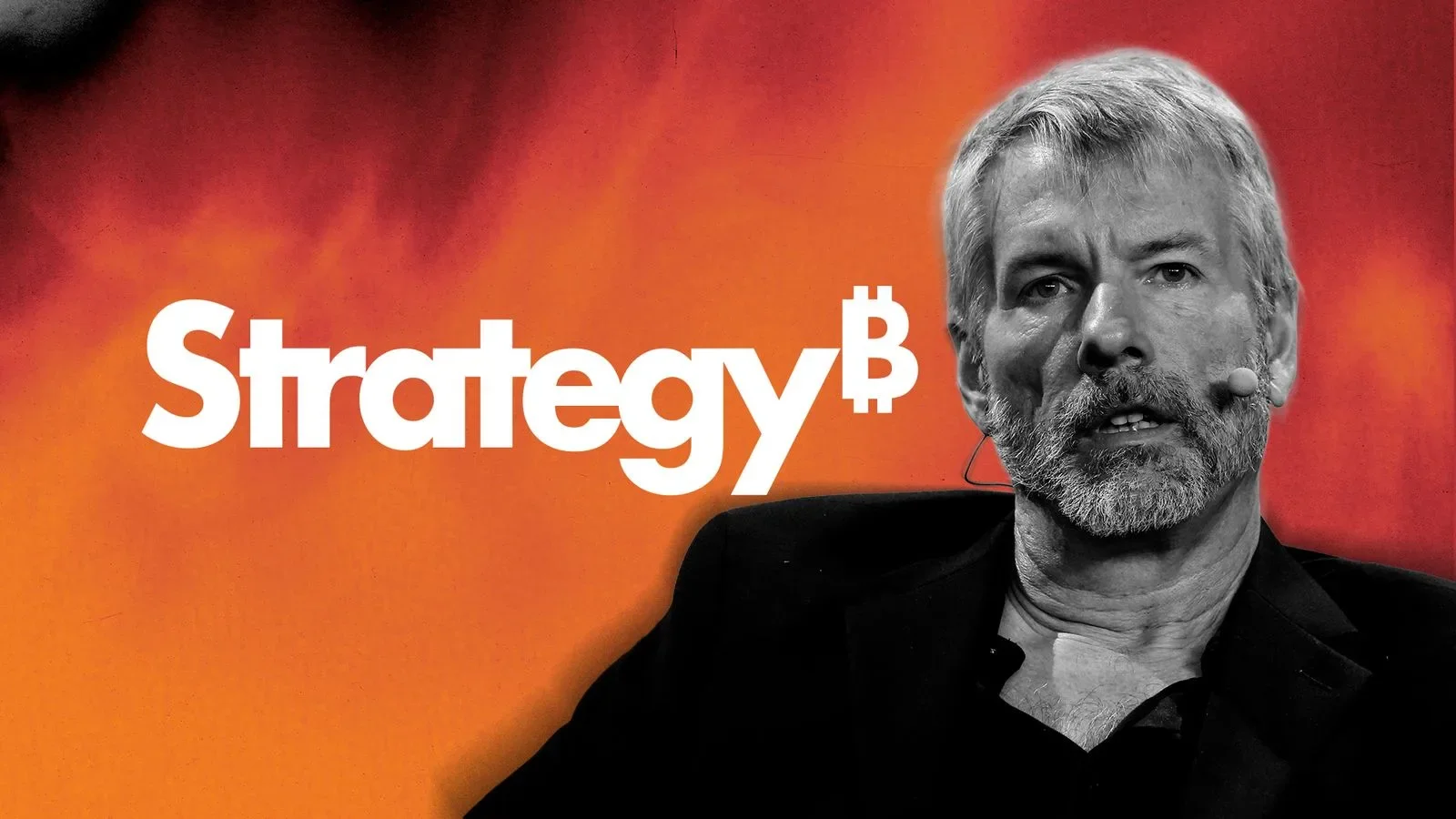
The $7.5 Billion 'Natural Demand': How Michael Saylor is Building a Floor for Bitcoin
تقاضای «طبیعی» ۷.۵ میلیارد دلاری؛ چگونه مایکل سیلور برای بیتکوین سقف و کف میسازد؟
Michael Saylor's MicroStrategy is seeing massive institutional appetite for its Bitcoin-backed stock, even as the SEC cracks down on crypto fraud. Understanding this 'natural demand' is key to navigating today's market volatility and protecting your capital.
At time of publishing
USD
270,700
Toman
Gold 18K
23.67M
Toman / gram
Bitcoin
$61,640
US Dollar
Tether
272,949
Toman
The Institutional Magnet: $7.5 Billion in Demand
Michael Saylor, the executive chairman of MicroStrategy, recently revealed a staggering $7.5 billion in 'natural demand' for his company’s STRC preferred stock. This isn't just another headline about a wealthy bull; it represents a fundamental shift in how global capital treats digital assets. While retail investors often panic when Bitcoin dips—as it has today, hovering around $61,640—large institutions are looking for sophisticated ways to gain exposure. By using preferred stock, these entities can bet on Bitcoin with a layer of corporate protection that a direct purchase on an exchange doesn't offer. This 'natural demand' suggests that even in a cooling market, the big players are searching for entry points, effectively creating a psychological and financial floor for the leading cryptocurrency.
For the average investor in Iran, this matters because it changes the 'gravity' of the market. When billions of dollars are locked into corporate structures tied to Bitcoin, the likelihood of the asset 'going to zero'—a common fear during bear cycles—diminishes significantly. However, it’s important to note that MicroStrategy is currently reducing the amount of STRC outstanding to manage the credit-market contraction. This shows that even the biggest bulls are not immune to the broader economic environment, including high interest rates and shifting liquidity. It’s a lesson in calculated aggression: knowing when to push and when to refine your leverage.

The Dark Side: Fraud and the Need for Due Diligence
While the institutional story is one of growth, the regulatory story is one of caution. The SEC recently charged eight firms over fake crypto platforms that defrauded investors of $37 million. These scammers used social media ads and forged documents to lure victims into 'too good to be true' schemes. This highlights a critical dichotomy in the market: on one side, you have the maturation of crypto through companies like MicroStrategy; on the other, a 'Wild West' where retail users are still being hunted by sophisticated predators. The lesson here is that as the market grows, the scams become more convincing, often mimicking the language of legitimate institutional players.
This need for safety and protocol isn't limited to finance. We see it in other sectors, such as the recent tragic inquest in New South Wales regarding 'free births' where lack of medical oversight led to heartbreaking outcomes. The takeaway is universal: bypassing established protocols—whether in medicine or finance—carries extreme risk. In the world of crypto, 'being your own bank' comes with the heavy responsibility of verifying every platform and avoiding any offer that promises guaranteed high returns. If an institution like BlackRock is seeing record outflows of $541 million from its IBIT ETF, it’s a sign that even the professionals are repositioning. You should never feel pressured to stay in a position if the environment feels unsafe or unclear.
The Iranian Context: Gold Chills and Toman Stability
Closer to home, the Iranian market is showing its own unique patterns on this Friday, November 20, 2026. While the US Dollar remains stable at 270,700 Toman, we’ve seen a significant 2.3% drop in the price of 18k gold, now sitting at 23,673,761 Toman per gram. This divergence is fascinating. Often, gold and crypto are viewed as twin pillars of an 'inflation hedge' strategy. However, as global narratives shift—like the UK moving away from divisive Brexit talk or the bracing for a literal autumn chill of -10C in London—investors are constantly rebalancing. A drop in gold prices in Iran during a period of currency stability might suggest a temporary local liquidity shift or a reaction to international ounce prices, which currently stand at $3,574.45.
For Arzbin readers, the combination of Michael Saylor’s institutional optimism and the local dip in gold presents a strategic moment. It’s a reminder that no asset moves in a straight line forever. The 'natural demand' from Wall Street provides a long-term tailwind for Bitcoin, but the local price of gold is currently offering a 'discount' compared to yesterday. Successful investing in the Iranian context requires watching both the global institutional 'lighthouse' and the local market 'weather.' Just as the UK is preparing for a cold snap, smart investors prepare for market winters by diversifying and ensuring they aren't over-leveraged in any single asset class.

Concept Diagram
Frequently Asked Questions
What does 'natural demand' mean in Michael Saylor's context?
Why is gold falling in Iran while the dollar remains stable?
How can I identify the fake crypto platforms mentioned by the SEC?
Is Bitcoin still a good hedge if it's dropping to $61,000?
Corporate Treasury Bitcoin Strategy: A New Frontier for Institutional Adoption
The increasing interest from entities like MicroStrategy, led by Michael Saylor, in allocating significant portions of their corporate treasuries to Bitcoin marks a pivotal shift in the cryptocurrency's journey towards mainstream acceptance. Traditionally, corporate treasury management focuses on preserving capital, maintaining liquidity, and optimizing returns through low-risk assets like cash, short-term bonds, and money market instruments. However, with persistent inflation concerns and historically low yields on traditional assets, some forward-thinking companies are re-evaluating this conservative approach.
MicroStrategy's strategy involves converting substantial cash reserves into Bitcoin, viewing it as a superior long-term store of value and a hedge against currency debasement. This move is driven by the conviction that Bitcoin, with its decentralized nature and fixed supply, offers a more robust inflation hedge than fiat currencies or even gold in the digital age. By making Bitcoin a primary treasury asset, MicroStrategy aims to protect its shareholders' wealth from the eroding effects of inflation and potentially benefit from Bitcoin's long-term appreciation.
This institutional adoption has a profound impact on the Bitcoin market. When a publicly traded company makes such a large and public commitment, it signals growing legitimacy and confidence in Bitcoin as an asset class. This sustained buying pressure from corporations creates a significant "demand floor," meaning there's a consistent base of large-scale buyers, which can help stabilize prices and reduce volatility compared to a market driven solely by retail speculation. It also encourages other institutions to consider similar strategies, further solidifying Bitcoin's position in the global financial landscape.
While highly publicized, this strategy is not without its risks. Bitcoin's price volatility remains a significant concern, and regulatory uncertainties continue to loom. Companies adopting this approach must also navigate complex accounting standards for digital assets and potential scrutiny from investors and regulators. Nevertheless, the trend initiated by companies like MicroStrategy highlights a new era where digital assets are increasingly considered viable components of sophisticated corporate financial planning.
Topics
Related Articles