
The Anthropic IPO Effect: How to Evaluate Crypto as a Store of Value During Global Tech Volatility
اثر عرضه اولیه آنتروپیک؛ چطور در موج جدید نوسانات، ارزش واقعی داراییهای دیجیتال را تشخیص دهیم؟
With Anthropic’s massive $81 billion IPO shaking up Nasdaq futures and Bitcoin retesting the $63,500 level, Iranian investors must look beyond simple price action. This guide teaches you how to evaluate if a coin is a genuine store of value or just a temporary tech-driven pump.
At time of publishing
USD
266,300
Toman
Gold 18K
24.29M
Toman / gram
Bitcoin
$63,662
US Dollar
Tether
269,418
Toman
The Tech-Crypto Correlation: Why Anthropic Matters to Your Wallet
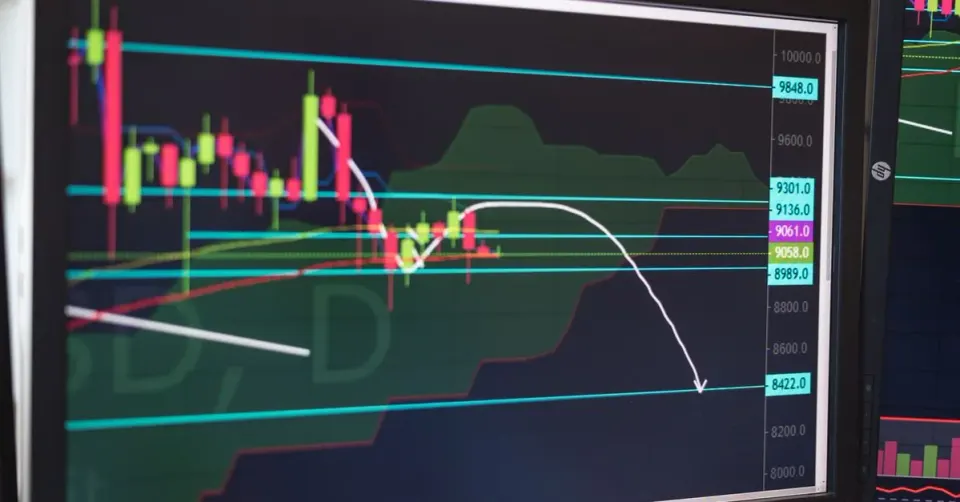
The global financial landscape on Thursday, November 19, 2026, is dominated by one name: Anthropic. The AI giant has priced its record-breaking IPO at $83 a share, reaching an $81.3 billion valuation. For the Iranian crypto trader, this isn't just Silicon Valley news. As Nasdaq futures rise in anticipation, we are seeing Bitcoin climb back to $63,662 after a nervous dip to the $62,000 support level. This correlation exists because institutional liquidity often flows between high-growth tech stocks and 'digital gold.'
When evaluating a coin as a store of value today, you must first look at its sensitivity to global equity markets. A true store of value should ideally demonstrate resilience when the 'hype' cycles of AI or traditional tech cool down. If a coin only rises because of a Nasdaq pump, it may not be the safe haven you seek. Watch the $63,500 resistance for Bitcoin; its ability to hold this level while tech stocks are volatile is a key indicator of its maturity as a sovereign asset class.
Security as the Foundation of Value
You cannot call an asset a 'store of value' if the infrastructure used to hold it is compromised. Today’s emergency update for BTCPay Server, which addressed five critical security flaws, serves as a stark reminder. These vulnerabilities could have allowed attackers to execute malicious code remotely. For Iranians using self-hosted solutions to bypass centralized exchange risks, security is the first metric of value. If the protocol or the gateway is leaky, the 'store' is empty.
To evaluate a coin’s worthiness, look at its developer activity and the speed of its security responses. A project that ignores critical flaws or lacks a robust bug-bounty program is a speculative gamble, not a store of value. Furthermore, the recent $6.5 billion freezing order against Binance in Abu Dhabi highlights that even the largest entities are subject to legal and technical freezes. True value lies in decentralized protocols that can withstand both hackers and sudden regulatory shocks.
Navigating the Iranian Blockade and Global CBDCs
While global markets focus on IPOs, the local context in Iran remains pressured by the ongoing US blockade of Iranian ports. This geopolitical tension keeps the USD/IRR stable but high at 266,300 Toman, while USDT carries a premium at 269,418 Toman. In this environment, a digital asset's value is also defined by its 'utility as a bridge.' If you cannot move the asset or convert it to liquidity during a crisis, its theoretical price is irrelevant. This is why stablecoins often outperform volatile assets in terms of practical value for Iranian users.
Lastly, keep an eye on institutional shifts like Singapore’s MAS issuing $77 million in tokenized bills via wholesale CBDC. This move toward 'programmable money' suggests that the future of value is moving away from simple coins and toward integrated financial ecosystems. For your portfolio, ensure you aren't just holding 'ghost coins' with no ecosystem. A genuine store of value in 2026 must have institutional interest, a clean security record, and the liquidity to survive even when local physical ports are closed.

Concept Diagram
Frequently Asked Questions
چرا عرضه اولیه آنتروپیک روی قیمت بیتکوین تأثیر دارد؟
باگهای امنیتی BTCPay چه خطری برای کاربران ایرانی دارد؟
در شرایط محاصره بنادر، خرید تتر بهتر است یا بیتکوین؟
Cryptocurrencies as a Store of Value Amidst Economic Volatility
The concept of a "store of value" is fundamental to understanding how different assets function within an economy, especially during times of uncertainty. At its core, a store of value is any asset, commodity, or currency that can be saved, retrieved, and exchanged at a later time without significant depreciation in value. Key characteristics include durability, scarcity, portability, divisibility, and fungibility. Historically, precious metals like gold, and sometimes real estate, have served this role due to their inherent scarcity and widespread acceptance as wealth preservers across generations and geopolitical shifts.
In recent years, cryptocurrencies, particularly Bitcoin, have emerged as a contentious candidate for a modern store of value. Proponents argue that Bitcoin embodies many of the essential characteristics: its supply is algorithmically capped at 21 million coins, making it scarce; its decentralized nature means it's not subject to the whims of any single government or central bank; and its global digital network ensures portability and divisibility. For many, especially in regions experiencing high inflation or capital controls, Bitcoin offers an alternative to traditional financial systems that might be failing or inaccessible.
However, the journey for cryptocurrencies to be universally accepted as a reliable store of value is fraught with challenges, primarily its notorious price volatility. While traditional assets like gold also experience fluctuations, Bitcoin's price swings have historically been far more dramatic, leading critics to question its ability to reliably preserve purchasing power over shorter to medium terms. Despite this, supporters point to Bitcoin's long-term upward trend and its resilience through various economic crises, suggesting that its volatility might decrease as adoption grows and markets mature. The ongoing debate highlights the evolving nature of finance and the search for stable assets in an increasingly volatile global economy.