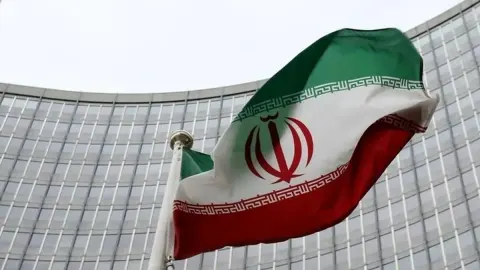
US Strikes Iranian Tankers After Warship Attack as Toman Jumps 2.9% Amid War Fears
حمله نظامی آمریکا به نفتکشهای ایرانی؛ جهش ۲.۹ درصدی قیمت دلار در پی تشدید تنشها
US Central Command confirms strikes on three Iranian crude carriers following missile attacks on American warships, sending the Toman to 228,700. Meanwhile, global markets eye Poland as a value play and Bitcoin faces a critical Fed test as inflation cools.
At time of publishing
USD
228,700
Toman
Gold 18K
23.66M
Toman / gram
Bitcoin
$79,909
US Dollar
Tether
226,331
Toman
Direct Military Confrontation: US Strikes Iranian Tankers
The geopolitical situation in the Persian Gulf has escalated to a critical threshold as the US military confirmed striking three Iranian crude oil tankers on Saturday. According to reports from US Central Command, these strikes were a direct response to missile attacks launched against an American aircraft carrier and a destroyer patrolling the region. While the US navy vessels successfully avoided the "multiple unprovoked attacks" without sustaining damage or casualties, the retaliatory strike marks a significant shift from targeting proxies to hitting Iranian-flagged assets directly.
For the Iranian domestic market, the reaction was instantaneous and sharp. The US Dollar in the Tehran open market jumped from 222,200 to 228,700 Toman, a 2.9% increase in just 24 hours. This move reflects a massive "war premium" being priced in by traders who fear that a wider maritime conflict could lead to a total blockade of Iranian oil exports. The US military's explicit warning that it is prepared to "destroy Iran’s limited and exposed oil fleet" has added a layer of systemic risk that the market hasn't seen in years, driving investors toward the safety of hard currency and gold. This escalation comes at a time when the Iranian economy is already struggling with high inflation and limited access to international banking, making the prospect of losing oil revenue even more devastating for the national budget.

Markets Look for Value in Poland as Bitcoin Faces Fed Test
While regional tensions dominate the headlines in the Middle East, global investors are shifting their gaze toward unconventional value plays. Financial analysts are highlighting the Polish stock market as a compelling alternative to the increasingly expensive S&P 500. Following Poland’s reclassification as a developed economy, it has become accessible to a wider pool of institutional capital. Currently, Polish equities are trading at significantly lower multiples than their American counterparts, offering a "booming" growth profile without the tech-heavy concentration and high valuations seen in New York. This shift suggests that the global appetite for risk is diversifying, as investors seek refuge from the volatility of US mega-cap stocks in markets that offer more robust fundamentals at a discount.
In the digital asset space, Bitcoin is holding steady just below the $80,000 mark, trading at $79,909. The market is currently in a "wait-and-see" mode ahead of the Federal Reserve's meeting on September 16. New data shows that US core inflation has slid from 4.76% to 3.05%, a cooling trend that traditionally supports the case for interest rate cuts. However, recent jobs data has complicated the narrative, leading some to bet that the Fed might maintain a more hawkish stance than previously expected. For crypto investors, this means the $80k level remains a psychological barrier that requires a clear macroeconomic green light to break. The persistence of ETF inflows suggests institutional confidence remains high, but the short-term price action is heavily tethered to the Fed's next move on interest rates.

Himalayan Miracle and Domestic Political Rhetoric
In a rare piece of positive news amidst a week of tragedy, a Chinese national was rescued alive from a tunnel in Nepal on Saturday. The survivor had been trapped for ten days after a devastating flash flood—triggered by a wall of ice, rock, and mud—swept through the Himalayan valley. The disaster has claimed over 1,300 lives, making it one of the deadliest natural events in the region's recent history. The rescue is being hailed as a miracle by local authorities, providing a brief moment of hope as recovery efforts continue in the difficult mountain terrain. This event highlights the increasing frequency of extreme weather events in the Himalayas, which many scientists attribute to climate change and the rapid melting of glaciers.
Back in Tehran, domestic political figures are attempting to project a sense of ideological continuity despite the rising external pressures. Parliament Speaker Mohammad Bagher Ghalibaf recently praised the concept of "jihadi management," framing it as a benchmark for distinguishing right from wrong within the Islamic Republic's governance. While these statements aim to solidify the domestic base, they stand in stark contrast to the immediate economic challenges facing the country. With gold prices rising 2.2% to 23,662,218 Toman per gram and the Emami coin climbing to 237.5 million Toman, the gap between official rhetoric and the public's financial reality continues to widen. The surge in gold and coin prices indicates that the Iranian public is increasingly seeking to preserve their purchasing power in the face of both military threats and currency devaluation.

Watch
BREAKING: US strikes THREE Iranian oil tankers
Fox News
Frequently Asked Questions
Why did the US strike Iranian tankers directly?
How did the Tehran market react to the military escalation?
What is the 'Fed Test' for Bitcoin mentioned in the reports?
Geopolitical Risk and Currency Dynamics: The Case of the Iranian Toman
Currencies serve as a barometer of a nation's economic health and political stability. Generally, when geopolitical tensions escalate, particularly involving military conflict or significant political uncertainty, investors tend to shy away from the affected region. This often leads to capital flight and a decrease in demand for the local currency, causing it to depreciate against more stable global currencies like the US Dollar. Markets dislike uncertainty, and conflict inherently creates a high degree of it, prompting a flight to safety.
The Iranian Toman (an unofficial but widely used unit of ten Iranian Rials) operates in a highly complex and often volatile environment, heavily influenced by international sanctions, domestic economic policies, and significant geopolitical pressures. Unlike many freely floating currencies, the Toman's value is often subject to multiple exchange rates—an official rate set by the central bank and a parallel (or black) market rate that more accurately reflects true supply and demand, often at a significant premium. This dual-rate system, combined with ongoing sanctions, means that its movements can sometimes defy conventional economic logic.
When a headline reports the Toman "jumps" (appreciates) amid "war fears," it presents an intriguing anomaly to the general rule of currency depreciation during conflict. Several factors could explain such a counter-intuitive movement. It might indicate strong central bank intervention to prop up the currency, perhaps to signal stability or manage public perception during a crisis. Alternatively, specific market reactions, such as a temporary flight to domestic assets if external options are severely restricted, or even speculative trading based on short-term developments, could cause a temporary appreciation. It's also crucial to consider which rate is being reported—the official rate might be more easily manipulated than the parallel market rate.
Ultimately, the Toman's behavior underscores how currencies in politically charged environments are not solely driven by economic fundamentals. Geopolitical developments, government interventions, the impact of sanctions, and the dynamics of parallel markets play an outsized role, leading to movements that can appear volatile, unpredictable, and at times, paradoxical to external observers. Understanding these layers of influence is key to interpreting currency fluctuations in such unique contexts.
Topics
Related Articles