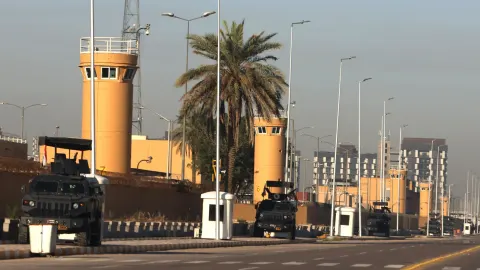
Global Markets Face 'Trumpflation' as Hormuz Seizures Drive Energy Hoarding and AI Tech Wars Escalate
سایه «ترامپفلایشن» بر بازارهای جهانی؛ بحران در هرمز و رقابت میلیاردی در دنیای هوش مصنوعی
As UK inflation hits a three-year high and the EU approves a massive loan for Ukraine, the global economy is struggling with the costs of the ongoing Iran conflict. Meanwhile, Google secures a multi-billion dollar AI deal, signaling that the tech race remains unfazed by geopolitical volatility.
At time of publishing
USD
153,450
Toman
Gold 18K
17.74M
Toman / gram
The Rise of 'Trumpflation': Global Markets Buckle Under Energy Costs
The global economic landscape is shifting rapidly as the term 'Trumpflation' takes center stage in international discourse. In the United Kingdom, inflation accelerated to 3.3% in March, the sharpest jump in fuel prices in over three years. This spike is directly attributed to the maritime volatility in the Middle East, which has disrupted supply chains and forced shipping companies to take longer, more expensive routes. Political analysts suggest that President Trump’s erratic 'deal-making' diplomacy, while aiming for peace, has introduced a level of market uncertainty that is driving up the cost of living for millions across the West.
Simultaneously, the European Union has provisionally approved a monumental €90 billion loan to Ukraine, a move that was stalled for months by Hungary. The sudden shift in Budapest’s stance, following the reopening of the Druzhba pipeline, signals a desperate attempt by European nations to stabilize energy flows while continuing to fund defense efforts. However, this massive injection of capital into a war-torn region, combined with rising energy taxes meant to shield households, is creating a complex fiscal environment where the risk of long-term stagflation—stagnant growth paired with high inflation—is becoming a very real threat to the Eurozone's recovery.
Google’s Multi-Billion Dollar Bet: The AI Infrastructure War Intensifies
While the world’s eyes are fixed on the Strait of Hormuz, the technology sector is undergoing its own seismic shift. Google Cloud has reportedly signed a multi-billion-dollar deal with Thinking Machines Lab, the new venture led by former OpenAI executive Mira Murati. This partnership focuses on building massive AI infrastructure powered by Nvidia’s latest GB300 chips. The deal underscores a critical reality: despite geopolitical instability, the race for artificial intelligence supremacy is accelerating. For investors, this suggests that 'digital oil'—data and compute power—is becoming just as vital as physical crude oil in the global power hierarchy.
This trend is not limited to software. BMW has officially unveiled the 'Neue Klasse' upgrade for its flagship 7 Series, integrating advanced AI and next-generation electric architecture. The launch, held simultaneously in New York and Beijing, highlights how traditional industries are pivoting toward high-tech solutions to remain relevant in an era of high energy costs. By moving away from traditional combustion engines and toward AI-driven efficiency, automakers are attempting to insulate themselves from the fuel price volatility currently rocking the global markets. It is a clear signal that the future of the global economy is being built on silicon, even as the world struggles with the legacy of carbon-based conflicts.

The Shadow War Continues: Why Ship Seizures Persist Despite the Truce
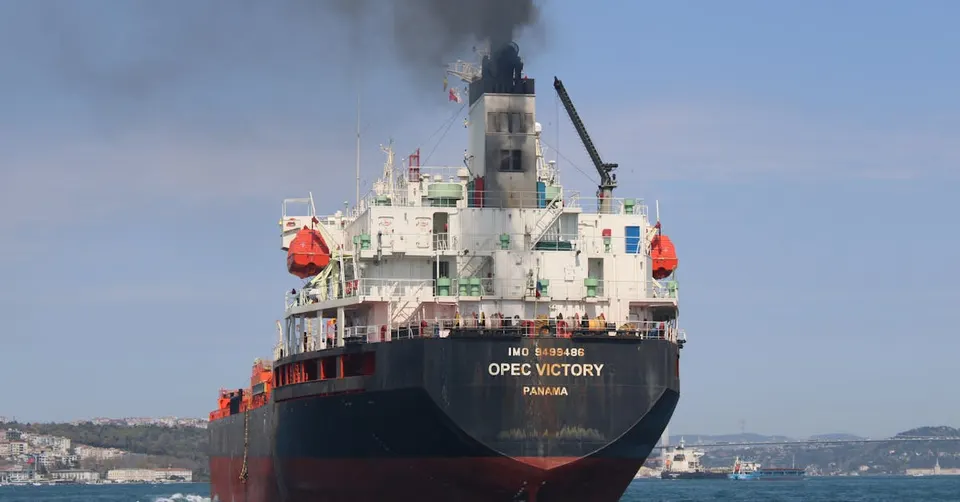
Despite President Trump’s unilateral extension of the ceasefire, the situation in the Strait of Hormuz remains a powder keg. The IRGC Navy’s seizure of two foreign-flagged cargo ships for 'violating protocols' serves as a stark reminder that Tehran does not view the truce as a cessation of its regional influence. Instead, Iranian leadership appears to be using these maritime maneuvers to maintain leverage in the ongoing negotiations. By demonstrating its ability to close or disrupt the world’s most vital energy artery at will, Iran is ensuring that its demands remain at the forefront of the 'unified proposal' Trump is awaiting.
This tactical muscle-flexing has led to a phenomenon of 'energy hoarding' among wealthy nations. As countries scramble to secure oil reserves to avoid future shortages, the resulting artificial demand is keeping prices high for everyone else. For the average Iranian citizen, this is a double-edged sword. While the 18k gold price in Tehran rose 0.8% to 17,743,893 Toman and the Emami coin jumped 1.7% to 177,000,000 Toman today, the long-term economic devastation of a prolonged standoff remains a looming shadow. The market's reaction—where the USD/IRR remained flat at 153,450 Toman—suggests a cautious 'wait-and-see' approach as traders weigh the reality of the ceasefire against the physical reality of seized tankers and blocked lanes.
Watch
US seizes Iranian-flagged ship that tried to pass strait of Hormuz blockade
Guardian News
Frequently Asked Questions
What is 'Trumpflation' and how does it affect global markets?
Why did Iran seize ships despite the ceasefire extension?
What is the significance of the Google and Thinking Machines Lab deal?
How is the EU responding to the energy crisis caused by the Iran war?
Why the Strait of Hormuz Matters: A Chokepoint That Shapes Global Energy Prices
The Strait of Hormuz is a narrow waterway, only about 21 miles (34 km) wide at its narrowest point, that connects the Persian Gulf with the Gulf of Oman and the open ocean. Despite its modest size, it is one of the world’s most critical oil chokepoints: roughly 20‑30% of the world’s daily oil consumption and about 30% of the global petroleum trade pass through this strait each day. This concentration of flow means that any disruption—whether a naval incident, a seizure of a vessel, or a deliberate closure—can instantly ripple through global oil markets.
Geopolitical tension in the region amplifies the strait’s importance. The Iranian Revolutionary Guard Corps (IRGC) has, on several occasions, seized commercial ships navigating the passage, citing sanctions or security concerns. Such actions trigger immediate risk premiums in oil pricing, as traders price in the possibility of supply shortages. The term “Trumpflation” in recent headlines reflects how political uncertainty, combined with supply shocks, can accelerate inflationary pressures worldwide, especially in energy‑dependent economies.
Economists describe this phenomenon using the supply risk premium: an extra cost that buyers are willing to pay to hedge against potential supply interruptions. When news of a seizure or a threat to close the strait surfaces, oil futures spike, and related commodities—like gold—often rise as investors seek safe‑haven assets. The ripple effect can also influence unrelated sectors, such as automotive manufacturers (e.g., BMW’s Neue Klasse) that depend on stable energy costs for production and logistics.
Understanding the strategic dynamics of the Strait of Hormuz helps explain why policymakers, from the United States to the European Union, closely monitor naval movements there and why diplomatic efforts aim to keep the waterway open. It also underscores why energy‑focused investors watch geopolitical headlines as closely as they watch supply‑and‑demand fundamentals.
For anyone following global markets, the strait serves as a vivid reminder that geopolitics and economics are inseparable—a single ship’s fate can reverberate through inflation rates, commodity prices, and even the cost of a new car.