Global Tensions Simmer: US Envoys in Pakistan Amidst Iran War Fallout
تنشهای جهانی در اوج: سفرای آمریکا در پاکستان در بحبوحه پیامدهای جنگ ایران
As the Iran conflict continues, US envoys Steve Witkoff and Jared Kushner are in Pakistan for crucial talks, while Iran's Foreign Minister Abbas Araghchi is also present in Islamabad. Meanwhile, the US targets Chinese refineries with sanctions over Iranian oil purchases, escalating economic pressure.
At time of publishing
USD
154,050
Toman
Gold 18K
17.68M
Toman / gram
Diplomatic Maneuvers in Islamabad Amidst Escalating Conflict
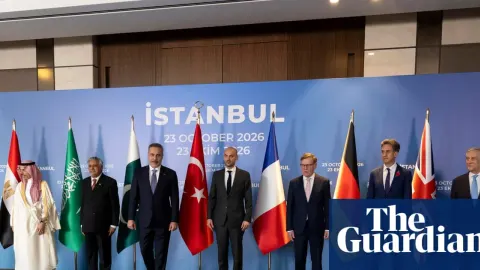
High-stakes diplomatic efforts are underway in Islamabad, Pakistan, as US envoys Steve Witkoff and Jared Kushner arrive for discussions related to the ongoing conflict involving Iran. Their presence coincides with that of Iranian Foreign Minister Abbas Araghchi, who is also in the Pakistani capital. While Iran has officially stated that no direct meetings are planned with US representatives, the convergence of these key figures in a neutral territory signals an intense, albeit indirect, push for de-escalation or at least communication amidst the prolonged hostilities. The White House has shifted its strategy from aggressive bombardment to diplomatic engagement, with figures like Kushner and Witkoff leading these efforts, underscoring the administration's desire to find a path forward.
The broader context involves the international community's deep concern over the widening conflict, which has already seen significant military actions and has disrupted global shipping lanes, particularly in the Strait of Hormuz. The International Chamber of Shipping has voiced strong objections, calling the capture of vessels by both the US and Iran a violation of international law and urging the immediate release of crews. This diplomatic outreach in Pakistan, therefore, represents a critical, albeit delicate, attempt to manage the crisis and prevent further regional destabilization, even as direct talks remain off the table for now.
US Tightens Sanctions on China Over Iranian Oil Imports
The United States has intensified its economic pressure campaign against Iran by imposing sanctions on China's Hengli refinery. The US Treasury Department asserts that this refinery has been a significant source of revenue for Iran's military, generating hundreds of millions of dollars. This move signals a broader strategy by the Trump administration to cut off Iran's oil export channels, a vital source of funding for its war efforts and broader economy. By targeting major buyers like Hengli, the US aims to cripple Iran's financial capacity and compel it towards a diplomatic resolution.
This action is part of a wider effort to enforce existing sanctions and deter international entities from engaging in trade that supports Iran's war machine. The US has previously warned against such transactions, and the targeting of a significant refinery like Hengli demonstrates a willingness to take decisive action against perceived circumvention of its policies. The implications for global oil markets could be substantial, potentially leading to increased volatility and prompting other nations to re-evaluate their trade relationships to avoid similar punitive measures.
Geopolitical Repercussions: UK-US Relations Strained Over Iran War Support
Leaked Pentagon documents reveal internal discussions within the US administration suggesting a potential reassessment of support for the UK's claim over the Falkland Islands. This hypothetical shift is reportedly linked to a perceived lack of robust British backing for the US-led military actions concerning Iran. The memo indicates that the Trump administration considered using its support for the UK's sovereignty claim as leverage to pressure London into greater alignment on the Iran conflict. Downing Street has publicly reaffirmed its unwavering stance on the Falklands, emphasizing that the UK's position on the islands' sovereignty will not change.
This revelation highlights the complex web of alliances and the transactional nature of international diplomacy, particularly in times of major geopolitical crisis. The US appears willing to leverage long-standing alliances and territorial disputes to consolidate support for its foreign policy objectives. The incident underscores the potential for significant friction between key allies when their strategic interests diverge, as seen in the differing approaches to the Iran conflict. The UK's position, while publicly resolute, may face internal pressures as the US continues to seek broader international coalition.
Market Snapshot: Toman Holds Steady Amidst Global Uncertainty
On the currency front, the Iranian Toman has shown remarkable stability, with the USD/IRR exchange rate remaining unchanged at 154,050 Toman to the US dollar over the past 24 hours. This steadiness in the face of significant global geopolitical tensions and US sanctions highlights the controlled nature of the Toman's valuation, likely influenced by central bank policies and capital controls. While external pressures mount, the domestic currency market appears to be insulated for the moment, though the long-term impact of sanctions on Iran's economic resilience remains a critical concern.
In the precious metals market, gold prices have seen a slight dip. The price of 18-karat gold per gram has decreased by 0.3%, moving from 17,728,888 Toman to 17,677,408 Toman. This minor correction in gold prices, despite the prevailing global uncertainty which typically drives safe-haven assets higher, could indicate shifting investor sentiment or specific market dynamics within Iran. Conversely, the Emami coin has experienced a modest uptick of 0.6%, rising from 176,000,000 Toman to 177,000,000 Toman, suggesting a continued demand for traditional coinage as a store of value among some segments of the population.
Watch
Iran vs US Tensions Explode Again? | 9 AM News Headlines | 24 April 2026 | Samaa News Global
SAMAA News Global
Frequently Asked Questions
Why are US envoys in Pakistan at the same time as Iran's Foreign Minister?
What is the significance of the US sanctions on China's Hengli refinery?
How are the Iran conflict and UK-US relations connected?
What is the current status of the Iranian Toman against the US Dollar?
Have gold prices changed recently in Iran?
Understanding Economic Sanctions and Their Global Reach
Economic sanctions are powerful foreign policy tools used by governments and international bodies to influence the behavior of other states, individuals, or entities. Essentially, they involve the deliberate withdrawal of customary trade or financial relations. These measures can range from broad restrictions on trade, investment, and financial transactions to more targeted actions like asset freezes, travel bans, and arms embargoes. The primary goal is often to pressure a target regime to change its policies, deter aggression, prevent human rights abuses, or counter terrorism.
The mechanisms through which sanctions operate are diverse. They can prohibit the export or import of specific goods, restrict access to international financial systems, or block transactions with designated individuals or companies. For instance, sanctions against a country's oil sector can severely curtail its revenue, while restrictions on its banking system can make it difficult to conduct international trade. These actions aim to create economic hardship, thereby compelling political change, but they often have significant ramifications for the target country's population and broader global markets.
A prime example is the extensive sanctions regime imposed by the United States and other nations on Iran. These sanctions have targeted critical sectors of Iran's economy, including its oil industry, banking system, and trade. The impact has been profound, leading to severe inflation, a significant devaluation of the Iranian currency (the Toman), and challenges in accessing essential goods and services. Such economic pressure, while intended to influence Tehran's policies, also creates ripple effects across regional economies and international oil markets, often necessitating diplomatic engagements in neighboring countries like Pakistan to manage the fallout and maintain regional stability.