Comey Surrenders Over 'Seashell' Threat as Putin Proposes Iran Nuclear Deal to Trump
تسلیم شدن جیمز کومی در برابر اتهام تهدید ترامپ؛ پیشنهاد هستهای پوتین در تماس با کاخ سفید
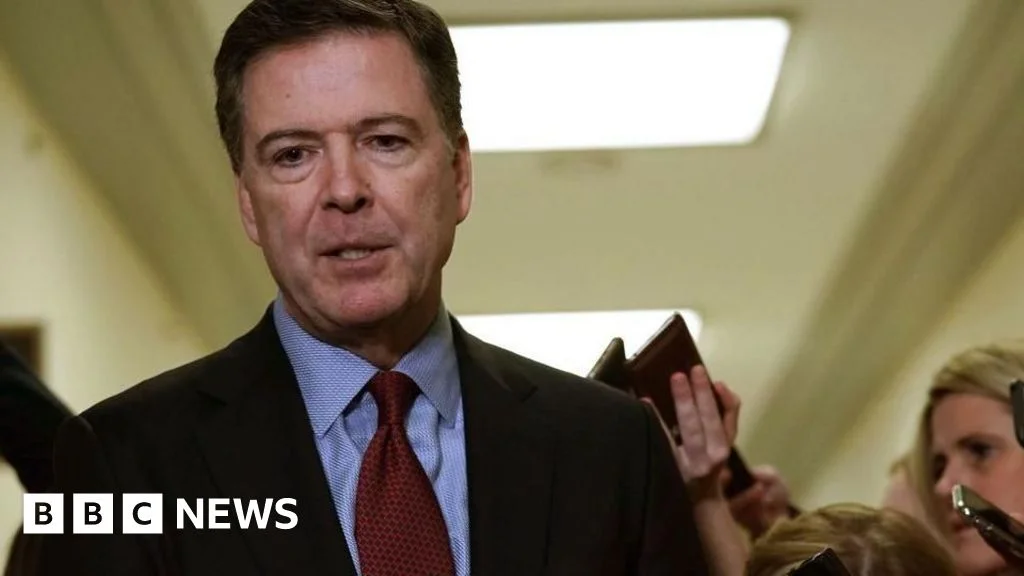
Former FBI Director James Comey has surrendered to authorities following an indictment over a social media post allegedly threatening President Trump. Meanwhile, Vladimir Putin has reached out to Trump with new proposals for Iran's nuclear program as a naval blockade drives the Toman to new lows.
At time of publishing
USD
178,850
Toman
Gold 18K
19.80M
Toman / gram
Bitcoin
$75,499
US Dollar
Tether
17,640
Toman
The '86 47' Indictment: James Comey Surrenders
In a dramatic escalation of the legal and political warfare defining the current US administration, former FBI Director James Comey surrendered to authorities in North Carolina on Wednesday. The surrender follows a federal indictment regarding a social media post from 2025, in which Comey shared a photograph of seashells arranged to form the numbers "86 47." Prosecutors from the Justice Department contend that this message was not a mere artistic expression but a coded call for violence against Donald Trump, the 47th President of the United States. In American slang, to "86" something is to eject or cancel it, and the government argues this constituted a direct threat to the President's life.
Comey’s brief court appearance marks a significant moment for the Trump administration’s efforts to prosecute long-time political adversaries. Critics argue that the use of a year-old Instagram post to justify a criminal indictment sets a dangerous precedent for free speech and political expression. However, supporters of the move suggest that the former FBI chief's influence makes any perceived incitement a matter of national security. This development further polarizes an already fractured American electorate, signaling that the legal battles surrounding the Trump presidency are moving into a more aggressive, retaliatory phase that could impact domestic stability and, by extension, global market confidence.

Putin’s Nuclear Gambit and the Naval Siege of Iran
Geopolitical tensions in the Middle East reached a new fever pitch this hour following a high-stakes phone call between Russian President Vladimir Putin and Donald Trump. According to Kremlin aides, Putin put forward specific ideas aimed at resolving the long-standing conflict over Iran’s nuclear program. While the details of the proposal remain classified, the timing is critical; it coincides with Trump’s renewed vow to maintain a strict naval blockade on Iranian ports. Trump has publicly stated that this "naval siege" is proving more effective than traditional military strikes, even as it sends global oil prices soaring toward the $117 per barrel mark.
Tehran has responded with threats of "practical action" to break the blockade, raising the specter of a direct maritime confrontation in the Persian Gulf. The situation is further complicated by the spread of viral AI-generated content, specifically LEGO-style videos depicting the conflict, which French correspondents report are blurring the lines between digital entertainment and state propaganda. As Putin attempts to position himself as a mediator—also suggesting a ceasefire in Ukraine to mark the anniversary of World War II—the world remains on edge. For Iran, the stakes are existential, as the blockade chokes off vital trade routes and forces the domestic economy into a state of hyper-volatility.

Market Turmoil: Toman Plummets as Ackman’s Fund Flops
The Iranian Toman experienced a sharp decline in value over the last 24 hours, driven primarily by the escalating naval blockade and the resulting geopolitical uncertainty. In the Tehran market, the USD/IRR exchange rate moved from 171,450 to 178,850, representing a significant 4.3% depreciation. This currency shock has immediately cascaded into the precious metals sector, where Gold 18k per gram rose from 19,078,212 to 19,797,543 (+3.8%), and the Emami gold coin jumped from 195,000,000 to 202,000,000 (+3.6%). For Iranian households, this rapid loss of purchasing power is intensifying the domestic economic crisis, making basic imports and savings protection increasingly difficult.
On the global stage, Wall Street saw its own share of drama as Bill Ackman’s highly anticipated Pershing Square USA (PSUS) fund flopped on its first day of trading, with shares sinking 18% within minutes of the opening bell. This institutional failure reflects a growing skepticism among investors toward large-scale closed-end funds in a high-interest-rate environment. Simultaneously, Federal Reserve Chair Jerome Powell announced he would remain on the Fed's Board of Governors even after his term as chair ends. Powell’s decision to stay, despite intense political pressure and ongoing legal scrutiny, suggests a move to maintain institutional continuity at the Fed, even as the broader US financial landscape faces unprecedented volatility from both political indictments and regional wars.