Tehran Rejects Gulf Council Claims as Tankers Pivot to 'Dirty' Crude Amid Blockade
واکنش تند تهران به بیانیه شورای همکاری؛ تغییر آرایش نفتکشها در سایه تداوم تنشها
Iran has categorically rejected the latest PGCC statement on regional security as tankers shift from fuel to crude trade to bypass shipping constraints. Meanwhile, Meta faces a surprise exodus of 20 million users while the US reports seizing $500M in Iranian crypto assets.
At time of publishing
USD
178,150
Toman
Gold 18K
20.08M
Toman / gram
Bitcoin
$76,336
US Dollar
Tether
17,690.9
Toman
Tehran Rebuffs PGCC as Maritime Security Redefines Regional Stance
In a sharp diplomatic escalation at 16:00 Tehran time, Foreign Ministry spokesperson Esmaeil Baqaei has categorically rejected the recent press statement from the Persian Gulf Cooperation Council (PGCC). The Iranian government views the council's claims regarding Iran’s regional performance during the ongoing US-Israeli tensions as baseless and interference in sovereign affairs. This diplomatic friction is compounded by First Vice President Mohammad Reza Aref’s recent declaration that the security of the Persian Gulf remains a "non-negotiable" red line for the Islamic Republic, signaling that Tehran will not entertain external frameworks for maritime oversight that exclude its direct influence.
This hardening of rhetoric occurs as the "shadow fleet" continues to play a pivotal role in bypassing the US naval blockade in the Strait of Hormuz. Recent reports suggest that Iran has successfully utilized dark ships and fraudulent flagging to maintain a baseline of exports, despite the heavy presence of Western naval assets. For the average Iranian reader, this diplomatic tug-of-war is directly reflected in the currency markets; the USD/IRR pair saw a minor cooling today, moving from 178,850 to 178,150 Toman (-0.4%), suggesting that while political tensions are high, the market has priced in a state of "permanent crisis" rather than an immediate new shock.
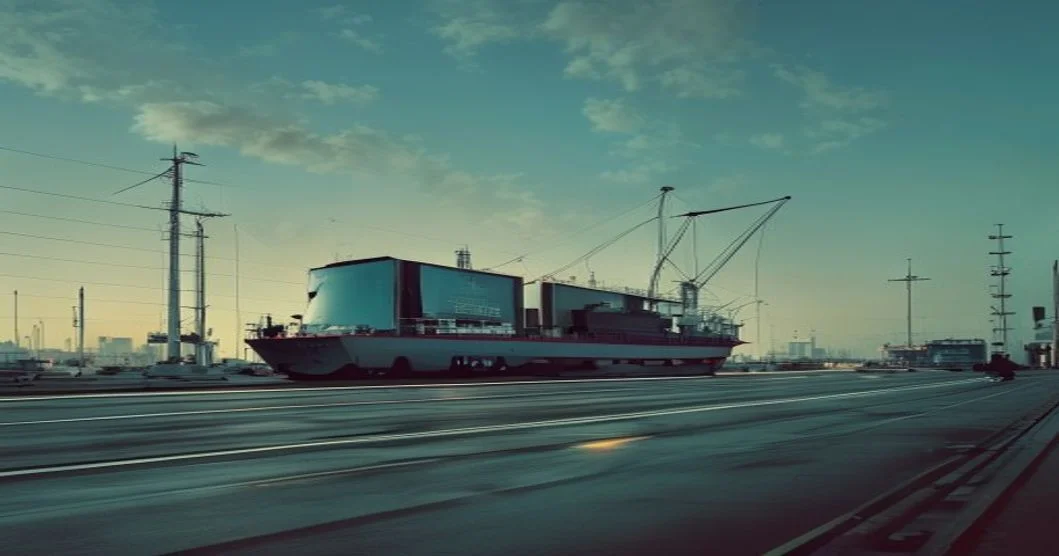
The Great Tanker Pivot: Fuel Carriers Switch to Crude Amid War Flows
The global energy infrastructure is undergoing a radical transformation as the war in Iran and the effective closure of the Strait of Hormuz upend traditional shipping economics. According to recent data, as many as 68 Long Range-2 (LR2) clean tankers, which typically transport refined fuels like diesel and gasoline, have been converted into "dirty" tankers to carry crude oil. This shift is driven by desperate crude buyers who are scrambling for supply that is not trapped behind the blockade. The economic incentive to move crude has now far outstripped the margins for refined products, leading to a massive reallocation of the global fleet.
This maritime shift signifies a broader reshaping of the global energy order. As the Strait remains a high-risk zone, the cost of insurance and the scarcity of available hulls are pushing oil prices into a new structural bracket. While the immediate panic of the previous hours has stabilized, the long-term reality of a restricted Hormuz means that global supply chains for energy are becoming less efficient and more expensive. For investors, this means the "boring" industrial backbone of the shipping industry is currently cashing in on the chaos, with freight rates for crude-capable vessels reaching multi-year highs.
Meta’s User Exodus and the AI Infrastructure Gold Rush
In the technology sector, Meta (formerly Facebook) reported a startling loss of 20 million daily active users across its family of apps last quarter. This decline comes at a time when Mark Zuckerberg is planning to pump billions more into AI investments, creating a strange divergence between the company's social media dominance and its future-tech bets. While users appear to be abandoning traditional platforms, the "agentic AI" build-out is creating a massive windfall for the industrial companies that provide the power, cooling, and hardware for data centers. Investors are increasingly moving away from consumer-facing apps to focus on the "lights-on" companies that make the AI revolution physically possible.

Closer to home, the US Treasury has intensified its financial pressure, with Secretary Scott Bessent announcing the seizure of nearly $500 million in Iranian crypto assets. This marks a significant increase from previous figures and highlights the growing capability of Western authorities to track and intercept decentralized financial flows. In the local Iranian market, gold has shown a unique divergence: while the price of 18k gold per gram rose by 1.4% to 20,080,797 Toman, the Emami coin actually fell by 2.0% to 198,000,000 Toman. This suggests a shrinking "bubble" (Hobab) in the coin market as investors shift toward raw gold or liquid assets amid fears of further international seizures of digital wealth.
Frequently Asked Questions
Why are fuel tankers (LR2) being converted to carry crude oil?
What caused the divergence between 18k gold and Emami coin prices in Iran?
How significant is the US seizure of $500 million in Iranian crypto?
Understanding the Strategic Chokepoint: The Strait of Hormuz
The Strait of Hormuz is a narrow waterway that links the Persian Gulf with the Gulf of Oman and the open Indian Ocean. At its narrowest point it is only about 21 nautical miles (39 km) wide, making it one of the world’s most constrained maritime passages. Roughly 20% of global oil consumption – and an even larger share of the oil exported by the Gulf states – must pass through this corridor, giving it outsized influence over energy markets.
Because of its limited width, the strait can accommodate only a certain number of large vessels at a time. LR2 (Long Range 2) tankers, which can carry up to 800,000 barrels of crude, are the workhorses of Gulf exports. When geopolitical tension rises, ship owners often redirect LR2s to “dirty” (lower‑grade) crude blends that are less likely to be seized or blocked, a maneuver that has become more common after recent U.S. sanctions and the seizure of Iranian crypto assets.
Security concerns amplify the strait’s strategic value. Iran’s PGCC (Petroleum and Gas Commodities Council) has repeatedly warned that any blockade or hostile action would be met with a “non‑negotiable” response, echoing past threats to close the waterway. Historical incidents – such as the 2019 tanker attacks and the 2020 Iranian missile strikes on U.S. vessels – demonstrate how quickly the strait can become a flashpoint, prompting regional navies to maintain a constant presence.
The economic ripple effects are immediate. Any disruption spikes crude prices, pushes up related commodities like gold (which Iran often uses as a hedge), and forces currency markets to adjust – for example, widening the USD/IRR spread. Traders watch Hormuz closely because a brief closure can shave billions off global GDP, while also influencing regional stock indices and even the valuation of tech firms like Meta, which reported user‑base losses linked to market instability in 2026.
Looking ahead, the strait’s future hinges on diplomatic negotiations and the ability of the international community to manage sanctions without triggering a full‑scale blockade. While alternative routes such as the Cape of Good Hope exist, they are far more costly and time‑consuming. Maintaining the free flow of oil through Hormuz remains a cornerstone of global energy security.