Araghchi’s Diplomacy Blitz Amid $126 Oil: Will the ‘War Powers’ Loophole Delay a Strike?
دیپلماسی فشرده عراقچی در سایه نفت ۱۲۶ دلاری؛ آیا گریزگاه قانونی واشینگتن مانع از درگیری میشود؟
As Iran launches a diplomatic offensive through regional counterparts and Pakistani mediators, the US administration signals a 'pause' in the war deadline. Meanwhile, global oil prices hover at four-year highs following a shock UAE decision to exit OPEC.
At time of publishing
USD
177,000
Toman
Gold 18K
19.81M
Toman / gram
Bitcoin
$78,429
US Dollar
Tether
17,598.5
Toman
Araghchi’s Regional Offensive and the Pakistani Channel
In a flurry of high-stakes diplomatic activity at 17:00 Tehran time, Foreign Minister Abbas Araghchi has engaged in intensive telephone consultations with regional counterparts to articulate Iran’s framework for ending the current cycle of hostilities. This diplomatic push is not merely symbolic; it coincides with reports that Tehran has submitted a formal proposal to Pakistan, acting as a key mediator between the Islamic Republic and Western powers. The goal is clear: to de-escalate the immediate threat of military strikes by offering a structured path toward a ceasefire that addresses both regional security and sovereignty concerns.
For the average Iranian observer, this shift toward diplomacy has provided a momentary floor for the national currency. The USD sell rate moved from 177,150 to 177,000 Toman, a marginal decrease of 0.1%, reflecting a market that is cautiously optimistic but still on edge. While the diplomatic rhetoric remains firm—with Iran’s UN representative insisting that all states involved in US-Israeli aggression must be held accountable—the active involvement of Islamabad suggests that back-channel negotiations are reaching a critical maturity. This suggests that while the military posture remains high, the 'language of the room' has shifted toward finding a face-saving exit for all parties involved.
The 'War Powers' Loophole: A Strategic Pause in Washington
In Washington, the legal landscape surrounding the potential for conflict has taken a complex turn. Defense Secretary Pete Hegseth recently suggested that the 60-day clock mandated by the War Powers Resolution—which requires the President to seek Congressional approval for continued military action—effectively 'pauses' or stops during a ceasefire. This interpretation allows the administration to claim that hostilities have been 'terminated' in a legal sense, thereby bypassing the need for a contentious vote in a deadlocked Congress. It is a calculated maneuver that keeps the threat of force on the table while avoiding a domestic political crisis that could undermine the President’s leverage.
This legal ambiguity has significant implications for global markets. International affairs commentators note that by labeling the conflict as 'terminated' without a formal peace treaty, the US maintains a state of 'hybrid readiness.' For investors, this means that the risk of a sudden escalation has not vanished but has instead been institutionalized into a long-term geopolitical variable. This uncertainty is visible in the gold markets, where 18k gold dropped slightly from 19,870,492 to 19,807,008 Toman (-0.3%), as traders struggle to price in a conflict that is neither fully active nor fully resolved.
Oil at $126 and the UAE’s OPEC Exit Shock
Global energy markets are currently reeling from a dual shock: the ongoing US-Iran impasse and the stunning announcement that the United Arab Emirates intends to formally exit OPEC. This move has disrupted the traditional regional economic balance and sent oil prices surging to a four-year high of over $126 per barrel. While prices eased slightly on Friday, the underlying supply anxiety remains acute. The UAE’s departure signals a breakdown in the unified energy front of the Gulf monarchies, potentially leading to a more volatile 'every nation for itself' production strategy that could either flood the market or cause localized shortages depending on geopolitical alignments.
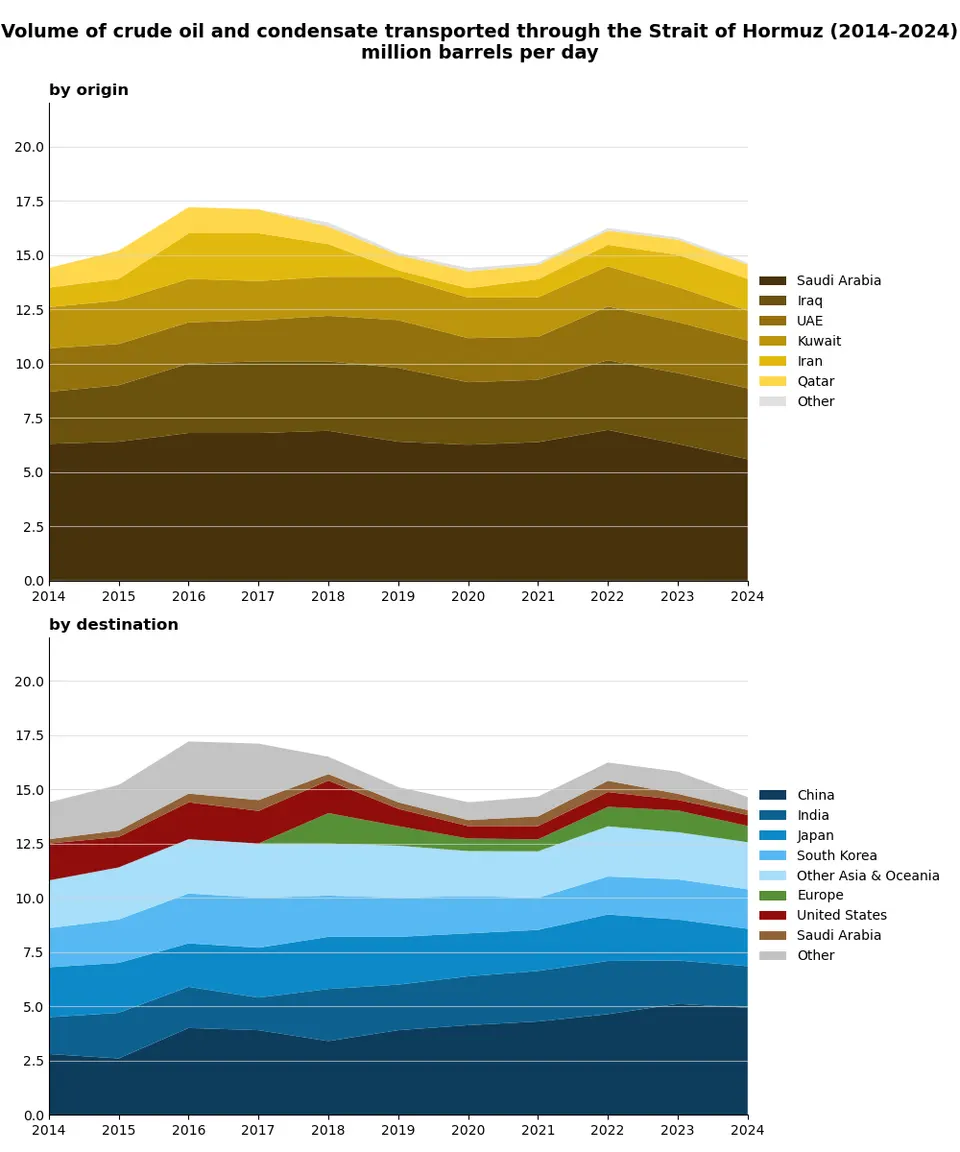
For the Iranian economy, $126 oil is a double-edged sword. While it theoretically increases the value of illicit or sanctioned exports, the heightened tension in the Strait of Hormuz—now described by analysts as a 'global battleground'—increases the cost of insurance and shipping to prohibitive levels. Strategists suggest that even if the US and China eventually cooperate to reopen the Strait, the long-term damage to the US Dollar’s dominance in energy settlements may have already begun. If the dollar weakens as a result of these shifts, the inflationary pressure on the Toman could intensify, regardless of the nominal oil price.
The Pentagon’s AI Pivot and Global Social Tensions
While the world focuses on missiles and oil, a quieter but equally significant revolution is taking place in the halls of the Pentagon. The US military has officially partnered with tech giants including SpaceX, OpenAI, and Google to transform into an 'AI-first fighting force.' This initiative aims to provide 'decision superiority' by using generative models to process battlefield data in real-time. This move has sparked intense debate over the ethics of automated warfare and the increasing reliance on private corporations for national defense. It marks a shift where the next conflict may be decided not just by the number of drones, but by the quality of the algorithms directing them.

This technological acceleration is occurring against a backdrop of rising social friction globally. From May Day rallies in France demanding better wages to the cultural debates in Australia over Indigenous Acknowledgments, the 'right' and 'left' are increasingly at odds over the direction of national identities. In Australia, the practice of acknowledging Aboriginal traditional owners has become a political target, reflecting a broader global trend where traditional norms are being challenged by populist movements. For the global observer, these stories highlight that the current era is defined by a total restructuring of power—technological, economic, and cultural.
Frequently Asked Questions
Why is the UAE's exit from OPEC so significant for oil prices?
What is the 'War Powers' loophole being discussed in the US?
How is the Iranian Toman reacting to these diplomatic developments?
Why is the Pentagon partnering with companies like OpenAI and SpaceX?
The War Powers Resolution: Limiting Presidential Authority in Conflict
Enacted in 1973 over President Nixon's veto, the War Powers Resolution (WPR) is a landmark piece of U.S. legislation designed to reassert Congressional authority over the commitment of U.S. armed forces to hostilities. Born from the constitutional tensions and public disillusionment of the Vietnam War, its primary aim was to ensure that future presidents could not unilaterally engage the nation in prolonged military conflicts without the explicit consent and oversight of the legislative branch. It reflects the Founders' intent to divide war-making powers between the Executive and Legislative branches, with Congress holding the power to declare war and the President serving as Commander-in-Chief.
The WPR outlines specific procedures for the President to follow when deploying troops into situations where hostilities are imminent or ongoing. It mandates that the President must notify Congress within 48 hours of introducing U.S. armed forces into hostilities or into situations where imminent involvement in hostilities is clearly indicated by the circumstances. Crucially, it stipulates that such a deployment must terminate within 60 calendar days unless Congress has declared war, specifically authorized the use of armed forces, or extended the period. An additional 30-day withdrawal period is allowed, bringing the total potential duration without Congressional approval to 90 days.
Despite its clear intent, the War Powers Resolution has been a perennial source of contention between the Executive and Legislative branches. Presidents have often challenged its constitutionality or interpreted its provisions, particularly the definition of "hostilities," very narrowly, allowing them to bypass the strict reporting and authorization requirements. This has led to what critics often refer to as a "loophole," where presidents initiate military actions without formal Congressional authorization, arguing that such actions do not constitute "hostilities" in the WPR's sense or are necessary responses to imminent threats. The resolution has rarely been formally invoked by Congress to force a presidential withdrawal, highlighting the practical difficulties in enforcing legislative checks on executive power in foreign policy.
Understanding the War Powers Resolution is vital for interpreting U.S. foreign policy and potential military engagements. In scenarios like the one suggested by the headline, involving a potential "strike" in a geopolitically sensitive region like the Strait of Hormuz, the WPR frames the legal and political considerations for any presidential decision to deploy forces. Diplomatic efforts, such as those mentioned in the headline, often aim to de-escalate tensions and avoid situations that would trigger the WPR's provisions, thereby preventing a direct confrontation between the executive and legislative branches over the legality and wisdom of military action.