Fibre-Optic Drones and Hormuz Standoff: Hezbollah Shifts Tactics as US Denies Missile Strike
پهپادهای فیبر نوری و بنبست هرمز: تغییر تاکتیک حزبالله همزمان با تکذیب حمله موشکی توسط آمریکا
Hezbollah deploys jam-resistant fibre-optic drones in Lebanon while the US and Iran trade conflicting reports over a supposed naval strike in the Strait of Hormuz. Meanwhile, markets react to Trump's 'Project Freedom' as oil prices climb amid regional instability.
At time of publishing
USD
189,300
Toman
Gold 18K
20.94M
Toman / gram
Bitcoin
$78,944
US Dollar
Tether
18,916.3
Toman
The Silent Thread: Hezbollah’s Fibre-Optic Revolution
In a significant escalation of battlefield technology, Hezbollah has reportedly shifted its tactical focus toward the use of fibre-optic drones. Unlike traditional unmanned aerial vehicles (UAVs) that rely on radio frequencies—which are highly susceptible to Israeli electronic warfare and jamming—these new drones are tethered by a physical micro-fibre cable. This technology allows for a high-definition video feed and precise control that remains completely immune to the sophisticated 'spoofing' and jamming techniques that have previously neutralized many of the group’s assets. This shift suggests that the fragile ceasefire brokered in mid-April is being tested by a new era of technological adaptation where physical connections bypass digital barriers.
For regional security, this development is a nightmare scenario. Most modern defense systems, including those deployed along the Lebanese-Israeli border, are designed to disrupt the invisible signals between a pilot and a drone. By using a physical wire, Hezbollah effectively blinds these electronic countermeasures. Analysts suggest this move is not just about tactical efficiency but is a clear signal of continued Iranian-backed innovation in proxy warfare. For the Iranian reader, this underscores the increasing sophistication of regional allies and the potential for these technologies to filter back into domestic defense or, conversely, invite even more aggressive counter-tech measures from Western powers.

The Hormuz Fog of War: Missiles, Denials, and 'Project Freedom'
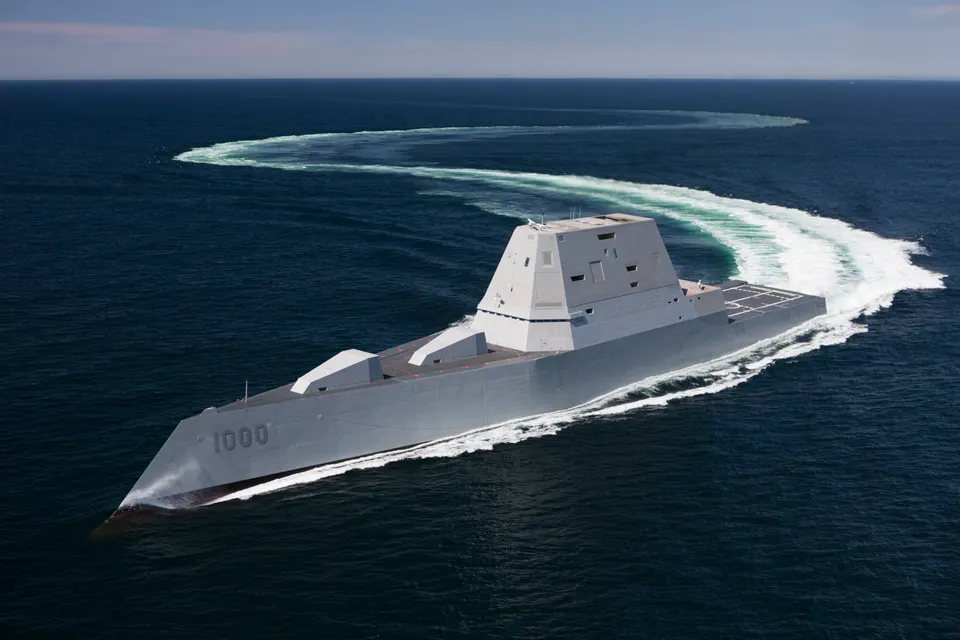
The Strait of Hormuz has once again become a global flashpoint following claims from Iran’s Fars news agency that two missiles struck a US Navy destroyer. While US Central Command was quick to issue a total denial, the rhetoric has already sent shockwaves through energy markets. Major General Ali Abdollahi, commander of the Khatam al-Anbiya central headquarters, issued a stern warning: any foreign military entering the waterway without coordination with Iranian forces will be viewed as a target. This directly challenges President Trump’s newly announced "Project Freedom," which aims to use 15,000 service members and a massive naval fleet to "guide" commercial tankers through the blockaded strait.
What we are witnessing is a high-stakes game of chicken between Trump’s transactional foreign policy and Tehran’s traditional regional dominance. Trump frames the escort mission as a humanitarian gesture to free trapped crews, but Tehran views it as a blatant violation of sovereignty. For the Iranian economy, this tension is a double-edged sword. While the USD/IRR rose slightly from 189,100 to 189,300 (+0.1%), the threat of direct military confrontation keeps the market in a state of paralysis. If "Project Freedom" proceeds without Iranian consent, the risk of a miscalculation—or a deliberate strike—remains at an all-time high, potentially decoupling the Rial further from any sense of stability.
Shifting Alliances and the Cost of Conflict
Beyond the immediate heat of the Middle East, the global geopolitical landscape is shifting under the weight of long-term conflict. UK Prime Minister Keir Starmer has indicated that Britain may join a £78 billion EU loan scheme to support Ukraine, a move designed to mend ties with Brussels while maintaining pressure on Moscow. This highlights a growing trend where Western powers are pooling financial resources to sustain proxy conflicts, even as their domestic economies suffer from the 'cost of living' crisis. In the UK, food prices are on track to be 50% higher than they were in 2021, driven by the very energy shocks that the Hormuz crisis threatens to exacerbate.
For investors and observers in Iran, these global trends are deeply interconnected. The rise in oil prices—sparked by the Hormuz dispute—provides a temporary revenue cushion for energy exporters but accelerates global inflation, which eventually raises the price of imported goods and technology. As seen in the photography of Peter van Agtmael, the "diary of war" is never confined to the battlefield; it echoes in the price of beef in London and the value of the Emami coin in Tehran, which rose from 206,000,000 to 207,000,000 (+0.5%) today. The world is increasingly fragmented, yet economically tethered to the same volatile triggers.
Watch
Hezbollah deploys hard-to-jam fibre optic drones, shifting battlefield tactics • FRANCE 24 English
FRANCE 24 English
Frequently Asked Questions
Why are fibre-optic drones more dangerous than radio-controlled ones?
What is Donald Trump's 'Project Freedom' in the Strait of Hormuz?
How did the Tehran markets react to the reported strike on a US warship?
Understanding Asymmetric Warfare
Asymmetric warfare describes a conflict between opposing sides that differ significantly in military power, resources, and strategic capabilities. Instead of engaging in direct, head-on confrontations that would likely lead to defeat, the weaker party employs unconventional tactics, leverages surprising technologies, and exploits the vulnerabilities of the stronger adversary. This often involves guerrilla tactics, terrorism, insurgency, or, as seen in modern contexts, the innovative use of readily available or specialized technologies like drones. The goal is not necessarily to achieve outright military victory in a traditional sense, but to inflict disproportionate costs, erode political will, or achieve specific strategic objectives through indirect means.
A prime example of asymmetric warfare in action is the reported deployment of fibre-optic drones by groups like Hezbollah in sensitive geopolitical arenas such as the Strait of Hormuz. While major powers possess sophisticated air defense systems and electronic warfare capabilities, fibre-optic drones offer a distinct advantage: their command and control signals are transmitted via physical fiber optic cables, making them inherently resistant to radio frequency jamming. This allows a less technologically advanced actor to maintain control over its assets even in heavily contested electromagnetic environments, effectively neutralizing a significant advantage of a superior military force.
The "jamming resistance" highlighted by fibre-optic drones is a classic characteristic of asymmetric tactics. It represents a strategic shift where a weaker actor identifies a critical vulnerability (jamming of wireless drones) in a stronger adversary's defense and develops or acquires a technology that bypasses it. This enables them to conduct surveillance, reconnaissance, or even targeted strikes with a degree of impunity that traditional wireless drones would not afford, thereby complicating the stronger power's operational calculus and raising the stakes in a standoff situation.
Understanding asymmetric warfare is crucial for comprehending contemporary global conflicts and the evolving nature of threats. It explains why non-state actors or smaller nations can pose significant challenges to global superpowers, often by transforming conventional battlefields or creating new ones. The ability to innovate with technology, adapt tactics, and exploit an adversary's perceived strengths is central to this form of warfare, making it a persistent and evolving feature of international security.
Topics
Related Articles