Trump Attacks Pope Over Iran Nuclear Stance; Emami Coin Plummets 5% as 'Project Freedom' Escalates
حمله ترامپ به پاپ بر سر برنامه هستهای ایران؛ سقوط ۵ درصدی سکه امامی همزمان با عملیات «پروژه آزادی»
President Trump has sparked a diplomatic crisis by criticizing Pope Leo XIV's stance on Iran, while the U.S. Navy begins 'Project Freedom' to break the Hormuz blockade. In Tehran, the Emami coin has seen a massive 4.9% drop as markets react to the heightened risk and shifting global alliances.
At time of publishing
USD
181,600
Toman
Gold 18K
20.04M
Toman / gram
Bitcoin
$81,385
US Dollar
Tether
18,150
Toman
The Nuclear Standoff: Trump, the Vatican, and Domestic Maneuvers
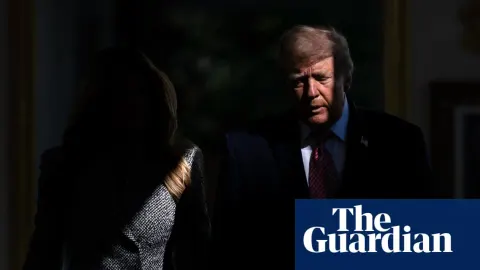
In a move that has sent shockwaves through both Washington and the Vatican, President Donald Trump has issued a scathing verbal attack against Pope Leo XIV. The President accused the pontiff of endangering the global Catholic community by allegedly supporting Iran's right to maintain a nuclear program. This rhetorical escalation comes at a critical juncture, just days before Secretary of State Marco Rubio is scheduled to meet with the Pope to de-escalate tensions. For Iranian markets, this signals a hardening of the U.S. executive branch's stance, suggesting that any hope for a diplomatic thaw or a return to the nuclear deal is increasingly remote under the current administration.
Simultaneously, the domestic political landscape in the U.S. is shifting as Tennessee Republicans move to redraw congressional districts in Memphis. While seemingly a local issue, this reflects a broader strategy of consolidating power within the GOP, which directly influences the longevity and aggression of U.S. foreign policy toward the Middle East. As the U.S. political machine aligns more closely with a hardline isolationist yet interventionist stance, the Iranian Rial remains under pressure, with the USD/IRR rate moving from 181,000 to 181,600 (+0.3%) in the last 24 hours. The market perceives these political shifts as a precursor to more stringent enforcement of sanctions and potential military posturing.
Project Freedom: Breaking the Hormuz Chokehold
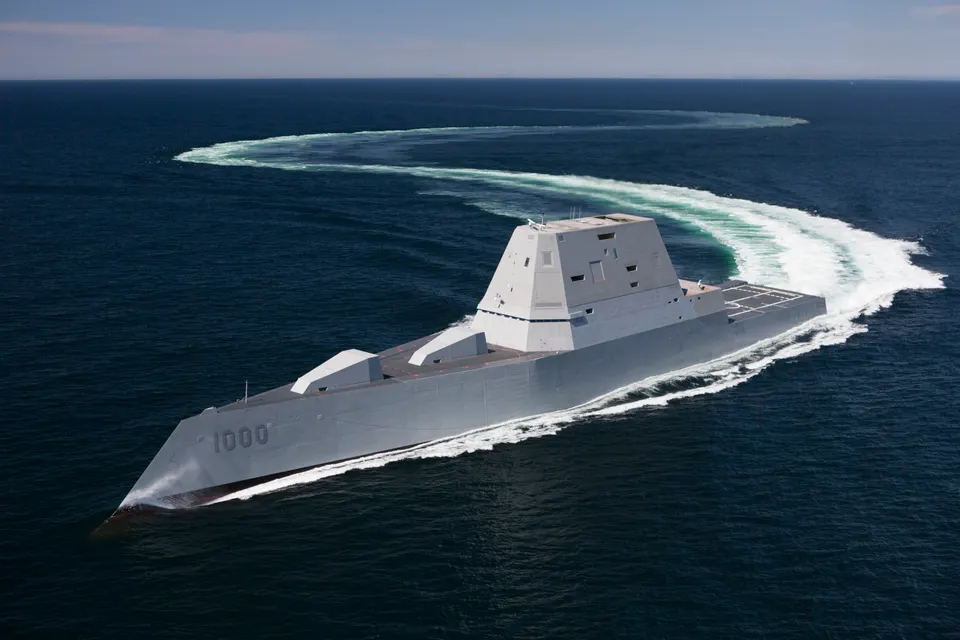
The Strait of Hormuz has become the epicenter of a global energy crisis as the U.S. begins implementing 'Project Freedom.' This initiative involves the deployment of U.S. warships to guide and protect commercial tankers stranded by the Iranian blockade. President Trump has explicitly warned Tehran that they "know what not to do" to avoid a full-scale military confrontation. However, the situation remains volatile, with nearly 11 million barrels per day of production currently shut in across the region. This supply shock is not just a future threat; it is an active reality that has pushed global oil expectations for 2027 into a state of high uncertainty.
For the Iranian economy, the blockade and the subsequent U.S. response are a double-edged sword. While the blockade was intended as a leverage point, the arrival of U.S. naval assets and the potential for direct engagement have spooked local investors. This is most evident in the gold market, where the Emami coin has plummeted from 205,000,000 to 195,000,000 Toman, a sharp decrease of 4.9%. This drop suggests a massive liquidation of local assets as holders move toward more liquid or offshore havens, fearing that the 'Project Freedom' escalation could lead to a domestic economic freeze if trade routes are permanently compromised.
The AI Pivot: IREN’s $625 Million Bet on Mirantis
While geopolitics dominates the headlines, the technology and crypto sectors are undergoing a fundamental transformation. IREN (formerly Iris Energy) has announced a significant $625 million all-stock acquisition of the cloud platform Mirantis. This deal, valued at roughly four to five times Mirantis's revenue, signals a decisive shift for major crypto mining firms. They are no longer just securing the Bitcoin network; they are pivoting to become AI cloud infrastructure providers. As Bitcoin holds steady at $81,385, the industry is realizing that the massive power and cooling infrastructure built for mining is perfectly suited for the burgeoning AI revolution.
This trend is critical for Iranian tech investors and crypto enthusiasts. As global firms like IREN and PayPal—which recently announced an AI-led turnaround—modernize their tech stacks, the barrier to entry for smaller players increases. The convergence of AI and crypto suggests that future market dominance will belong to those who can provide compute power, not just those who hold tokens. In the local market, Tether (USDT) remains a primary vehicle for capital flight and wealth preservation, currently trading at 181,150 Toman, mirroring the slight uptick in the free-market USD rate.
Global Instability: From Romania to the Gulf
Geopolitical instability is not limited to the Middle East. In Europe, Romania’s pro-European government led by Ilie Bolojan has collapsed following a lost confidence vote. This collapse, fueled by an austerity drive and a surge in far-right sentiment, adds another layer of uncertainty to the global economy. As European governments struggle with internal dissent and economic stagnation, their ability to mediate in the Middle East conflict or provide a unified front on sanctions is severely diminished. This fragmentation often leads to higher volatility in global markets, affecting everything from gold prices to currency exchange rates.
Closer to home, the human cost of the conflict is becoming apparent for migrant workers in the Gulf. Millions of workers from poorer nations are now faced with the impossible choice of remaining in a potential war zone or returning to countries suffering from the same energy and inflationary crises. This labor uncertainty could eventually impact the logistics and service sectors of neighboring economies, including Iran's. With 18k gold prices dipping slightly by 0.4% to 20,040,398 Toman per gram, the overall sentiment is one of cautious defensive positioning as the world waits to see if 'Project Freedom' will lead to a breakthrough or a broader conflagration.

Frequently Asked Questions
What is 'Project Freedom' in the Strait of Hormuz?
Why did the Emami coin price drop by 4.9% while the USD rose?
How does the IREN-Mirantis deal affect the crypto market?
Why is the conflict between Trump and Pope Leo XIV significant for Iran?
Why the Strait of Hormuz Matters: A Bottleneck That Shapes Global Energy
The Strait of Hormuz is a narrow waterway, only about 21 nautical miles wide at its tightest point, that links the Persian Gulf with the Gulf of Oman and the open ocean. Despite its modest dimensions, it carries roughly 20 % of the world’s petroleum—about 21 million barrels per day—making it one of the most critical chokepoints for global energy security. Any disruption, whether from military confrontation, mining of the seabed, or a deliberate blockade, instantly reverberates through oil markets, causing price spikes and prompting strategic stock‑pile adjustments by governments and firms.
Historically, the strait has been a flashpoint. During the Iran–Iraq War (1980‑88), Iran mined the waters and attacked tankers, prompting the U.S. Navy’s Operation Earnest Will to escort commercial vessels. More recently, in 2019, Iran threatened to close the strait in retaliation for U.S. sanctions, prompting a brief surge in Brent crude prices. These episodes illustrate how the mere threat of a closure can be leveraged as a geopolitical tool, amplifying the strategic value of the waterway far beyond its physical size.
Economically, a blockade would compress global oil supply, pushing spot prices upward and tightening the balance of trade for oil‑importing nations. The International Energy Agency (IEA) routinely models “supply shock” scenarios that assume a 10‑% reduction in Iranian exports, which can add $5‑$10 per barrel to global prices. Such moves also affect exchange rates in the region; for example, a sharp rise in oil prices often strengthens the Iranian rial (IRR) against the U.S. dollar in the short term, though long‑term effects depend on sanctions and domestic monetary policy.
From a legal perspective, the United Nations Convention on the Law of the Sea (UNCLOS) guarantees the right of innocent passage, but the strait’s status as an international transit passage means that any attempt to block it would likely be deemed a violation of international law, inviting diplomatic and possibly military responses. Understanding the strait’s geography, history, and economic impact helps explain why headlines about “Project Freedom” or a “Hormuz blockade” generate such alarm across markets and political circles.
Topics
Related Articles