War Profiteers and Hormuz Fire: Global Markets Brace as US Tariffs Face Legal Setback
سوداگران جنگ و آتش در هرمز؛ بازارهای جهانی در شوک درگیریهای دریایی و ابطال تعرفههای ترامپ
Global markets are reacting to a volatile morning as reports emerge of major corporations profiting from the Iran conflict while direct military exchanges in the Strait of Hormuz push oil prices higher. Meanwhile, a US court has dealt a blow to President Trump's tariff policy, and UK Prime Minister Keir Starmer faces a political crisis following local election losses.
At time of publishing
USD
177,000
Toman
Gold 18K
20.17M
Toman / gram
Bitcoin
$79,338
US Dollar
Tether
17,920
Toman
The Business of Conflict: Who Profits from the Iran War
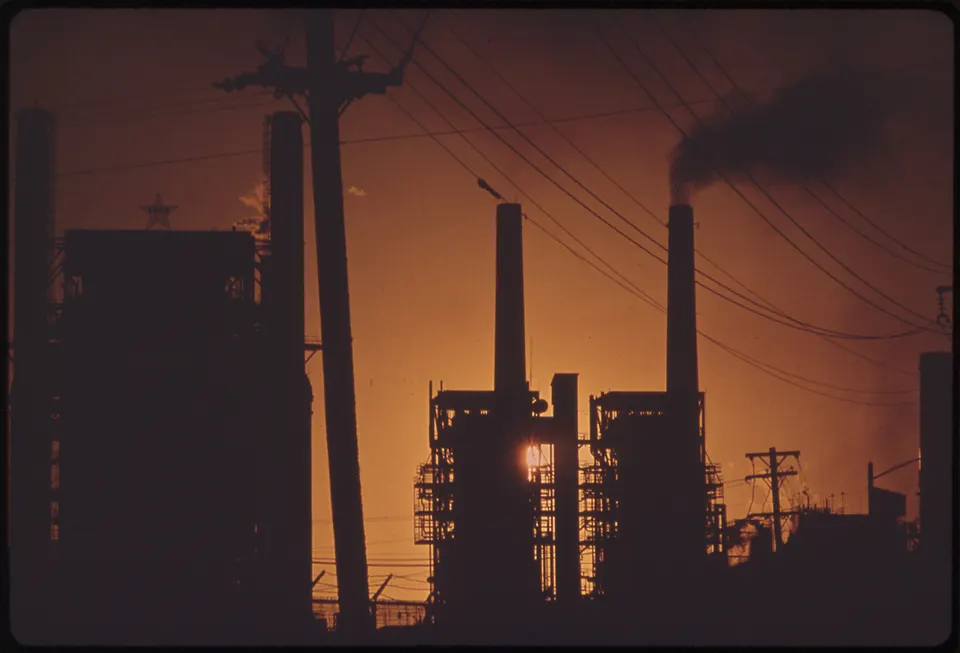
While the humanitarian and economic toll of the conflict in the Middle East continues to mount, a new report highlights that the "business of war" is thriving for a select group of global entities. Large oil conglomerates and major financial institutions have seen their balance sheets swell as the volatility in the Persian Gulf drives up energy prices and demand for complex hedging instruments. For these firms, the disruption of traditional supply routes is not just a logistical challenge but a primary driver of record-breaking quarterly earnings, as the risk premium embedded in every barrel of crude translates directly into shareholder dividends. This surge in profitability among the world's largest energy players and banks has sparked a heated debate regarding the ethics of conflict-driven growth.
For the average Iranian citizen, this trend is a double-edged sword. While the high price of oil technically increases the value of national resources, the reality of sanctions and the "war premium" on shipping often means that these profits do not reach the domestic economy. Instead, they exacerbate global inflation, which in turn raises the cost of imported goods in Tehran. The realization that global financial giants are netting billions while the local population faces currency instability creates a narrative of economic injustice that is likely to fuel further domestic and regional political rhetoric against international financial systems.
Escalation in Hormuz: Missiles, Drones, and Market Jitters
The situation in the Strait of Hormuz has shifted from verbal threats to direct kinetic action this morning. The Iranian Navy has reportedly utilized cruise missiles and combat drones to target US destroyers, citing retaliation for alleged aggression against Iranian tankers. This direct confrontation marks one of the most significant flare-ups in recent months, directly challenging the maritime security of the world's most vital energy artery. Despite these heavy exchanges, President Donald Trump has made the surprising claim that the existing ceasefire between Washington and Tehran remains functionally in place. This dissonance between the reality on the water and the rhetoric from the White House has left traders in a state of high alert, as the "shadow war" breaks into the open.
Oil markets have responded with immediate volatility. Futures rose sharply following the news of the exchange of fire, as the risk of a total closure of the Strait of Hormuz becomes a more tangible possibility for global supply chains. In the local market, the impact is already being felt; the USD/IRR rate moved from 176,700 to 177,000 (+0.2%) as demand for hard currency as a safe haven increases. If the military activity continues to escalate, the psychological pressure on the Toman could intensify, potentially breaking past current resistance levels despite the central bank's efforts to maintain order.
UK Elections and the ASEAN Summit: A World in Flux
Across the Atlantic, the political landscape of a key Iranian diplomatic partner is shifting. Initial results from the UK local elections suggest a catastrophic night for Prime Minister Keir Starmer’s Labour Party, with significant losses in traditional heartlands. This domestic weakness may limit the UK’s ability to project influence or mediate in the Middle East conflict, as Starmer faces internal pressure and potential leadership challenges. A distracted British government often leads to a more fragmented European foreign policy, which could complicate ongoing diplomatic efforts to stabilize the Persian Gulf. For Iran, the outcome of these elections is a signal of shifting Western priorities and the potential for more populist, isolationist movements to gain ground.
Simultaneously, Southeast Asian leaders at the ASEAN summit are grappling with the fallout from the Iran conflict. The bloc is expected to call for deeper energy cooperation and the immediate reopening of the Strait of Hormuz to secure their own energy-dependent economies. The concern among these leaders is that a prolonged conflict will derail the post-pandemic recovery of the entire Asian continent. This collective pressure from Eastern economies adds a new layer of complexity to the geopolitical chess match, as both Tehran and Washington must now weigh the economic interests of their largest trading partners in Asia against their own military and strategic objectives.
Legal Blow to Trump Tariffs and Currency Stability
In a major legal setback for the US administration, the US Court of International Trade has ruled that President Trump’s recent 10% global tariffs are unjustified under a 1970s trade law. While the ruling currently only applies to specific plaintiffs, it sets a legal precedent that could eventually dismantle a core pillar of Trump’s "America First" economic strategy. This decision introduces a new level of uncertainty into global trade relations, as markets must now account for the possibility of these tariffs being struck down entirely. For global markets, this is a rare moment of relief from the protectionist policies that have characterized the current US administration's approach to international commerce.
Despite this legal victory for free trade, the Iranian market remains focused on the immediate geopolitical risks. The price of Gold 18k per gram remained virtually flat at 20,169,444 Toman, while the Emami coin held steady at 195,000,000 Toman. This stagnation in gold prices, despite the rise in USD, suggests that local investors are caught in a "wait-and-see" mode, balancing the global dip in tariff-related tensions against the local rise in military conflict. The relative stability of gold amidst a currency fluctuation indicates that the market has not yet fully priced in a total breakdown of regional security, though the threshold for a major sell-off remains thin.

Watch
Iran and US exchange fire in strait of Hormuz - Iran accuses US of violating ceasefire | BBC News
BBC News
Frequently Asked Questions
How did the USD/IRR exchange rate react to the Hormuz clash?
What was the US Court of International Trade's ruling on Trump's tariffs?
Why are global banks and oil companies profiting from the Iran conflict?
What is the significance of the UK election results for Iran?
The Strait of Hormuz: A Vital Global Energy Chokepoint
The Strait of Hormuz, a narrow waterway connecting the Persian Gulf to the Arabian Sea and the broader Indian Ocean, is arguably the world's most critical energy chokepoint. Geographically, it's a funnel through which an immense volume of global oil and liquefied natural gas (LNG) must pass. Its strategic significance stems from the fact that it is the sole maritime outlet for several major oil-producing nations, including Saudi Arabia, Iran, Iraq, Kuwait, Qatar, and the United Arab Emirates. Any disruption here has immediate and profound implications for global energy markets.
Roughly one-fifth of the world's total petroleum consumption, or about 21 million barrels per day, transits through the Strait of Hormuz. This includes nearly all of the crude oil exports from Saudi Arabia, Iran, the UAE, Kuwait, and Iraq, as well as significant volumes of LNG from Qatar. The sheer volume makes it indispensable for maintaining global energy supply chains. For many importing nations, particularly in Asia, Europe, and North America, alternative routes are either non-existent or economically unfeasible for such vast quantities.
Given this immense dependency, geopolitical tensions in the region, such as those between the U.S. and Iran, directly translate into heightened anxieties in global markets. Even the threat of a blockade, military confrontation, or attacks on shipping in the Strait can trigger sharp spikes in crude oil prices. This is not just due to actual supply disruptions, but also market speculation, increased insurance premiums for tankers, and the perceived risk to future supply, forcing global markets to brace for potential volatility and economic fallout.
Understanding the Strait of Hormuz's role as a vital energy chokepoint is crucial for comprehending how regional conflicts can cascade into global economic instability. It underscores the interconnectedness of geopolitics, energy security, and international trade, demonstrating how a relatively small geographical area can exert enormous influence over the world's economy and daily lives.
Topics
Related Articles